
Introduction: A “new scam” disguised as an investment
Recently, "Xinkangjia" has become a frequently mentioned keyword on multiple social platforms and investment exchange groups. According to public information online, Xinkangjia has been active since 2023, operating under the name of "Dubai Gold Exchange China Branch". In the early stage, it attracted investors under the name of crude oil futures investment, and later under the name of "big data investment", "foreign exchange investment" and "virtual currency investment". Participants become members by paying a threshold fee of 1,000 USDT (Tether, a type of virtual currency, 1USDT can be exchanged for 1 US dollar), and develop and grow according to the so-called "militarized" organization, with different proportions of rebates between different levels.
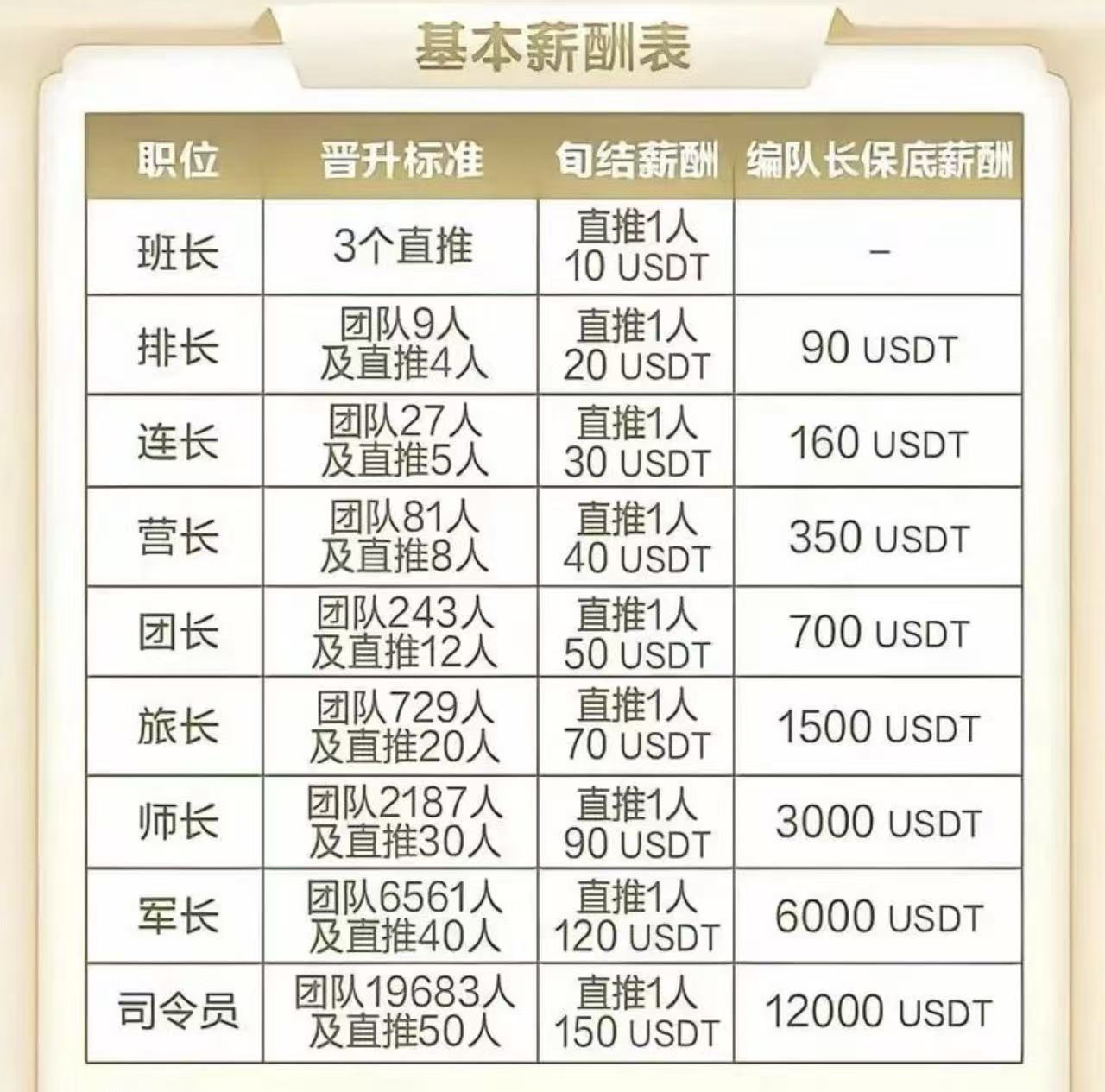
(The internal organizational structure and hierarchical rebates of Xinkangjia are circulated online)
On June 26 this year, the Xinkangjia platform completely closed its withdrawal channels. It was reported online that there were 2 million investors in China, and the boss Huang and others embezzled about 18 billion yuan. The funds involved were even transferred in the form of virtual currency USDT after being mixed (which can be understood as money laundering).
In fact, in April this year, the Dubai Gold and Commodities Exchange (DGCX) issued a notice stating that DGCX has not established any affiliated institutions or any partners in China.
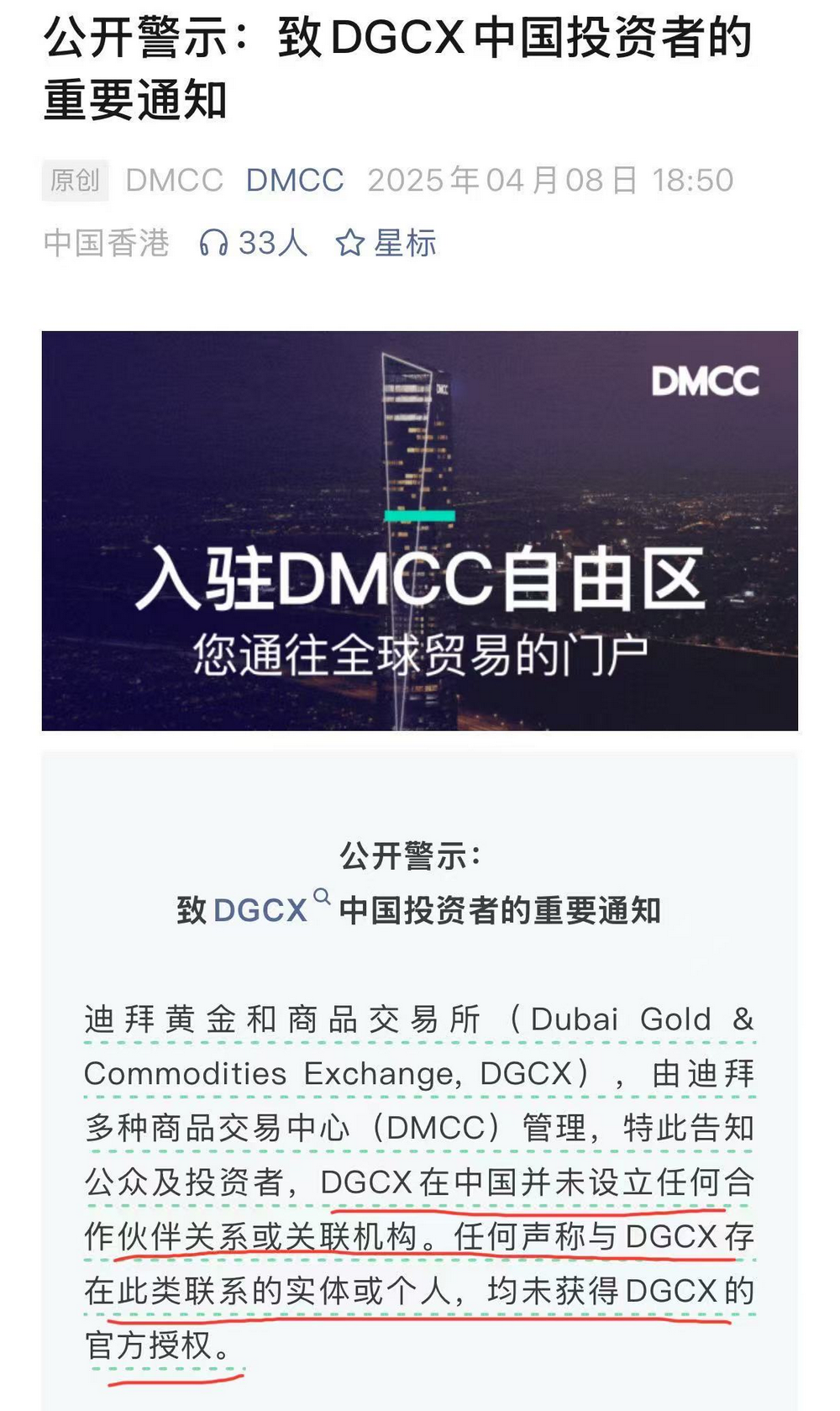
As early as 2024, some departments in mainland China have also issued warnings to Xinkangjia, but there are still people who leave comments under my video, questioning Lawyer Liu's judgment on Xinkangjia's collapse. Some people also think that I said it too late, and maybe they can't withdraw their money.

1. What crime does the “Xinkangjia” model constitute?
At present, no judicial authority or financial management agency has officially reported whether Xin Kangjia has committed a crime, but based on some materials circulating on the Internet, Lawyer Liu judged that according to Xin Kangjia's model, it is very likely that he is involved in organizing and leading pyramid schemes or illegal fund-raising crimes (fund-raising fraud is the most likely crime).
There is also a practical issue here. From the perspective of the judicial authorities, if it is classified as illegal fund-raising, one problem they will face is that the investment funds must be returned to the victims. The workload of counting, contacting and returning the approximately 2 million investors will be enormous. In addition, if the investment was in USDT, then should the USDT be returned or should the virtual currency involved be disposed of and converted into cash before the RMB is returned?
If pyramid schemes are convicted of crimes, many problems will be "easily solved": in current judicial practice, there is a tendency to determine that there are no victims in pyramid schemes, and all funds involved need to be confiscated and returned to the state treasury. This will not only enrich the treasury, but also save a lot of judicial resources, which is the scenario that judicial authorities most want to see.
But as lawyers, we must insist that the crime should be determined according to the law, evidence, facts, etc. The following discussion is based on the assumption that the judicial authorities have determined the crime of pyramid selling .
2. In pyramid scheme crimes, can investors get their money back?
This is the issue that investors are most concerned about: Can I get back the money I invested?
Unfortunately, from the current judicial practice in mainland China, funds involved in pyramid schemes rarely have a chance to be returned to investors. The main reasons are as follows:
(I) The funds involved in the case were mostly classified as “illegal proceeds”
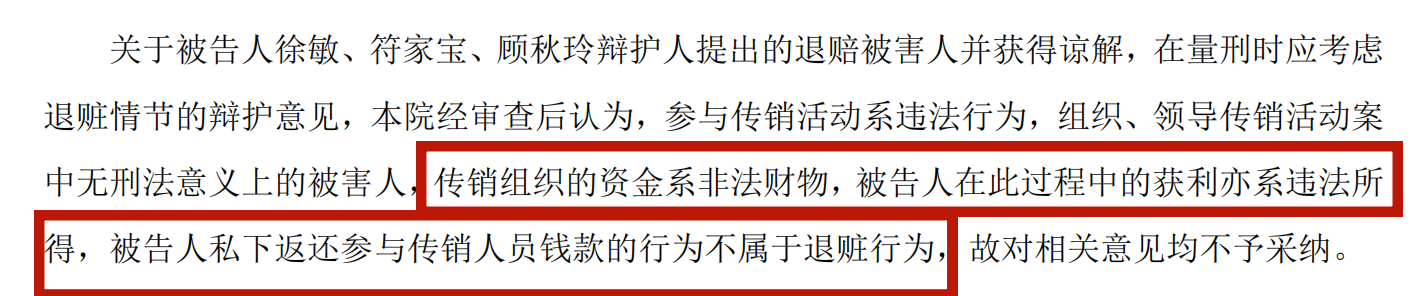
According to the provisions of China's Criminal Law, Criminal Procedure Law and relevant judicial interpretations, and the current mainstream judicial practice, once an act is identified as a crime, the public security organs, procuratorates and courts usually regard the funds absorbed by the platform as "illegal income" or "criminal tools", and seal, freeze, and seize them according to law, and ultimately confiscate and turn them over to the state treasury . For example, in the judgment of the Huishan District Court of Wuxi City on the pyramid scheme crime of Xu Mou, Fu Moumou and others ((2020) Su 0206 Xingchu 561), it was pointed out:
2. The law gives priority to protecting the overall social order
The primary task of judicial organs in handling MLM cases is to combat crime and maintain financial order, because the crime of organizing and leading MLM activities is itself stipulated under the section of "crimes that disrupt the market economic order". For a large number of "investors" who participate in MLM, even if their original intention is to invest, they inevitably play a role in "boosting" the expansion of the platform, and some investors even make profits by recruiting people. Therefore, judicial organs are generally cautious about the so-called "return of investor funds".
3. Serious asset loss and difficulty in recovering assets
Many pyramid schemes quickly transfer funds overseas or launder money through virtual currencies during their operations. By the time the public security authorities file a case, there are few assets left, and even if investors win the case, it is difficult to enforce the return. In previous major pyramid scheme cases such as "Yunlianhui" and "Shanxinhui", hundreds of millions of funds were confiscated by the court, and investors had almost no way to get compensation. It can be predicted that even if the "Xinkangjia" case enters the judgment stage, most of the funds will belong to the state.
However, there are also cases of returning money to investors in judicial practice. For example, in the pyramid scheme case of Cai and Wu ((2016) Yue 2072 Criminal First Instance No. 1195), the court clearly pointed out that ordinary investors were victims of the pyramid scheme case and the corresponding property should be returned.
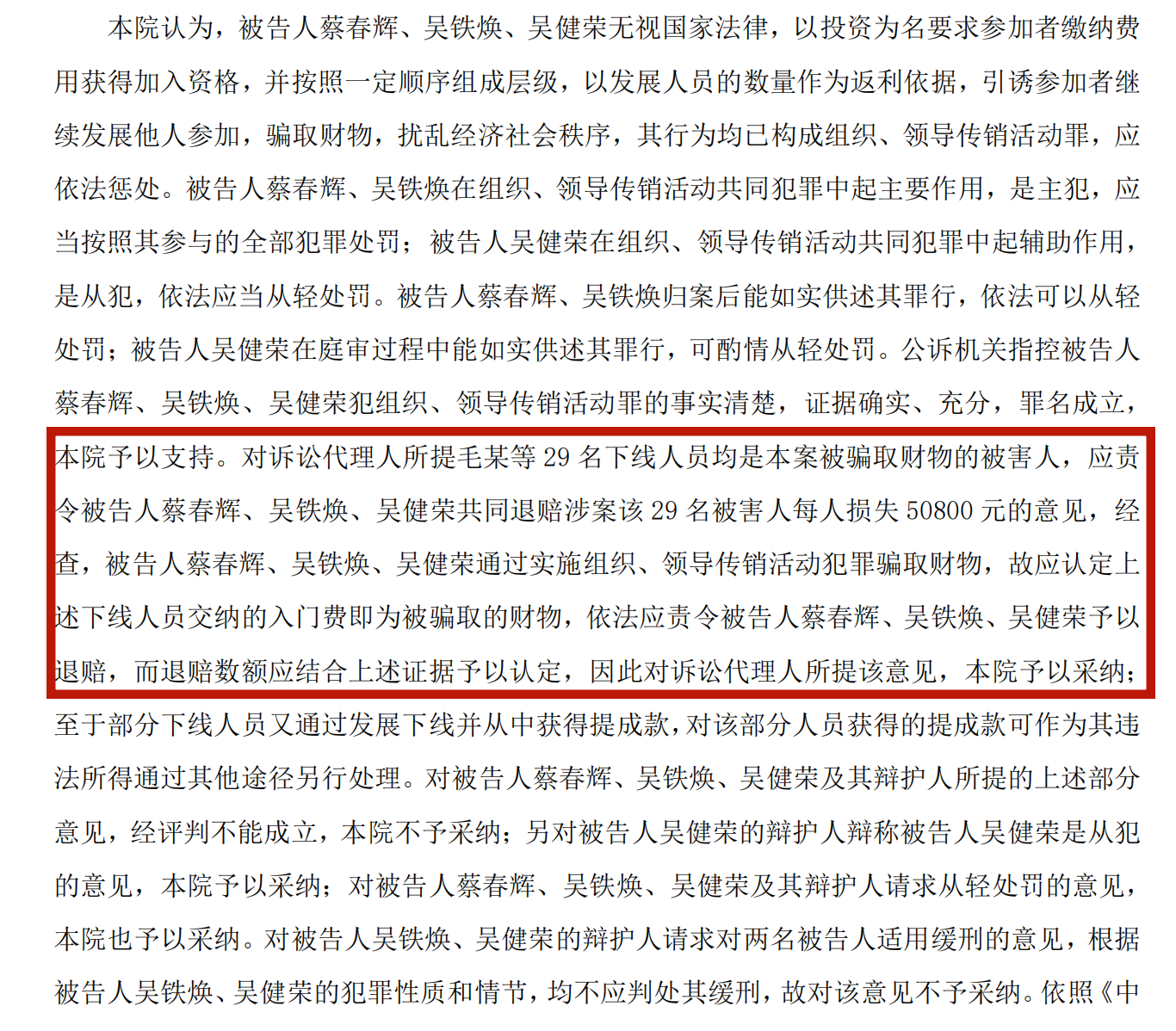
In the pyramid scheme crime case of Huo ((2020) Ning 0402 Criminal First Instance No. 285), the court also ordered Huo to return the investment funds of 37 victims.
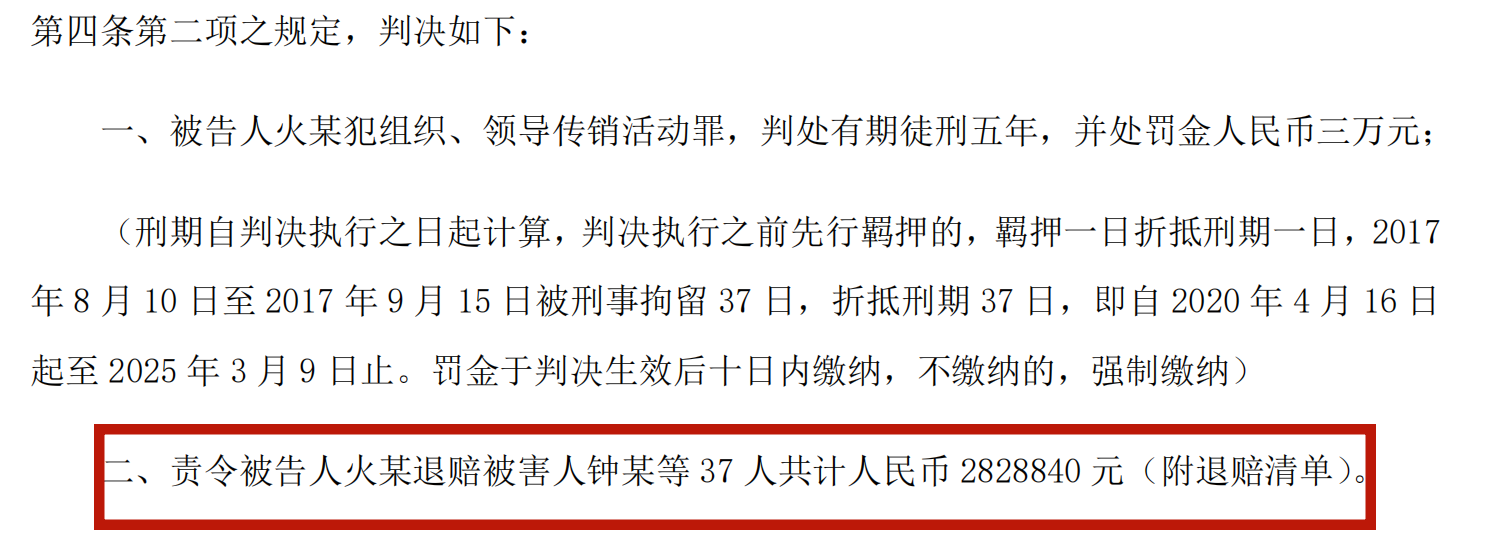
Lawyer Liu needs to point out that even though there are these two precedents on returning the money to the victims, it does not completely mean that the trial of new pyramid scheme criminal cases should be conducted in this way. After all, China is not a country of common law, and current judicial practice is still mainly based on fines and confiscations.
3. What other legal risks are there when investing in USDT?
What is special about Xinkangjia is that all investors make investments in USDT. Therefore, some participants may still have a fluke mentality: "I invest in USDT, not RMB, and USDT is a virtual asset with property attributes. Can the law protect me?" This understanding has many misunderstandings in the current judicial reality in mainland China.
(I) Virtual currencies are not legal tender and transactions are not protected
Since the central bank and seven other ministries issued the "Notice on Preventing Risks of Token Issuance and Financing" in 2017, mainland China has clearly prohibited virtual currency transactions. The "9.24 Notice" in 2021 reiterated that virtual currency-related businesses are illegal financial activities, and no unit or individual may engage in such business activities.
Therefore, whether investors buy USDT, Bitcoin, or Ethereum, their investment behavior is not protected in the Chinese legal system . Even if losses occur or the platform runs away, the court is likely to not support their civil claims (so from this perspective, the litigation agent system for victims in pyramid schemes is not necessarily feasible, because many courts believe that there are no victims in pyramid schemes).
(II) “Recognizing property attributes” does not mean “supporting transactions”
Although some judicial decisions have determined that virtual currency has certain "property attributes" and can be used as the object of crimes such as theft and fraud, this only applies to the scope of criminal law. The purpose is to make it clear that "virtual currency can be stolen and can constitute a criminal object", rather than saying that "it can be traded and investment is legal". This distinction is very critical - recognizing its existence does not mean allowing its circulation, nor does it mean protecting its investment .
(III) Property involved in virtual currency cases is still mainly dealt with by fines and confiscations
Even if the assets involved are virtual currencies such as USDT, the public security organs will still freeze and seize them according to law, and confiscate them as illegal gains after conviction. If the "Xinkangjia" case is handled as a pyramid scheme, the large amount of USDT assets absorbed by the platform that are seized by the judicial authorities will eventually be converted into legal currency and included in the national treasury, and investors will rarely get a refund.
Conclusion: Beware of the virtual currency "financial management" trap and protect your own wallet
The "Xinkangjia" case once again reminds us that virtual currency financial management projects disguised as "blockchain", "USDT", "mining machines" and "task platforms" are actually Ponzi schemes with old wine in new bottles. They are under the guise of "financial innovation", but in reality they are a collection of illegal fundraising, pyramid schemes and fraud.
At present, mainland China does not recognize the legal status of virtual currency investment, nor does it provide legal protection. This means that once the investment fails or the platform runs away, investors will not only suffer heavy losses, but may also bear legal responsibility for "participating in pyramid schemes" or "assisting in money laundering". Not only will they lose everything, but they will also be entangled in legal lawsuits, which is very uneconomical.
In the face of the temptation of virtual currency and high returns, investors should keep a clear head:
• Reject the promise of “guaranteed profit without loss” ;
• Stay away from the “recruiting people” and “rebate and dividend” model ;
• Don’t trust “investment experts” or “financial management teachers” on the Internet ;
• Once you discover a suspicious platform, report it to the public security authorities as soon as possible .
The law cannot protect non-compliant speculative behavior. Investments must be recouped and even more so, returned. I hope every investor can open their eyes, guard their wallets, and no longer pay for scams.