
Author | Huo Huo
Produced by|Baihua Blockchain
From the end of last year to the beginning of this year, the newly elected US President Trump made many promises to Bitcoin and the crypto industry during the election and before taking office, which directly boosted wave after wave of enthusiasm in the crypto market. Although Trump did not "burn the bridge after crossing the river" as some comments said after taking office, but instead implemented the previously promised favorable crypto policies in a constructive manner, the subsequent roller coaster market of Memecoin such as TRUMP in his family, coupled with the superposition of complex environment such as tariffs, market sentiment immediately turned from enthusiasm to panic, causing a lot of controversy.
The current crypto market performance is lower than expected, and it seems that there is no long-term impact of Trump’s series of Bitcoin/crypto policies. Are these really underestimated?
01. Implementation of Trump’s Ten Major Encryption Policy Commitments
During his 2024 presidential campaign, Trump made his top ten cryptocurrency policy commitments, explicitly stating that he would promote the development of the U.S. crypto industry and establish a friendly regulatory framework for it.
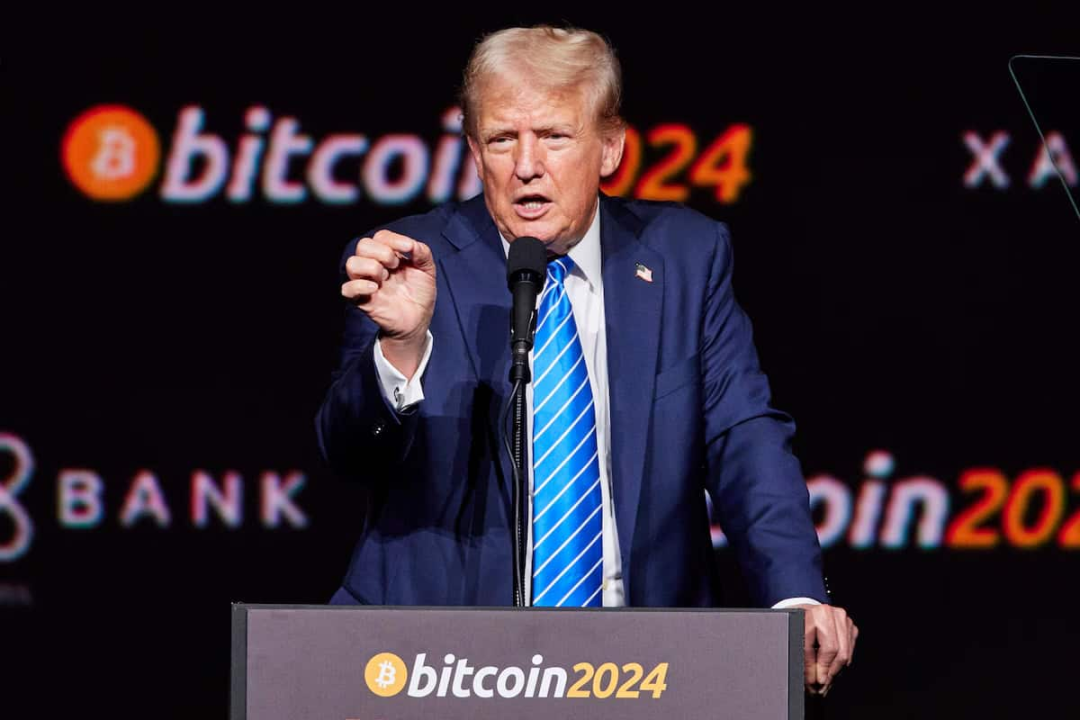
But Trump did not mention anything about crypto in his inaugural speech on January 20. However, Bitcoin Magazine CEO David Bailey later wrote that executive orders related to Bitcoin and cryptocurrencies have been included in the first 200 executive orders since Trump took office, indicating that crypto policies will continue to be promoted.
As time goes by, Trump has been in office for almost a month. How have these ten policies been implemented?
1) Make the United States the global cryptocurrency capital
On January 23, 2025, Trump signed an executive order aimed at promoting the United States' leadership in the field of crypto assets and financial technology, emphasizing support for the development of blockchain and crypto assets. David Sacks, Trump's appointed artificial intelligence and cryptocurrency commissioner, made it clear: "We want to make the United States the world capital of artificial intelligence and bring considerable economic benefits to the country."
2) Stop suppressing the crypto industry within one hour of taking office
On January 23, Trump signed an executive order to establish a cryptocurrency working group aimed at proposing a new regulatory framework for crypto assets and exploring the creation of a national Bitcoin reserve.
3) Prevent the U.S. government from further developing a central bank digital currency (CBDC)
The January 23 executive order explicitly prohibits the establishment, issuance, or promotion of CBDCs within the United States and requires the immediate termination of any related plans.
4) Build a strategic Bitcoin reserve
Currently, the government is evaluating the possibility of establishing a crypto asset reserve, but no final decision has been made. However, on January 23, Senator Cynthia Lummis, who proposed the Bitcoin Act, was appointed as the chairperson of the Senate Banking and Crypto Assets Subcommittee, which should push the bill again.
5) Fire SEC Chairman Gary Gensler
Gary Gensler resigned on January 20, and on January 21, Trump announced that SEC Republican Commissioner Mark T. Uyeda would serve as acting chairman until Paul Atkins (Trump's official nominee to replace Gensler) completes the Senate confirmation process. On the same day, Mark announced the establishment of a cryptocurrency working group to develop a clear and clear regulatory framework for crypto assets in the United States.
In addition, according to news on February 4, the Trump administration is reducing the number of members of the SEC's cryptocurrency enforcement team. The team was specifically responsible for crypto enforcement actions and consisted of more than 50 lawyers and staff, but there is no exact news on the number of layoffs.
6) Preventing the U.S. from selling its Bitcoin holdings
There has been no official statement clarifying the US government’s holdings of Bitcoin, so we will have to wait and see if there is any new news in the future.
7) Proposes using cryptocurrency to solve the US debt problem
There is currently no public information showing that the government has taken specific measures to use crypto assets to resolve national debt.
8) Propose a comprehensive encryption policy
There is currently no comprehensive crypto policy in place, but the crypto panel established by the new executive order signed below instructs relevant agencies to submit regulatory and legislative recommendations on crypto assets within 180 days in order to develop a comprehensive cryptocurrency policy.
9) Establishment of a Cryptocurrency Advisory Committee
A working group comprising senior officials from multiple departments has been set up to come up with a regulatory framework for crypto assets.
10) Reduce the sentence of Silk Road founder Ross Ulbricht
On January 23, Trump signed a pardon, releasing Ross Ulbricht, who had served 11 years in prison.
So far, most of the ten crypto-friendly policies promised by Trump have been implemented, especially in the formulation of regulatory frameworks and policy support. However, it will take time to verify the full implementation of some policies.
02. Trump’s other crypto news
However, in addition to the encryption-related sections of his first 200 executive orders after taking office and previously promised encryption policies, Trump has conducted many other explorations of encryption before and after his term.
1) Support the launch of the DeFi platform World Liberty Financial
World Liberty Financial (WLFI) is a decentralized finance (DeFi) project supported by the Trump family. It was launched in September 2024 and provides blockchain financial services such as borrowing, trading and income. Despite the active promotion by Trump and his children, WLFI has no direct legal relationship with the Trump family and is only authorized to use its brand for publicity. This ambiguous relationship has aroused market doubts, and the token WLFI only has governance functions and no economic rights, and the initial token sales were mediocre.
However, with the inauguration of Trump and the spread of the TRUMP Memecoin effect, WLFI's market popularity has increased. After January 20, 20% (20 billion) of its tokens were sold, raising a total of $1 billion. Driven by market demand, WLFI sold another 5% (5 billion) of tokens, priced at $0.05, an increase from the initial price. As of February 12, 81% had been sold.
WLFI not only relies on the Trump brand, its team also includes senior professionals in the crypto industry, and has established cooperation with Aave, Ethena Labs and other institutions. Its multi-signature address currently holds more than 74.5 million US dollars in crypto assets, mainly investing in ETH, WBTC, AAVE, etc.
2) Release of Trump Memecoin
On January 17, three days before the president was sworn in, Trump launched "TRUMP Memecoin" on Solana. In just two days, the market value soared to $14.5 billion, and drove Bitcoin to break through $109,000. However, the craze quickly faded. By January 30, the market value fell by two-thirds, but the transaction fees were as high as $86 million to $100 million. Trump's wife Melania subsequently launched "MELANIA Memecoin", which also suffered a sharp drop. TRUMP fell by 64.7% in a week, and MELANIA fell by more than 80%.
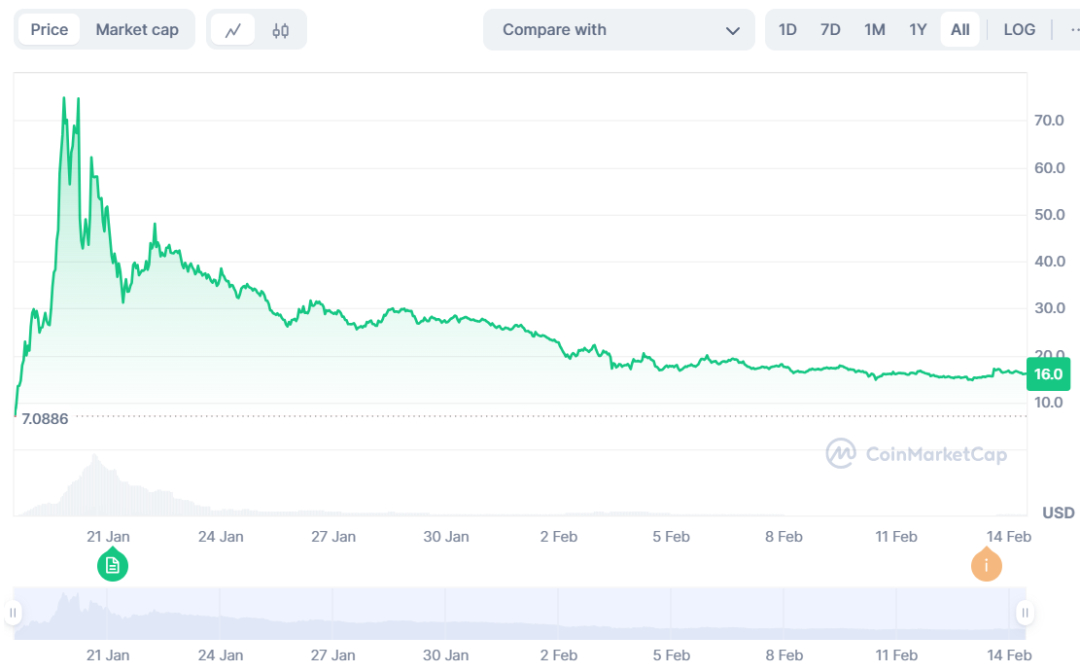
Price trend of TRUMP Memecoin since its launch. Source: CoinmarketCap
TRUMP is led by Trump's CIC Digital, which mainly makes profits through transaction fees, and its specific income and ownership are still opaque. On-chain data analysis shows that TRUMP was initially launched on DEX Meteora, and at least 50 large investors among the early holders of the Memecoin each made a profit of more than 10 million US dollars, while about 200,000 small investors suffered losses.
It is worth noting that the issuance of TRUMP caused a "blood-sucking effect" in the market in the short term, draining liquidity and causing a general decline in cryptocurrencies outside the Solana ecosystem. Subsequently, the WLFI project supported by Trump began to buy ETH assets in batches.
3) Establishment of a cryptocurrency working group
On January 23, 2025, Trump signed an executive order to establish a new special task force, the Cryptocurrency Working Group, which aims to propose new crypto asset regulations and explore the possibility of establishing a national cryptocurrency reserve. The working group is led by David Sacks, the AI and Cryptocurrency Commissioner appointed by Trump, and its members include senior government officials such as the Secretary of the Treasury, the Attorney General, the Secretary of Commerce, the Chairman of the SEC, and the Chairman of the CFTC.
According to the executive order, the working group will submit a report within 180 days, proposing regulatory recommendations on stablecoin management, market structure, consumer protection, etc., and assessing the feasibility of establishing a national crypto asset reserve. Sacks said: "We want to make the United States the world capital of artificial intelligence and bring considerable economic benefits to the country."

This move focuses on the integration of artificial intelligence and crypto assets, which is something Trump did not mention in his election promises. Currently, Trump has proposed that the United States should take the lead in these key technology fields, trying to further promote the United States' dominant position in the global technology competition through the coordinated development of artificial intelligence and crypto assets.
03. What do crypto KOLs think?
KOLs’ views on Trump’s crypto policy are diverse and complex. Based on some discussions and analysis on the Internet, the following is a summary of some of the main points:
1) Optimists
Some KOLs believe that Trump's policies will have a positive impact on the cryptocurrency industry. They pointed out that Trump's executive order may mark a shift from regulatory suppression to supportive policies, such as stopping the SEC's crackdown on cryptocurrencies, making the government more accepting of crypto technology, and allowing entrepreneurs to participate in policy making, which are believed to bring more innovation opportunities and regulatory clarity to the industry.
For example, Marc Andreessen, co-founder of a16z, said that Trump's policies are good for the cryptocurrency industry. In various interviews and public discussions, he expressed his confidence in the regulatory relaxation and policy support that the Trump administration may bring.
Crypto analyst @skydegencall said that not only did Trump not stop supporting cryptocurrencies after the election, but he incorporated Ethereum into his economic plan, believing that this would change the rules of the game and that crypto assets would become part of Trump's legacy.
Solana community leader @sol_jingou believes that Trump’s executive order will trigger a series of chain reactions, including stopping the SEC’s crackdown on cryptocurrencies, allowing government agencies to accept encryption technology, allowing entrepreneurs to participate in policy making, and the government itself becoming a participant in the encryption market. He believes that the winner this time will not be short-term speculators.
Crypto technology expert @0xCheshire also mentioned that Trump's executive order will lead to the SEC relaxing its suppression of cryptocurrencies and the government accepting crypto technology. He also pointed out that this policy shift is very beneficial to the industry and believes that the shift from high-pressure supervision to full support is a 180-degree turn.
2) Skeptics and critics
There are also KOLs who are skeptical about these policies. They worry that Trump's policies may be more motivated by political or personal interests rather than a true understanding and support of crypto technology. In particular, in discussions about Trump's own cryptocurrencies such as TRUMP, there are views questioning whether this will lead to market manipulation or conflicts of interest.
For example, Coinbase CEO Brian Armstrong said he welcomes the possible relaxation of regulations brought about by Trump's policies, but expressed concerns about whether the policies can truly serve the industry, avoid conflicts of interest, and provide long-term stability. He has repeatedly emphasized in public that any policy must truly understand and support the basic principles of cryptocurrency, such as decentralization and user privacy.
In an article published in The Guardian, Associate Professor of Finance @LarisaYarovaya was critical of Trump's crypto policy, arguing that Trump's policy could leave investors unprotected and vulnerable to financial manipulation, misconduct and bubble bursts.
Bloomberg investigative reporter @ZekeFaux expressed concerns about Trump and his family's entry into the crypto space in an interview with NPR, particularly regarding the conflict of interest that could result from Trump launching his own cryptocurrency.
US Senator @ElizabethWarren expressed concern about Trump's encryption policy, highlighting that such policies may be for personal gain rather than the public interest.
In general, the opinions of KOLs reflect the duality of expectations and concerns about Trump's encryption policy. Most of them admit that policy changes may bring opportunities, but at the same time, many voices remind us to carefully observe the actual implementation and impact of the policy.

04. Summary
On the one hand, many of Trump’s ten crypto policy commitments have already been implemented, such as the establishment of a cryptocurrency task force, the cessation of the crackdown on the crypto industry, and the exploration of establishing a Bitcoin reserve. However, some of the commitments have not yet been fully realized, such as solving the national debt problem through cryptocurrency and launching a comprehensive crypto policy.
On the other hand, Trump's active participation in the crypto space is not limited to policy support, but also includes actual business operations. He established a cryptocurrency working group, released the TRUMP coin, and supported projects such as the decentralized finance (DeFi) platform World Liberty Financial. This shows that Trump's cryptocurrency participation is not just rhetoric. He promotes market innovation through specific projects and policies, and strives to establish his own influence in the cryptocurrency field.
In addition, these measures also reflect Trump's desire to enhance the United States' leadership in the global crypto market and financial technology through the potential of cryptocurrencies and related technologies. Whether through his own cryptocurrency or supporting decentralized financial platforms, he is bringing more policy support and market opportunities to the cryptocurrency industry. However, these actions have also raised questions about their potential conflicts of interest and transparency, especially the role of Trump and his family in crypto projects, which has attracted some criticism.