
First, it should be clarified that both I and my organization hold both ETH and SOL, so holding SOL doesn't give me the right to criticize ETH. ETH's problems are long-standing and won't be ignored by the market simply because of previous hype.
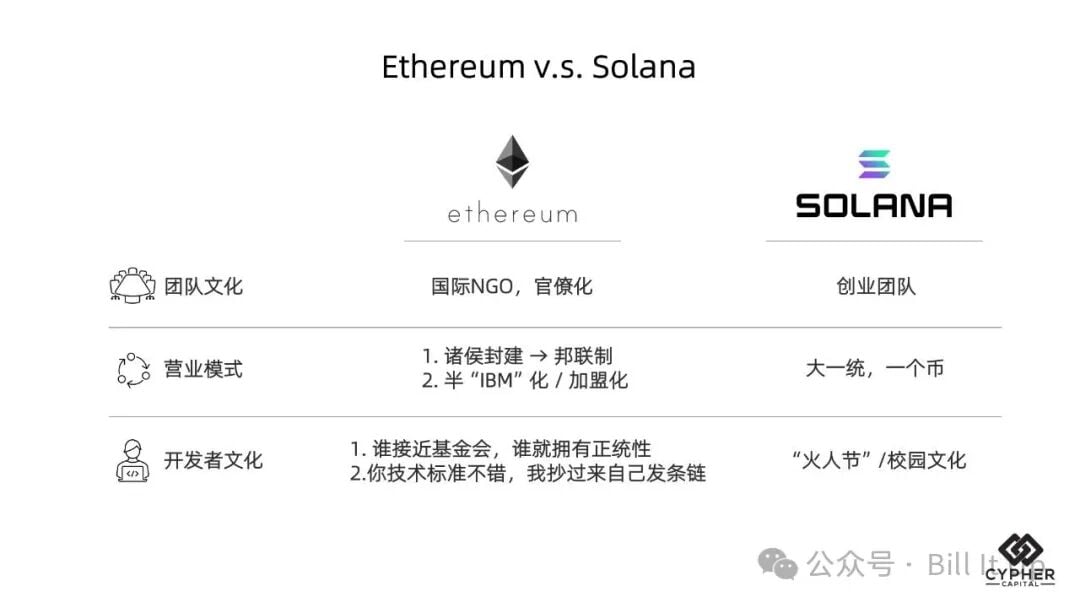
Ethereum resembles a feudal, international NGO—bureaucratic, decentralized, and focused on procedural justice. Vitalik Buterin is like the Zhou emperor, prematurely losing centralized power, turning L2 into feudal lords, with very limited proportions of their finances being remitted to the central government. It's even somewhat similar to the Commonwealth of Independent States after the collapse of the Soviet Union, or the Commonwealth of Nations after the fall of the British Empire, though even that connection is barely tenuous.
Furthermore, will ETH become like IBM? Microsoft, Amazon, and Nvidia are all worth trillions, while IBM is still sitting there: it's a very branded company, exporting technology and empowering others everywhere, but ultimately its business isn't about taking the entire market (the tax model is the strongest business, like Amazon taxing merchant transactions, and Google taxing global merchants' advertising spending), but rather becoming an organization that licenses tech licenses (and ETH licenses are free, so everyone can use EVM).
Another recurring issue is the developer culture where those who are close to the foundation and can flaunt their relationship with it are considered to have "legitimacy" and can enjoy more favor from investors and the community. This centripetal, sycophantic culture runs counter to Ethereum's original mission.
Furthermore, I overheard some private conversations among major Wall Street institutions that Wall Street players are coming to ETH for two reasons. Firstly, it's the oldest, most reliable, and reputable public blockchain. Secondly, many of them want to launch permission chains, and ETH's technology in this area has been proven over many years. This approach is essentially using ETH like IBM; it seems that the thinking of Wall Street institutions is remarkably similar to that of Chinese financial institutions.
In contrast, Solana exhibits a typical startup team culture—focused, efficient, and with strong execution. Its business model is a unified, integrated system, with a single coin supporting the entire system. Its developer culture resembles Burning Man: young, passionate, and highly experimental, closer to campus hacker culture. From a team and culture perspective, I still feel Solana is more like a multinational tech startup team.
Regardless, in the end, everyone is working together to put global assets on the blockchain. Competition is a good thing for all of us.