Author: Pan Zhifu
On July 15, the well-known financial science UP host "Xiao Lin said" released a video titled "Understanding Stablecoins in One Breath" on mainstream platforms such as YouTube, Bilibili, Douyin, and Toutiao. The video has been played more than " five million times" within 24 hours of its release. This is the first time that the content of the cryptocurrency circle has entered the public eye in a professional and neutral manner. The background, significance, and related laws of stablecoins are unfolded layer by layer, allowing more users to understand the mysteries in the form of popular science.

First, let’s review the highlights of Lin’s video.
1. US dollar stablecoins are still dominant, but the value is deposited in the "reach" end
In 2024, the transaction volume of stablecoins exceeded the total annual payment volume of Visa and Mastercard for the first time. Although the current mainstream USD-anchored stablecoins (such as USDT and USDC) use USD or US Treasuries as reserve assets, their actual commercial value is mainly deposited in the distribution link. In 2024, the channel distribution fees paid by Circle to Coinbase alone amounted to US$900 million, accounting for 54% of its total revenue. This data clearly shows the distribution characteristics of the industry value chain: the real business dominance is in the hands of platforms with user reach.
2. Compliance becomes a watershed in the industry, bringing a “trust premium”
The video points out that the negative impression of early cryptocurrencies associated with money laundering and excessive speculation are becoming key obstacles to mainstream acceptance. In this regard, Circle's compliance practices provide a successful model - successfully entering the mainstream financial market in the United States. With the advancement of the Genius Act, the Hong Kong Stablecoin Ordinance, and the Mica EU Act, this "compliance premium" is reshaping the industry's competitive landscape.
3. Stablecoins represent geo-financial games
The video points out that the US regulatory attitude towards stablecoins is essentially an extension of the US dollar hegemony in the digital age. This game situation has led to the entry of traditional financial institutions: banks are worried about the cannibalization of payment and settlement businesses, and technology giants covet the dividends of financial infrastructure. It is particularly noteworthy that regulators currently still strictly limit stablecoins to the payment field and remain highly vigilant about their derivative financial services. This policy orientation will continue to affect the evolution path of the industry.
The significance of this video is that it provides us with a rare "outside perspective" - through the feedback from 5 million ordinary viewers and the high-frequency keywords in the comment section, we can see the mainstream market's true understanding and expectations of the encryption industry - compliance anxiety and practicality doubts.
1. Encryption compliance and user asset security
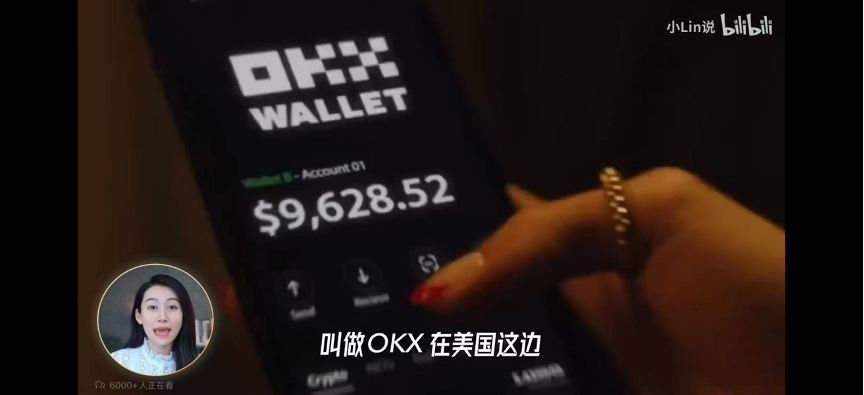
In the video Xiao Lin said, exchange compliance and user asset security occupied an important part, and this part focused on OKX. It is because for ordinary users, the core concern of cryptocurrency is not "whether it can make a profit" but "whether the funds are safe." In the video comment area, a large number of messages from non-cryptocurrency users also reflected concerns about regulatory compliance, fund security, and whether there is a risk of "Ponzi schemes." These concerns are precisely the threshold that the industry must cross to gain widespread acceptance.
After all, the lessons of history are vivid: in 2014, Japan's Mt. Gox lost 850,000 bitcoins due to hacker attacks and mismanagement; in 2022, FTX collapsed due to misappropriation of user funds, and its market value of tens of billions of dollars was reduced to zero overnight. These events not only severely damaged industry confidence, but also had a significant impact on the market:
• The total market value of cryptocurrencies at the beginning of 2023 is about $800 billion, far lower than the peak of 2021 ($3 trillion)
• The total amount of crypto financing in 2023 was only $9.5 billion (Messari data), a year-on-year decrease of 69% from 2022 ($30.7 billion), the lowest since 2020.
• 2023 banking crisis (Silvergate, Signature closure) fiat currency channel rupture: Crypto companies have more difficulty in depositing and withdrawing US dollars,
The market has entered a dark moment of "winter", with liquidity declining, financing shrinking, and retail investors leaving the market. Behind this is the painful price paid by the entire industry for the lack of supervision. Actively embracing cryptocurrency compliance is a more difficult path to take, because it means high costs.
The concept of "Proof of Reserves (PoR)" is particularly emphasized in the video. Compared with the reserve model of traditional financial institutions, institutional trusteeship and other intermediary models, the clear proof of reserves (PoR) is similar to the balance sheet of listed companies, and is more real-time and transparent. There is a lot of hidden but very valuable information in it, such as the proportion of mainstream assets, which can be equivalent to the proportion of core assets; the asset reserve ratio can be equivalent to an effective indicator of solvency.
Monthly reserve proof disclosure has now become a standard feature of mainstream trading platforms. Observing OKX's practice over the past two years, it was found that in addition to meeting basic disclosure requirements, an on-chain monitoring system has been established, which has the ability to track suspicious addresses in real time and provide risk warnings. From OKX's " CEX+Wallet+Pay " trinity strategy, it can be seen that this is their commitment to global user security and product experience. Similarly, we can also see that Circle has won recognition in the US market by adhering to compliance. This is a long-term credit certification and an answer to investors, users, and regulators.
2. Stablecoin global payment is just the starting point, and application is the end.
Xiao Lin said that when discussing the "stablecoin global payment system", he put forward a key point in the current development of stablecoins: although the current positioning of stablecoins by regulators in various countries is still focused on payment attributes, its future potential is far more than that. As the process of stablecoin legislation accelerates, global giants have made layouts:
• PayPal launched PYUSD in August 2023, becoming the first payment giant to issue a stablecoin;
• Ant Group, JD.com and other Internet companies are actively applying for Hong Kong stablecoin licenses;
• Traditional financial institutions such as Standard Chartered Hong Kong and CMB International are also exploring stablecoin business through joint ventures or sandbox testing.
Currently, more than 40 companies have applied for stablecoin licenses in Hong Kong. JPMorgan Chase CEO Jamie Dimonye also said that he does not understand the appeal of stablecoins, but he will not sit idly by. The industry is currently in a critical period of transformation: although major institutions are scrambling to lay out the right to issue stablecoins, the entire market has not yet formed a unified understanding of the true value and development path of stablecoins.
As the issuance threshold is lowered, the real differentiation will be reflected in the ability to build business scenarios . For example, in cross-border payments , we will cooperate with e-commerce to replace traditional bank remittances with stablecoins (saving 3-5% handling fees); promote merchant access: promote the implementation of stablecoins in tourism, games, e-commerce and other scenarios; expand DeFi participation and lower the threshold; and the key lies in the compliance channel: open up legal currency exchange through licenses to make stablecoins truly "usable".
This is why Meta plans to embed payment functions through WhatsApp to create a stablecoin application for social scenarios; Coinbase focuses on building digital wallets with social and gaming attributes; OKX starts from user demand scenarios and focuses on connecting digital currency payments with the chain.
OKX has established a compliant channel for real-time 1:1 exchange of USD and USDC through cooperation with Circle, and has also linked banks to optimize the process of fiat currency inflow and outflow. At the same time, users can complete stablecoin transfers or make payments at POS terminals through the OKX Pay app. When users can use stablecoins for various payment scenarios and can easily complete the exchange with fiat currency, the commercial value of stablecoins can be truly fully presented.
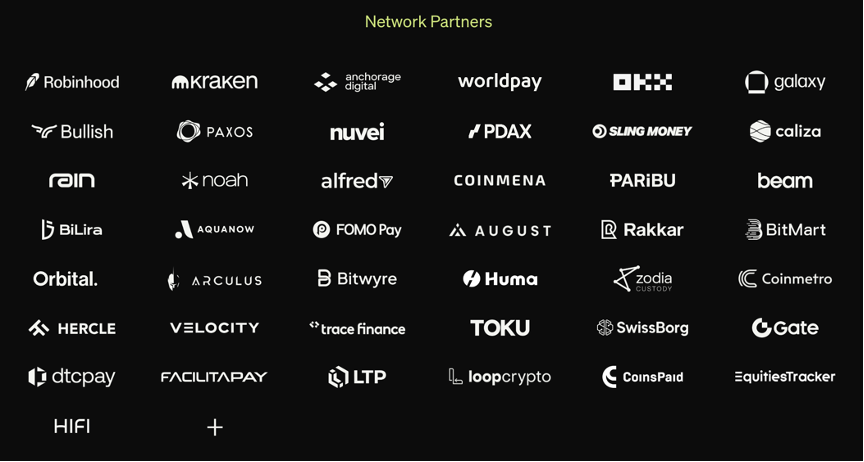
It is obvious that stablecoin-related companies are accelerating their efforts to build an ecosystem, forming multiple collaborative entities in issuance technology, ecological applications, and distribution channels, and engaging in fierce competition. For example, Circle and Coinbase have established a USDC issuance and distribution system; the Global Dollar Network has cooperated with more than 30 top companies in the industry, including the mainstream US trading platform Robinhood, the cryptocurrency exchange Kraken, and the crypto financial services company Galaxy Digital.
Recently, Global Dollar Network (GDN) announced the issuance of USDG stablecoin in the European Union and announced that OKX will become a core partner. This is the "only" stablecoin after USDC that has been clearly approved by regulators in both Singapore and the European Union, and has covered more than 3 billion users in 450 countries and regions.
Conclusion: Long-termism behind breaking the circle
Compliance is becoming the entry ticket, and the application scenarios determine the ceiling: when ordinary users can easily use stablecoins for cross-border payments and daily consumption as shown in the video, cryptocurrencies can truly be integrated into real life.
Every milestone in the development of the industry is hard-won. Every time the crypto industry breaks through the circle, every person or brand that enters the mainstream vision is the result of long-term persistence and hard work. Every step they take is carefully planned, boldly attempted, and firmly believed. This is the reason why they have come to where they are now and in front of us. Only in this way can they become the representatives of crypto builders.
Xiao Lin said that this breakthrough video is not only the beginning of an innovative revolution in the financial industry by stablecoins, but also a microcosm of the long-term efforts of builders in the encryption industry. I believe that this is not just a simple "seeing".