
Author: Ethan;
Editor: Hao Fangzhou
On July 17, when Jia Yueting stood on a rooftop parking lot in downtown Los Angeles, braving the afternoon sun and hot wind, and talked to the camera about FF's latest tram FX Super One, perhaps he had already planned the next scene in his mind. Who would have thought that the "car" was still floating in the air, but Boss Jia's script had quietly turned the page to the Web3 ecosystem.
On July 22, FF Lightning announced a strategic cooperation with digital asset infrastructure platform HabitTrade. What did not disappoint everyone was that Boss Jia once again started the "concept output" mode, throwing out a dazzling series of puzzles of "EAI travel + Web3 + blockchain + encryption + stablecoin" in one breath, and boasted that he would create a "value fusion monster" that connects "Web2 & Web3", "on-chain & off-chain", "reality & virtuality". It is indeed a speech by the ancestor of the PPT entrepreneurial world.
RWA is not something you can do just because you want to: What can FF "put on the chain"?
RWA, the full name of Real World Asset, sounds like a high-sounding word, but it actually talks about the simplest thing: moving off-chain valuable assets to the chain for trading and circulation. In other words, the project party must be able to come up with "real valuable things" in the real world - it can be real estate, debt, accounts receivable, gold, and artworks, but there must be two prerequisites: legal ownership and a clear path to income.
Then the question is: What assets does FF plan to use to tell the story of RWA?
Is it the Hanford plant? It has not been fully operational for many years, and the outside world even doubts that even the water and electricity grids are not running; is it FF 91? Deliveries are few and far between, and the loss per vehicle is staggering; or are they the "future concept cars" that are released every year, delayed every year, and now even the official Twitter account dares not write the delivery date?
None of them. The only thing FF can still "go online" at the moment is the more than 10,000 pre-orders. Although the number is not large, in a company like FF, it is already one of the few "assets that can tell a story." Although these orders have not yet been delivered and do not have the attributes of accounts receivable in the legal sense, they represent a potential "future cash flow" and are "contingent assets" in the traditional financial context - they cannot be recorded, but can be packaged.

In other words, if Jia Yueting really wants to do RWA, then his most realistic plan is to package these more than 10,000 pre-orders into a "future income rights asset pool", and then RWA Group will design a structured token product and sell it to the public through the HabitTrade platform.
On the surface, this is called "future income tokenization"; but more fundamentally, this is using the "promise to sell cars" to raise "money to build cars." It is a closed loop logically and also makes sense emotionally: trust me, give me money; wait for me to mass produce, and then return your profits.
This sounds very Jia Yueting, and very Web3.
Who is the real director? What are HabitTrade and RWA Group trying to do?
If the pre-order is the script of this RWA drama, then HabitTrade and RWA Group are the real "director" and "stage director" behind the scenes. To understand how this drama is designed, you have to first look at what they do and what kind of roles they are good at.
HabitTrade: The "Shuttle Bus" of the Stablecoin Circle
From public information, HabitTrade is a "global multi-market broker" registered in the Cayman Islands, but once you look at its official website or App page, you will find that it is not a traditional stock trading platform. Its biggest feature is that it uses stablecoins such as USDT as a deposit entry point, opening up the on-chain and off-chain channels between US stocks, Hong Kong stocks, ETFs and crypto assets.
What does this mean? In layman's terms: you can use USDT to buy Hong Kong stocks, or you can redeem US stock earnings back to on-chain assets. For those users who pursue flexibility and are vague about compliance, this "off-chain assets × stablecoin liquidity" bridge is exactly what they want.
The key is: HabitTrade is not just an entry point, it is also an "execution platform". It once helped U-Power to make an attempt at "equity + token" fusion financing. The routine is almost the same as FF's tokenization idea of pre-orders this time - the underlying assets remain unchanged, the financial packaging is changed, and a group of crypto speculators willing to bet with USDT are obtained.
So, Jia Yueting's involvement in HabitTrade this time is not accidental, but a copy of the script of his predecessors.
RWA Group: Transformation from NFT to Structural Finance
Let’s look at another partner - RWA Group. This name may not be loud enough, but you may have heard of its "predecessor": NFT China. That’s right, the Web3 project that was highly publicized in the 2021 NFT bull market has now transformed into an "RWA tokenization expert."
This transformation sounds a bit hasty, but it is actually very accurate: they are not going to be assets, but to be "asset packagers." RWA Group specializes in structural design, cross-border laws, and technical compliance. To put it bluntly, it helps you "write stories" with one hand and "clean up" with the other. It does not need FF to really build how many cars it can make. It only needs FF to provide a "future predictable cash flow" model. The rest of the structural layering, income model, token issuance, and chain hooks can all be packaged and done.
At this point, the layout of this play is clear: FF provides the story material (pre-order); RWA Group is responsible for designing the narrative structure and issuance model; HabitTrade provides trading channels and USDT buyers. All this shows that this is not a "chain dance" made by FF alone, but a financial narrative project that has been "actuarially designed".
Its background is not a dream, nor is it the idealism of the manufacturing industry, but a precise structural arbitrage logic.
Self-rescue? Carnival? Stepping on thunder? Is FF's RWA experiment reliable?
When we take apart this RWA model, it does form a logical closed loop on the surface: Jia Yueting uses the "promise to sell cars in the future" to exchange for today's USDT financing, and promises to give back to investors in the form of "income rights tokens" in the future. But for the crypto circle, this kind of gameplay is not unfamiliar, and it can even be said to be familiar. To sum it up in jargon: "Futurism + Tokenization + Liquidity = short-term narrative premium".
Is this gameplay reliable? We disassemble it from three angles:
First, the short-term structure works, and the narrative drives speculation
As long as the pre-order is real and has a payment record, RWA Group can package it into a "future cash flow asset pool", and then make a token mapping according to the "expected income right" ratio, and issue it to investors on the chain. HabitTrade has a complete stablecoin exchange system, which can painlessly list and list USDT trading pairs, and even add LP incentives to quickly attract the first batch of market participants.
Listed companies + pre-orders + airdrop expectations, these three axes are enough to activate a wave of short-term market sentiment.
So, this thing is possible to run through in the speculative sense - not in the product, but in "FOMO + emotion + narrative".
Secondly, the underlying assets are questionable. This is not RWA, but "emotional crowdfunding"
If you go deeper, you will find that the so-called underlying assets provided by FF - 10,000 pre-orders, are actually assets without legal protection, legal enforcement, and the ability to confirm the return. Simply put, it is not a valuable and redeemable account receivable, but a "letter of commitment based on trust." What you buy is not the cash flow of orders, but Jia Yueting's credit, FF's car-making ability, and the market's collective imagination of "delivery next week."
This is not "real-world assets" on the chain, but "the tokenization of vision and belief." If we allow this operation to expand indefinitely, RWA will no longer be a bridge for traditional assets, but a packaging machine for narratives and hype. Once participants are not investing in assets, but "investing in other people's efforts," the game will move toward the critical point of Ponziization.
Finally, dancing RWA under the shadow of SEC supervision is not a small risk
Don't forget that FF is a public company listed on the Nasdaq. This means that no matter what new story is told on the chain, it cannot avoid the attention of the traditional financial regulatory system.
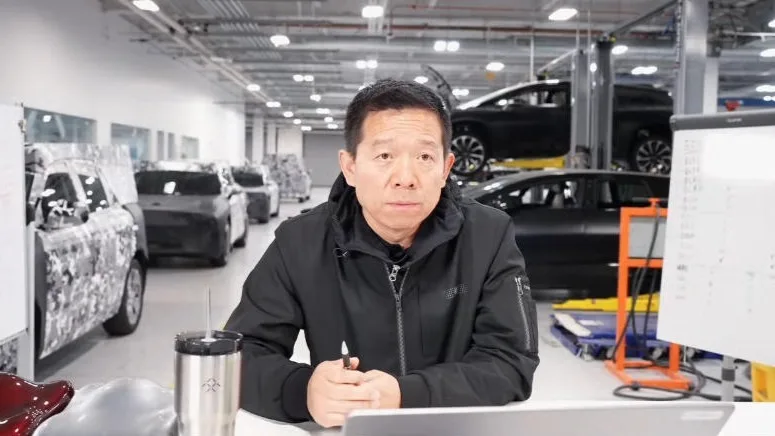
FF is currently under SEC review for early financial disclosure issues. The U.S. Securities and Exchange Commission has sent a warning letter to Jia Yueting and CEO Wang Jiawei, and may initiate enforcement procedures. While this round of investigation has not yet been concluded, FF has announced a high-profile cooperation with HabitTrade on Web3 and tokenized financing, which undoubtedly increases the compliance sensitivity of the entire project. (Details recommended: "Jia Yueting, who just raised 700 million yuan, is about to be "arrested" again?" (https://36kr.com/p/3388291020194176))
Although FF has not yet clearly launched any token or token sales plan, once it involves cashing out "pre-orders" and raising funds for US citizens in the future, it is possible to touch the SEC's regulatory red line for "unregistered securities issuance."
This is not marginal innovation, but an attempt to walk a tightrope as a listed company at the intersection of traditional and crypto finance.
What is the conclusion?
It may succeed in the short term, but it is due to speculation. It may go wrong in the medium term, but it is due to supervision. Whether it can succeed in the long term depends on the most heartbreaking question: Can FF deliver the car?
If not, then this financial innovation on the chain is ultimately just an old dream packaged with tokens.
Conclusion: Is this the future of RWA, or Jia Yueting's old path?
The end of financial innovation is not liquidity, but trust. Jia Yueting's FF is precisely the most contradictory existence on this road: he is extremely good at narrative, but always falls in the process of fulfillment; he always stands at the forefront of capital, but always has difficulty in supporting the delivery promise behind the forefront.
This time, he tried to use the name of RWA to revive a "faith relay" from Nasdaq to Web3: turn the future of mass production of automobiles into tokens; turn the money prepaid by users into circulating assets in the hands of investors; and put the high-risk, uncertain, and narrative-dependent business model on the shell of on-chain finance - continue to tell stories.
But RWA is not a refuge in the crypto world, it is a bridge of "off-chain assets + on-chain trust". Once the bridge is a steamy PPT on one side and the Token to be redeemed on the other side, the bridge will not go far and cannot bear the weight.
In the final analysis, this is not a victory for RWA or Web3, but another attempt by Jia Yueting in the art of "how to tell a future that can be monetized". He may succeed, allowing FFAI's stock price to rise for another round, giving himself a few more months of capital to survive; he may also fail, allowing the SEC to strike again, turning the interface between Web3 and TradFi into a new regulatory test field. But no matter what the result is, he has won the part he is best at: attention, traffic, and a group of believers who are willing to bet on him again.
For Jia Yueting, this is still the script he is most familiar with, just on a different stage.