
Author: Monchi | Editor: Monchi
1. Bitcoin Market
From May 31 to June 6, 2025, the specific trend of Bitcoin is as follows:
May 31: Bitcoin fell rapidly after opening, hitting a low of $103,867, and then rebounded to $104,900. After a round of decline to $103,220, the price showed an upward trend, with the intraday high rising to $104,802, showing a "V"-shaped repair trend overall.
June 1: The overall market trend remained volatile. Bitcoin rose slightly to $104,889 after opening, and then fell back to $103,992. It rebounded to $104,730 and then fell to $103,870. It rose in the late trading and finally closed at around $104,751.
June 2: Bitcoin maintained a volatile upward trend during the day, with prices breaking through $105,274, $105,820 and $105,876 in turn. Although there was a slight correction during the period, the overall trend was strong. However, near the close of the market, there was obvious selling pressure, and the price fell to an intraday low of $103,823 in a short period of time. It recovered slightly before the close, hovering around $104,350.
June 3: Market sentiment strengthened and Bitcoin started to rise, rising to an intraday high of $106,500, and then fell back to $104,954, but then it rose again, setting a new intraday high of $106,790, with strong bullish momentum.
June 4: The price trend entered the consolidation phase, with an overall downward trend. Bitcoin fell from $106,668 to around $105,360, with the amplitude gradually narrowing. After a slight increase, it briefly dropped to $104,365, then immediately recovered to $105,494 and closed at $105,485.
June 5: Bitcoin maintained an overall volatile trend that day, slowly falling from $105,000 after opening, hitting a low of $104,552, and then rebounded quickly, with prices fluctuating in a narrow range around $105,000. It briefly surged to $105,816 in late trading, but then turned to a downward trend and finally closed at $104,597 that day.
June 6: Bitcoin continued its downward trend of the previous day, and the intraday decline widened, quickly falling below the key support level of $103,000, and the lowest point was $100,501, hitting a staged low before stopping the decline and stabilizing. As of writing, the price of Bitcoin has slightly rebounded to $101,964, and the short-term trend is still weak, and the market's wait-and-see sentiment has intensified.
Summarize
This week, Bitcoin's trend rose first and then fell. It rose moderately in the early stage, fell under pressure in the later stage, and accelerated its decline in the late stage. On May 31, the price dropped to around $104,000. From May 31 to June 3, the trend showed a wide range of upward fluctuations, and reached a weekly high of $106,790 on June 3. From June 4 to 6, the market entered a correction and consolidation phase. The price center of gravity moved slightly downward, and the amplitude gradually converged. The overall fluctuation was around $105,000, indicating that the long and short sides were playing in a key range. On June 6, the price of Bitcoin fell sharply, with the lowest price dropping to $100,501, and the weekly gains were basically given up. The short-term trend weakened. Overall, the market has entered a stage of adjustment.
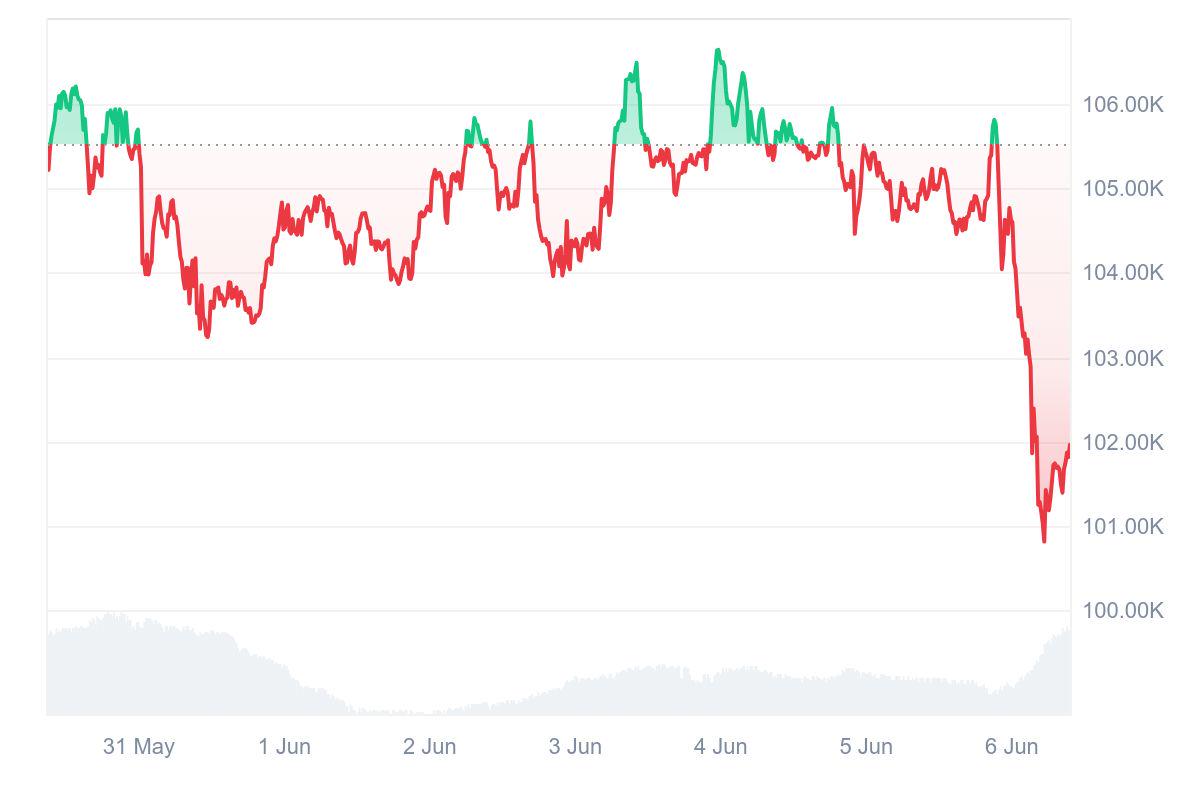
Bitcoin price trend (2025/05/31-2025/06/06)
2. Market dynamics and macro background
Fund Flows
1. The flow of funds from exchanges to platform reserves hit a record low, reflecting a signal of long-term holdings
According to Cointelegraph, the reserves of Bitcoin in centralized exchanges have dropped to an all-time low, indicating that a large amount of BTC is flowing out of exchanges. This trend reflects that large investors (including whales, institutions, and some countries) tend to transfer assets to cold wallets or non-custodial solutions for long-term holding (HODL). Structural capital outflows are generally regarded as medium- to long-term bullish signals, reflecting that the main funds remain optimistic about the future market trend. In addition, according to Onchain Lens data, more than $558 million of BTC was withdrawn from Binance in just 1 hour, further confirming the market's strong tendency to hoard coins for a long time.
2. Whale dynamics: institutional buying and chip rebalancing coexist
In the past week, the monthly holding growth rate of whale addresses has slowed to 28%, a significant decline from the previous high, indicating that whales are less willing to absorb funds at high levels. This phenomenon is usually seen as a precursor to a slowdown in short-term gains. However, some institutions have also made counter-trend arrangements. For example, Metaplanet, a Japanese listed company, continued to increase its holdings of Bitcoin during the market adjustment phase, and its total holdings have risen to a symbolic 8,888 BTC, showing its firm belief in the medium- and long-term trend. In addition, BlackRock transferred 5,362 BTC through Coinbase Prime, which was synchronized with the net redemption of more than US$500 million in two days from its iShares Bitcoin Trust (IBIT), indicating that it is actively rebalancing its asset portfolio.
3. Retail investors’ enthusiasm has declined: on-chain data shows that the market has not yet entered the frenzy stage
According to CryptoQuant analysis, in the past 30 days, small-scale fund activities with a transaction volume of less than $100,000 on the Bitcoin chain have fallen by about 2.45%, indicating that retail investor participation has not yet reached the stage of market frenzy. Although some small investors may participate in the market through ETFs or crypto financial platforms, the fund structure on the chain is still a key indicator of investor sentiment. Judging from the current data, the overall market sentiment is still in a rational range, structural frenzy has not yet appeared, and the market is more driven by institutions rather than emotions.
4. Risk of liquidity crunch rises: Sygnum Bank warns of potential trigger of "demand shock"
Sygnum Bank pointed out in its latest market report that the circulating supply of Bitcoin has decreased by about 30% in the past 18 months, resulting in a continued tightening of overall market liquidity. Analysts warn that as ETFs continue to accumulate and governments' interest in Bitcoin reserves increases, the market may face a "demand shock" situation, that is, the number of buyers far exceeds the available supply. In addition, the weakening of the US dollar and the instability of the US Treasury market have also increased the attractiveness of Bitcoin as a safe-haven asset. With the superposition of multiple factors, the price of Bitcoin may face a new round of upward fluctuations in the coming months.
5. Bitcoin ETF fund flows have seen short-term outflows
June 2: -$267.5 million
June 3: +$375.1 million
June 4: +$870 million
June 5: -$278.4 million
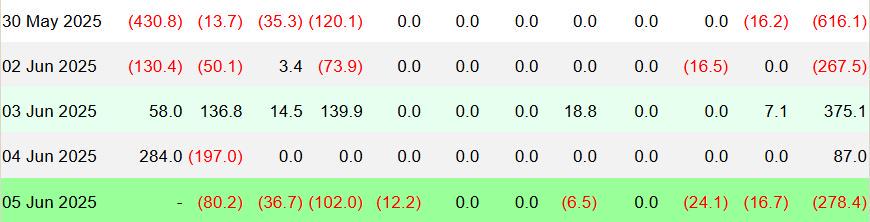
ETF Inflow/Outflow Data Image
From a monthly perspective, the US Bitcoin spot ETF still recorded a net inflow of US$5.2 billion in May 2025. The price of Bitcoin rose by about 11% during the same period, which was significantly stronger than traditional safe-haven assets. Among them, IBIT had a net inflow of US$5.9 billion in a single month, while Grayscale and ARKB recorded outflows of US$321 million and US$292 million respectively. The change in market sentiment was partly due to the large outflow of US$430 million from iShares Bitcoin Trust (IBIT) under BlackRock on May 30, ending its previous record of 34 consecutive trading days of net inflows. This event was regarded as a symbolic signal of the change in the attitude of funds in the ETF market. Despite this, the overall inflow scale of Bitcoin ETFs in May has exceeded the inflow of gold ETFs in the same period, indicating that Bitcoin is gradually consolidating its position in the global institutional asset allocation. Although short-term fluctuations still exist, the market still pays close attention to its medium- and long-term potential. Against the background of a sharp price correction at the end of this week, capital outflows have rapidly increased, reflecting the decline in the risk appetite of institutional funds and the rise in risk aversion. We need to be vigilant about the suppressive effect of the outflow trend on short-term price trends.
Technical indicator analysis
1. Relative Strength Index (RSI 14)
As of June 6, Bitcoin’s (BTC) 14-day relative strength index (RSI) was 35.361, according to Investing.com data.
The commonly used reference range of RSI is 0-100. It is generally believed that RSI above 70 indicates overbought, and below 30 is considered oversold. The current RSI value is close to the edge of 30, which is at a relatively low position, showing that the market has a certain oversold signal in the short term, indicating that the downward pressure is significant, but it may also be close to the edge of a technical rebound. If RSI continues to approach or fall below 30, it is necessary to pay attention to whether a staged bottom rebound opportunity is formed.
2. Moving Average (MA) Analysis
5-day moving average (MA5): $103,528.45
20-day moving average (MA20): $105,640.98
50-day moving average (MA20): $95,754.90
100-day moving average (MA100): $94,173.16
200-day moving average (MA200): $87,225.29
Current market price: $101,724.20

MA5, MA20, MA20, MA100, MA200 data pictures
In the short term, the current price of Bitcoin has clearly fallen below MA5 and MA20, indicating that the short-term trend is weak and the market lacks upward momentum. MA5 turned downward and showed signs of a death cross with MA20, which may further intensify the expectation of a short-term correction.
In the medium and long term, the price is still above MA50, MA100 and MA200, indicating that the medium-term trend still maintains an upward structure, but if the price continues to break below the 100,000 US dollar mark, it may trigger more technical selling pressure and seek support from MA50 or even MA100.
Overall, there are obvious signs of short-term pressure. Without an effective rebound, there is a risk that prices will continue to test the support below. However, the medium- and long-term trends have not been substantially damaged. We will pay attention to whether they can stabilize above $100,000 in the future.
3. Key support and resistance levels
Support level : The current short-term key support levels are located at two integer levels of $100,500 and $100,000. Among them, $100,000 is an important psychological support level. It is not only a key integer level on the technical side, but also an important anchor point for market sentiment. On June 6, Bitcoin fell to a low of $100,501 and then rebounded quickly, indicating that buying was active near this position, which initially verified its effectiveness as a short-term support. If this level is lost in the future, the support performance of the previous low of $98,500-$99,000 should be paid attention to below, and further support may be seen down to MA50 (about $95,754).
Resistance : The current short-term resistance is concentrated in the $102,000-$103,000 range. On June 6, the rebound was blocked, indicating that the selling pressure from above is still obvious. If the subsequent price can effectively break through and stabilize in this area, it is expected to further impact the $104,000-$105,000 line, which is the key medium-term resistance area. In addition, MA20 ($105,640) also constitutes dynamic suppression, which is one of the technical signals that the bulls have regained the dominant position.
Overall, Bitcoin is currently in a stage of shock adjustment between important support and resistance. The gains and losses of $100,000 will directly affect the future market trend. If this position is maintained, the market may build a staged bottom and brew a rebound; on the contrary, breaking it may trigger a new round of downward market. It is necessary to focus on whether the multi-period moving average support below is effective. If the resistance of $103,000 cannot be broken as soon as possible, the rebound is still a weak repair, and the market is prone to sideways consolidation.
Market sentiment analysis
1. Watch carefully when the highs fall back
This week, the overall market sentiment showed a trend of falling from highs and cautious wait-and-see attitude. As Bitcoin climbed slightly at the beginning of this week and broke through the $106,000 level, bullish enthusiasm once warmed up, but it failed to last. The sharp correction to $100,501 on June 6th significantly hit market confidence, short-term traders tended to be conservative, and wait-and-see sentiment gradually heated up.
2. Key Sentiment Indicators (Fear and Greed Index)
As an important tool to measure the sentiment of crypto investors, the Fear & Greed Index can effectively reflect the changes in the market's risk appetite. As of June 6, the index was at 46, at the lower edge of "neutral", indicating that market sentiment has clearly fallen from the previous optimistic area to a cautious level.
Looking back at this week (May 31-June 5), the daily values of the index were: 55, 56, 57, 58, 57, 55, 55. Overall, the index remained in a relatively optimistic range of 55-58 in the first six days of this week, indicating that the market risk appetite was acceptable. However, after the sharp drop in prices on June 6, the index dropped sharply to 46, and the market entered a clear risk aversion state. Compared with the average of last week (about 68), the overall sentiment showed a continuous weakening trend, suggesting that capital sentiment was cooling and the short-term selling pressure of major funds was increasing.
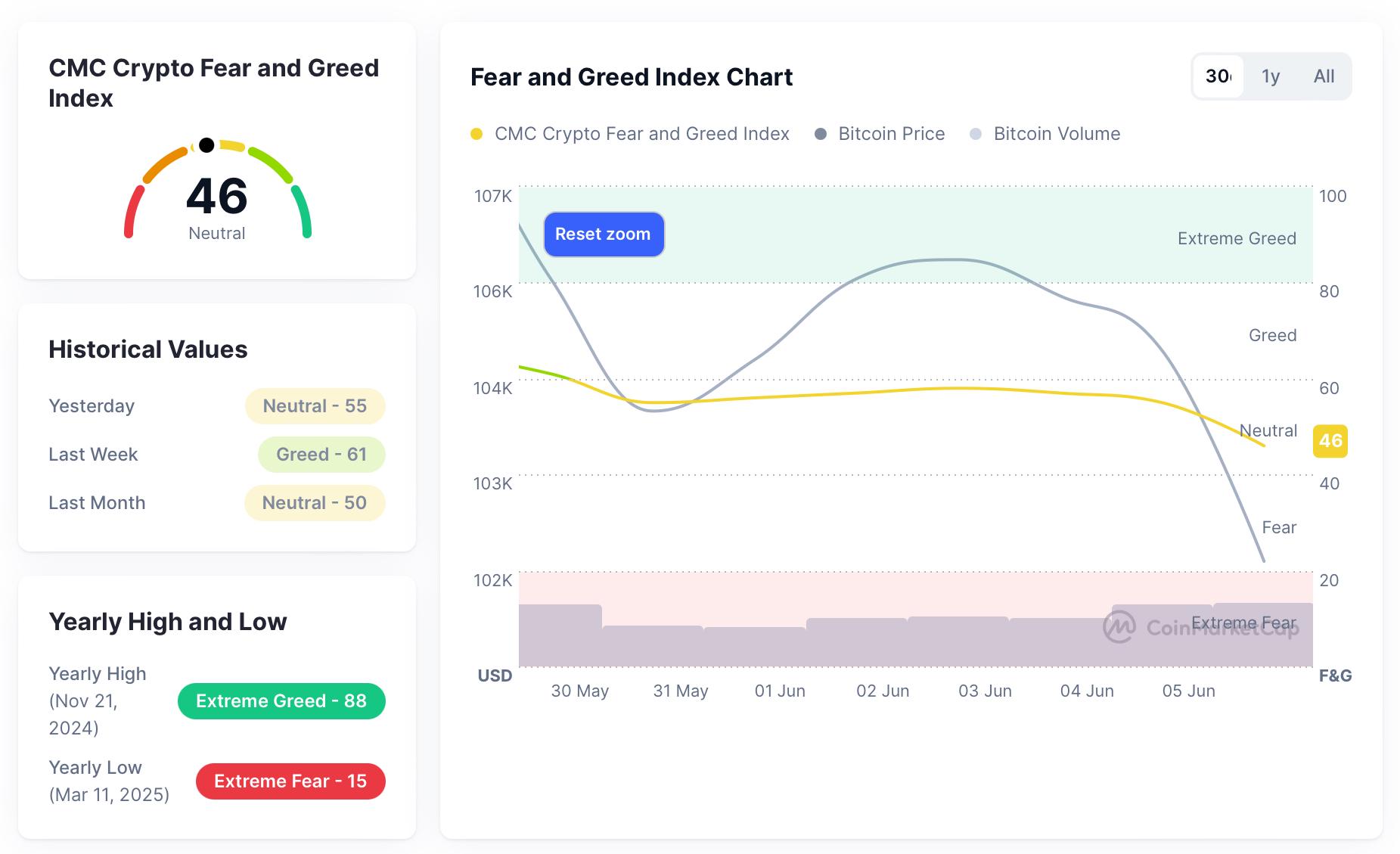
Fear and Greed Index Data Picture
Macroeconomic Background
US Policy and the Impact of the Trump Administration
The Trump administration has recently been open to cryptocurrencies, promoting a clear regulatory framework, encouraging institutions to enter the market, and boosting the rise of Bitcoin; at the same time, the "TRUMP" token it launched has sparked ethical controversy, and the market has reacted in a complex way. In addition, the U.S. court ruled on May 28 that its tariff policy exceeded the president's authority, which was interpreted by the market as limiting executive power and benefiting market liberalization, indirectly boosting investors' confidence in risky assets such as Bitcoin.
Stablecoin Legislation and Macroeconomic Data
The U.S. House of Representatives held a hearing on stablecoin legislation on June 4, aiming to provide a clearer regulatory framework for stablecoins. In addition, the U.S. Bureau of Labor Statistics is scheduled to release its monthly employment report on June 6, which may affect the Federal Reserve's interest rate decision and, in turn, affect the market sentiment of risky assets such as Bitcoin.
Politicians' dispute triggers market volatility
On June 5, Elon Musk and former President Donald Trump had a fierce exchange of views on social media platforms over topics such as trade policy, government intervention and technology control. As both of them are highly influential in the financial market and cryptocurrency, the dispute was interpreted by the market as a signal of increased potential political uncertainty, triggering short-term risk aversion by some investors and becoming one of the macro factors for the sharp correction of Bitcoin on June 6, highlighting the current market's sensitivity to policy and high-level public opinion risks.
3. Hash rate changes
Between May 31 and June 6, 2025, the Bitcoin network hash rate fluctuated as follows:
On May 31, the network hash rate rose sharply, rising continuously from 868.43 EH/s to a maximum of 1098.21 EH/s, and fell slightly at the end of the day, closing at 1080.74 EH/s, showing a trend of rapid accumulation of computing power in the short term. On June 1, the overall hash rate showed a downward trend, falling from a high to 968.91 EH/s, 862.76 EH/s, and 829.97 EH/s, but rebounded slightly to 862.69 EH/s before the end of the day, indicating that some computing power was back online after adjustment. On June 2, the hash rate experienced intraday fluctuations, first briefly rising to 934.67 EH/s, then quickly falling back to 786.03 EH/s, and finally stabilizing around 850 EH/s, reflecting the instability of computing power scheduling. On June 3, the hash rate rose rapidly again, reaching a high of 1034.89 EH/s, but then continued to fall, first dropping to 950 EH/s, and finally closing at 850.11 EH/s. The fluctuation was large, which may be related to the temporary shutdown or reconnection of some mining farms. On June 4, the hash rate was relatively low overall, rising slightly to 835.79 EH/s during the day, then slowly falling to a minimum of 743.47 EH/s, and finally rising to 832.02 EH/s. On June 5, the hash rate first rose to 841.49 EH/s, and then fell back to 773.23 EH/s, indicating that some computing power temporarily withdrew. However, the overall retracement was limited, and it had recovered to 841.27 EH/s at the end of the day, reflecting that the network operation is still relatively stable. On June 6, the hash rate continued to rise. As of the time of writing, it stabilized at around 865 EH/s, continuing the upward trend of the previous day.
Overall, from May 31 to June 3, the Bitcoin hash rate showed a wide range of fluctuations, reflecting the frequent dynamic adjustments of miners' computing power and the large fluctuations in network computing power. From June 4 to 6, the hash rate amplitude gradually narrowed and the fluctuation range decreased, indicating that the network computing power tended to stabilize. Overall, the current computing power level remains in a relatively high range. Short-term fluctuations remind the market to pay attention to the impact of miners' operating environment and cost changes on computing power, which may put some pressure on the short-term price trend of Bitcoin.
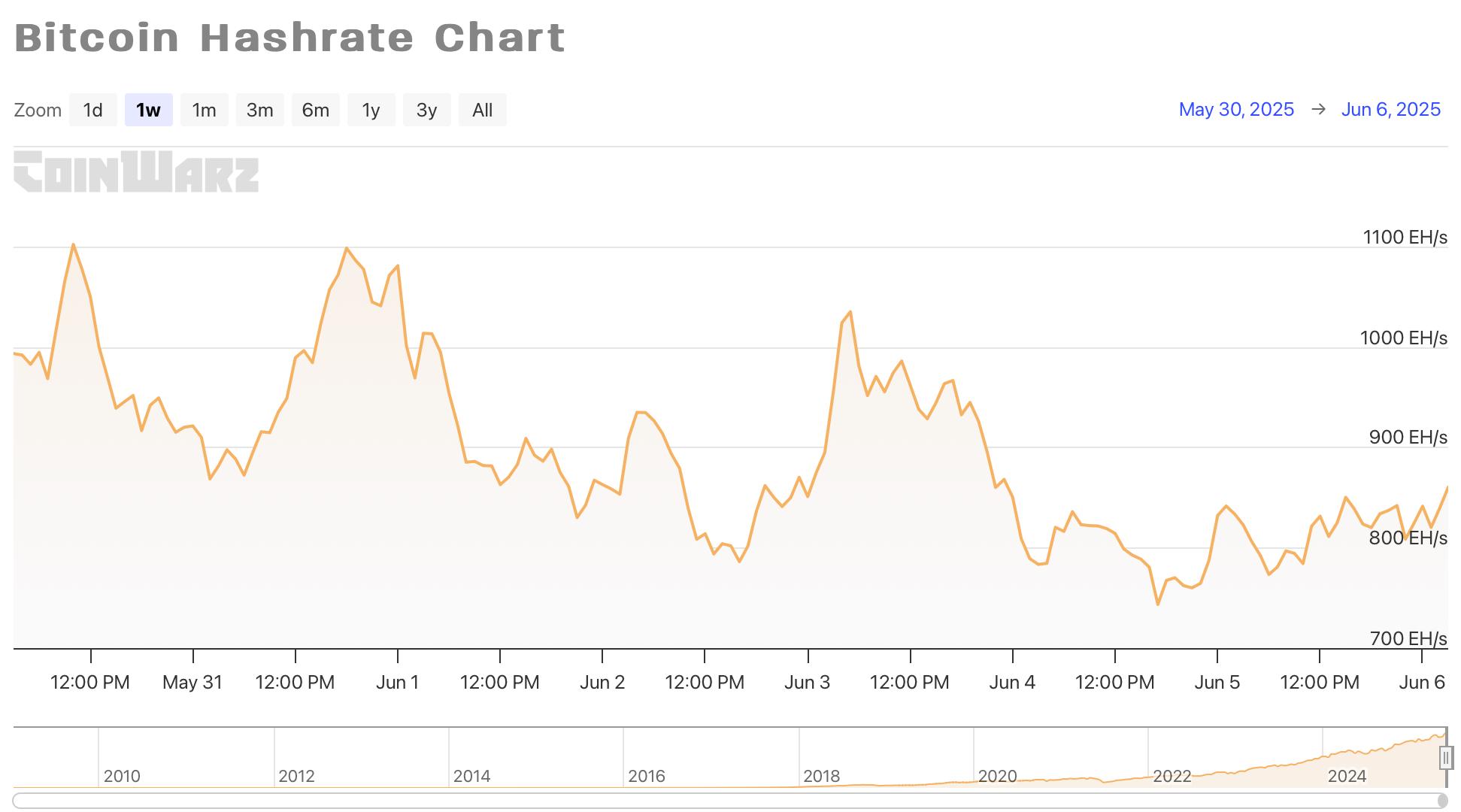
Bitcoin network hash rate data
4. Mining income
According to YCharts data, the total daily income of Bitcoin miners this week (including block rewards and transaction fees) is as follows: May 31: $52.78 million; June 1: $43.81 million; June 2: $44.02 million; June 3: $48.10 million; June 4: $41.91 million; June 5: $44 million. From the overall trend, the average daily total income of miners this week is roughly maintained in the range of $42 million to $53 million. Although there is a certain retracement, it remains in the historical mid-high range, indicating that the current network is supported by Bitcoin prices and the trading activity is still good, and the income of miners is still stable and sustainable.
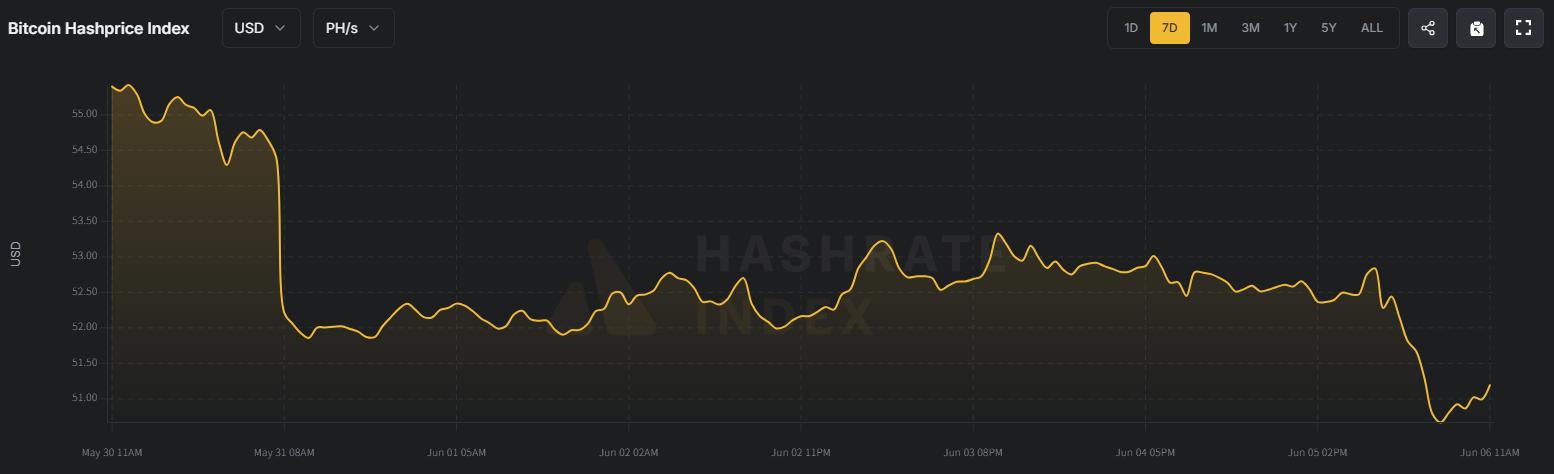
Over the past week, the unit computing power income (Hashprice) of the Bitcoin network has shown an overall downward trend. As of June 6, Hashprice reported $51.25/PH/s/day, which has fallen significantly from last week's high. Since the high of $57.12/PH/s/day on May 29, Hashprice has continued to pull back, and on May 31, it dropped significantly to $51.85/PH/s/day, and then fluctuated in a narrow range of $51-53/PH/s/day. On June 6, there was another slight decline, reaching a minimum of $50.66/PH/s/day. The current Hashprice is at a relatively low level on a monthly basis, but from a quarterly perspective, it is still in the upper-middle range, indicating that under the background of declining transaction fees and increasing computing power, the unit computing power income is under pressure, but the overall profit space has not been completely compressed. The subsequent trend of Hashprice will be mainly affected by the price of Bitcoin, on-chain transaction activity, changes in the fee structure, and the rhythm of network computing power and difficulty adjustment. In the short term, it is recommended to focus on changes in transaction volume and potential adjustments in mining farm power supply costs.
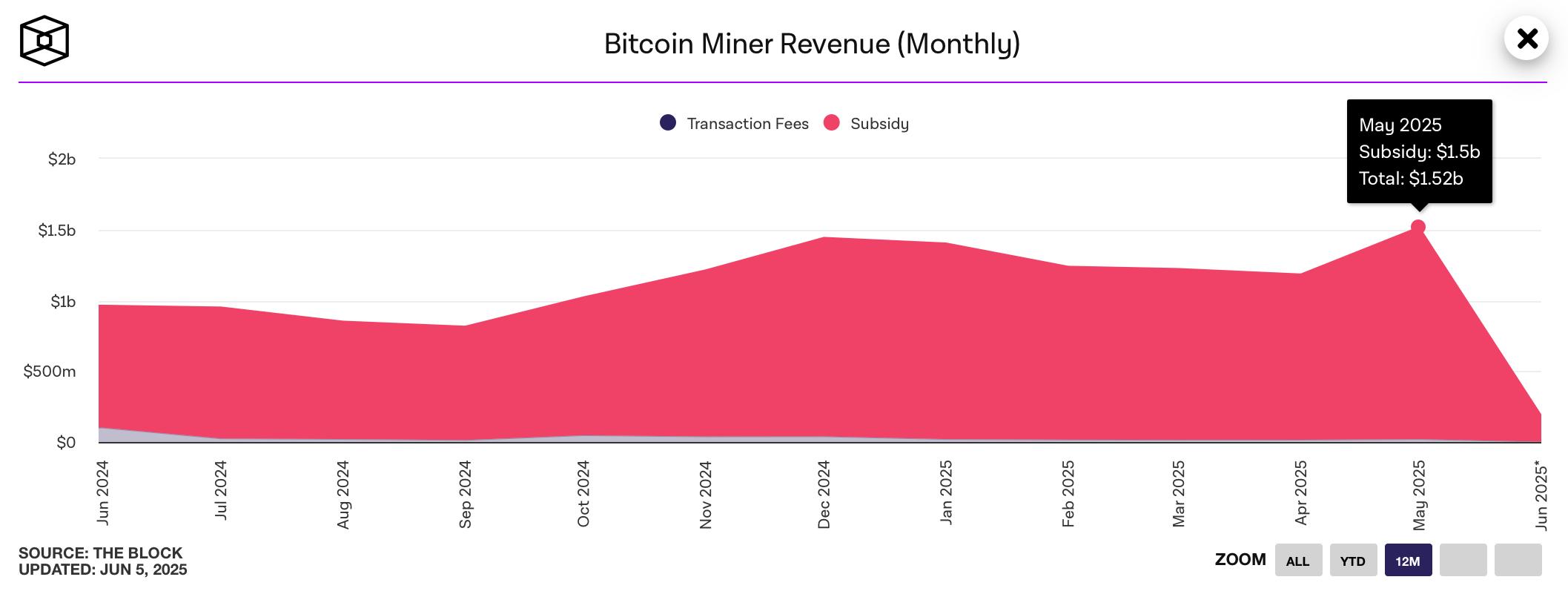
According to data from The Block, Bitcoin miners' total revenue in May 2025 reached $1.52 billion, up about 28.8% from $1.18 billion in April 2024. The main reason for the increase in revenue is that the price of Bitcoin continued to strengthen in May, driving miners to earn higher returns from block rewards and transaction fees. According to data from The Block, Bitcoin miners' total revenue in May 2025 reached $1.52 billion, up about 28.8% from $1.18 billion in April 2024, showing strong profitability in May. The growth was mainly driven by the upward trend of Bitcoin prices. At the same time, the increase in on-chain transaction volume and the increase in transactions with a high proportion of transaction fees also provided miners with additional sources of income. The inflow of funds driven by the ETF market and policy expectations have increased market trading activity, thereby further increasing the overall income level of miners. Although market sentiment has adjusted back in early June, from a monthly perspective, the mining industry is still in a profit cycle.
Hashprice data
Bitcoin miners monthly income data
5. Energy costs and mining efficiency
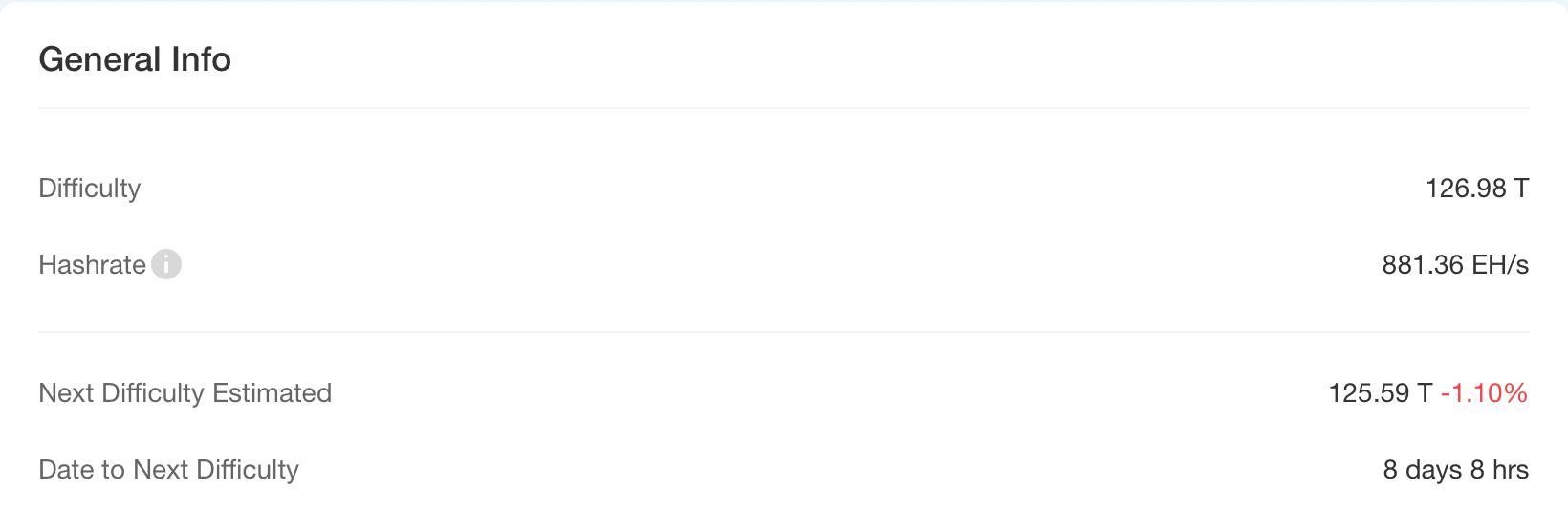
According to BTC.com data, the Bitcoin network has completed a new round of mining difficulty adjustment at 08:01:30 on May 31, 2025 (block height 899,136). This round of difficulty has increased by 4.38% to 126.98 T, setting a record high, further raising the output threshold for miners across the network. As of the time of writing on June 6, according to CloverPool real-time data, the Bitcoin network's computing power is 881.36 EH/s, still running at a high level. The next difficulty adjustment is expected to be around June 14, and the adjustment direction may turn downward, with an expected decrease of 1.10% to 125.59 T. This trend shows that some high-cost mines or small-scale miners have withdrawn or stopped in the near future, driving a structural contraction in computing power, which may be related to the compression of marginal profits caused by seasonal increases in electricity prices and fluctuations in Bitcoin prices.
From the perspective of mining costs, according to the latest model calculation results of MacroMicro, as of June 4, 2025, the unit production cost of Bitcoin is approximately US$97,902.76, while the spot price during the same period is US$104,731.98, and the corresponding mining cost-to-price ratio is 0.93. This ratio is in a healthy range, indicating that current Bitcoin mining activities still have considerable profit margins at the macro level. Although the network computing power remains high and the difficulty is at a historical peak, mainstream mining farms can still maintain positive cash flow with higher power efficiency and better energy consumption ratio.
Overall, Bitcoin mining is still in a profitable range. Although the network computing power and mining difficulty remain high and the unit computing power income is under pressure, the operation of mainstream mining farms remains stable, thanks to the high Bitcoin price and transaction fee support. As summer approaches, rising electricity prices in some areas may compress the profits of marginal miners, and high-energy-consuming old models are facing elimination pressure. The industry is accelerating the transformation to high-efficiency and low-consumption equipment. In the future, the profitability of miners will be affected by multiple factors such as electricity prices, difficulty adjustment rhythm and currency price fluctuations. It is necessary to continue to pay attention to changes in climate, energy policies and computing power deployment in major mining areas.
Bitcoin mining difficulty data
6. Policy and regulatory news
U.S. Senator Lummis: Financial security is national security, the United States should establish a strategic Bitcoin reserve
On June 4, U.S. Senator Cynthia Lummis said on social media that financial security is national security and the United States should establish a strategic Bitcoin reserve. She said that U.S. military leaders also support this proposition.
California State Assembly unanimously passes Bitcoin payments bill
On June 4, the California State Assembly passed a bill with 68 votes in favor and 0 votes against, allowing the state to receive payments in Bitcoin and digital currencies. The bill will be submitted to the Senate for deliberation.

Related images
7. Mining News
IMF expresses concern over Pakistan’s Bitcoin mining plans
On May 31, against the backdrop of energy shortages and budget negotiations, the International Monetary Fund questioned Pakistan's plan to allocate 2,000 megawatts of electricity for Bitcoin mining. The plan was announced last week and aims to attract autonomous miners, blockchain companies and artificial intelligence companies to Pakistan. The International Monetary Fund has asked the Pakistani Ministry of Finance to urgently clarify the legality of cryptocurrency mining and electricity allocation, especially in the context of the country's long-term energy shortages and financial pressures. It is reported that the Pakistani government did not seek the opinion of the International Monetary Fund before announcing this decision. In addition, the International Monetary Fund also expressed concerns about the potential impact of cryptocurrencies on Pakistan's electricity prices and resource allocation. It is expected that the two sides will arrange a separate meeting to discuss the Bitcoin power plan.

Related images
Bitcoin Miners Marathon Digital and Core Scientific Sued Over Crypto Patents
According to Cointelegraph on June 3, Malikie Innovations recently sued Bitcoin mining companies Marathon Digital and Core Scientific, accusing them of infringing their patents with the elliptic curve cryptography (ECC) technology they used. The company acquired 32,000 "non-core" patents from BlackBerry in 2023. The lawsuit stated that the defendant mining companies used patented technology held by Malikie in their Bitcoin mining operations.
Legal expert Aaron Brogan said that such lawsuits usually do not target individual Bitcoin users, but may have a significant financial impact on the defendant mining company, and if they lose the case, they may face six years of royalties. AMLBot legal director Niko Demchuk believes that if the patents involved have expired or only cover technology before the implementation of Bitcoin ECC, Malikie's claim may be difficult to establish. The outcome of this case will depend on the specific scope of the patent and the court's interpretation.
8. Bitcoin related news
Bitcoin holdings of global companies and countries (statistics for this week)
1. Trump Media Group: On May 30, Trump Media Group completed approximately US$2.44 billion in private equity financing, and planned to use approximately US$2.32 billion of it to establish Bitcoin reserves, becoming one of the companies with the largest Bitcoin holdings among U.S. listed companies.
2. U.S. Bitcoin spot ETF: On May 31, according to HODL15Capital data, U.S. Bitcoin spot ETFs hold a total of about 1.205 million BTC, with BlackRock IBIT ranking first with about 660,000 BTC, followed by Fidelity FBTC and Grayscale GBTC.
3. El Salvador: According to mempool data on June 1, El Salvador currently holds 6,194.18 bitcoins with a market value of approximately US$646 million, continuing to maintain its leading position in national bitcoin holdings.
4. DDC Enterprise: On June 1, cross-border consumer goods e-commerce group DDC Enterprise increased its holdings of 79 BTC, completing the first phase of its 100 bitcoin purchase plan, and plans to increase its holdings to 5,000 bitcoins in the next 36 months.
5. Jetking: On June 1, Jetking purchased about 6 new bitcoins, and currently holds 21 bitcoins, with a cumulative investment of about 1.59 million US dollars. The return on Bitcoin investment in 2025 will reach 31.05%.
6. Reitar Logtech: On June 2, Reitar Logtech, a US-listed company, announced a plan to acquire Bitcoin worth up to US$1.5 billion to enhance financial stability and promote the development of logistics technology.
7. The Blockchain Group: On June 3, the company spent 60.2 million euros to increase its holdings of 624 bitcoins, and its current total holdings increased to 1,471 bitcoins, continuing to expand its bitcoin reserves.
8. K33: On June 3, the listed company K33 purchased 10 bitcoins for 10 million Swedish kronor and included them in the company's balance sheet to further improve its digital asset allocation.
9. Bitmine: On June 5, it was reported that mining company Bitmine plans to raise US$18 million through IPO to purchase Bitcoin, and will be listed on NYSE American with the code "BMNR".
10. Strike: On June 5, Bitcoin payment application Strike announced that its balance sheet already holds 1,500 BTC, ranking among the top 25 companies in the world.
Metaplanet CEO: Volatility is not a bug in Bitcoin, but a signal and "fuel"
On June 1, Simon Gerovich, CEO of Metaplanet, a Japanese listed company that adopts the Bitcoin treasury strategy, posted on the X platform that volatility is not a bug in Bitcoin, but a signal, an energy, and a fuel. Volatility drives the flywheel of Bitcoin and accelerates the accumulation of Bitcoin. Most importantly, Bitcoin's volatility is attractive to capital.
Analyst: Bitcoin fundamentals remain bullish, long-term holders continue to increase holdings to form a buffer support
On June 1, CryptoQuant analyst Axel Adler Jr wrote that although the price of Bitcoin briefly pulled back to $103,000-104,000, the fundamentals remain bullish: trading platform reserves continue to decline, corporate purchases continue to put pressure on supply, and long-term holders continue to increase their holdings, forming a buffer below the market.
Meanwhile, the macro picture is showing mixed signals: slowing PCE inflation has relieved some of the Fed's policy pressure, but tariff uncertainty and rising yields have reinforced the risk-averse atmosphere, dampening the market's appetite for growth. The baseline scenario for next week is for Bitcoin prices to trade sideways between $103,000 and $110,000 until new catalysts emerge. If volume increases and momentum breaks through 20%, accompanied by a break above $110,000, it would confirm that the market is ready to test the $115,000–120,000 range. Conversely, if net inflows turn positive and prices fall below $100,000, it could signal a deeper correction.
Analysis: Bitcoin consolidates at $105,500, but market may be in the early stages of a new supercycle
On June 2, Bitcoin is currently trading at around $105,500, near a key support level, and market sentiment is cautious. Analysts pointed out that this level may be a watershed for short-term direction selection. If it falls below, it may test the support near $103,000. If it holds, it is expected to re-challenge $115,000. On the other hand, despite the high volatility of the market in the short term, analysts said that the long-term outlook remains optimistic. Rachael Lucas, a cryptocurrency analyst at BTC Markets, renewing that since the long-term upward trend has not been broken, it is expected that the $115,000 level may be re-challenged, and it may be in the early stages of a new super cycle.

Related images
As of May, the number of wallets holding more than 1,000 Bitcoins has climbed to 1,455
On June 3, it was reported that as of May 2025, the number of wallets holding more than 1,000 bitcoins has climbed to 1,455, indicating that whales have begun to hoard again.
Trump's eldest son: After losing access to banking services, the family is all in on Bitcoin and cryptocurrency
On June 3, Trump's eldest son, Donald Trump Jr, said in an interview with CNBC that after being unable to obtain banking services, his family chose to go All In on Bitcoin and cryptocurrency.
Bitcoin holdings in the U.S. completely crush gold: nearly 50 million people hold more than $11,000 per person
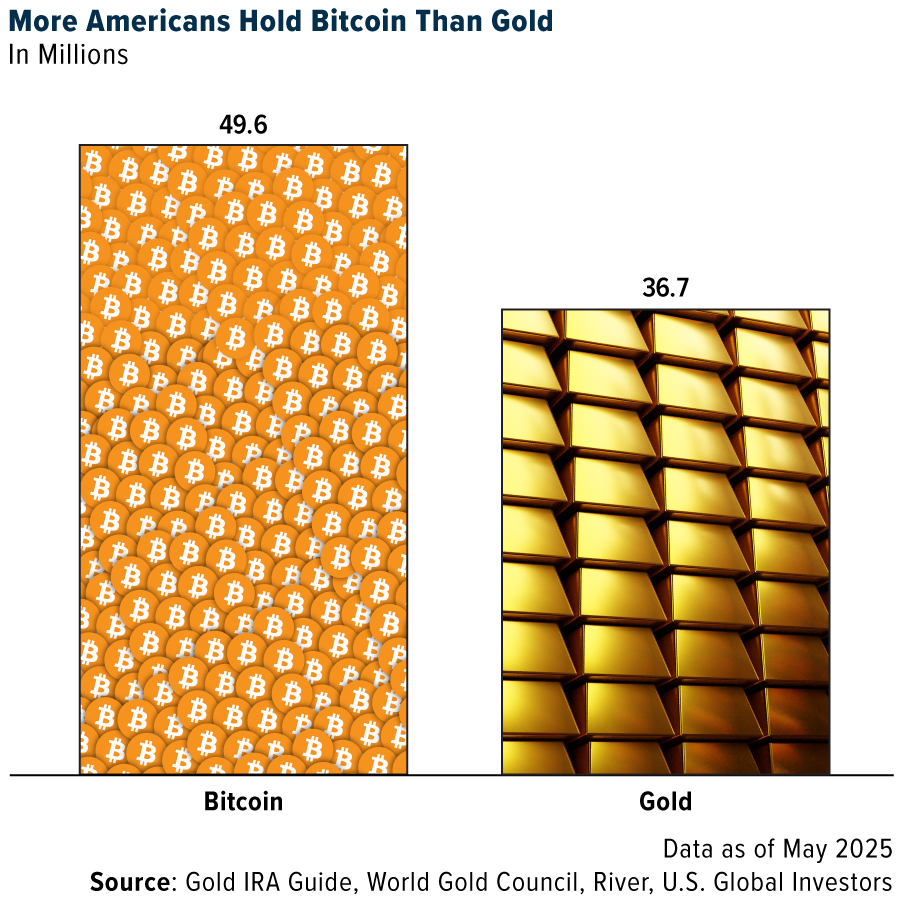
According to news on June 5, in 2025, the number of people holding Bitcoin in the United States and the amount of holdings will significantly exceed that of gold. Data shows that currently 49.6 million Americans hold Bitcoin, with an average holding amount of US$11,089 per person; while the number of people holding gold is only 36.7 million, with an average holding amount of only US$1,512 per person. Analysts believe that cryptocurrency has become a mainstream asset choice.
Related images