

Author | Route 2 FI
Compilation|Baidu Blockchain
Regardless of whether you are in the crypto market or not, as long as you pay a little attention, you always seem to be itching for those news about getting rich a hundred or a thousand times, and you can't help but put yourself in the picture and then go down to the table.
However, only after truly participating in it, will you discover that behind the few lucky ones who become rich overnight, the vast majority are just cannon fodder who are unknown or even suffer huge losses.
After years of working in the crypto market, I’ve learned these 18 lessons:
01. Don’t assume anyone will care about you
Even if you feel like you are part of the crypto Twitter community and that you belong to some big family, in reality, you are alone in this market. The cryptocurrency market is a "player vs. player" arena where everyone is pursuing their own interests.
No one will really consider you, all decisions and actions revolve around self-interest. Therefore, you need to be vigilant and rely on your own judgment instead of relying on the goodwill of others.
02. Information asymmetry on Twitter is extremely high
On social media platforms like Twitter, information asymmetry is very serious. Some influential people may have more insider information or market dynamics, while ordinary investors are often at a disadvantage. To make wise investment decisions in the cryptocurrency market, you need to know who is the real source of valuable information.
Follow the right people and you may get huge "alpha", but blindly follow the wrong people and you may lose everything. Learning to distinguish the reliability and motivation of information sources is the key to successful investment.
03. Trust your own judgment
When market sentiment is volatile, the advice of others is often unreliable.
- When the market is going up, and you ask someone what to buy now, they might say, "Buy when the market is high? Are you stupid?"
- When the market is down, if you ask people what to buy now, they will say, "It's all over, it's stupid to buy now."
These feedbacks often reflect the extremes of market sentiment rather than objective advice. Therefore, learn to trust your own analysis and judgment, and don't be swayed by the emotional comments of others.
04. Stay away from the echo chamber
On Twitter, it’s easy to get sucked into an echo chamber, where you only hear voices that agree with your own views. Rather than using social media to seek confirmation bias, use it to test and challenge your investment ideas.
For example, if you are considering investing in a popular token (such as "HYPE"), in addition to paying attention to the voices supporting it, you should also actively seek out opposing opinions. Perhaps you have overlooked some key risks or issues. Keep an open mind to make a more comprehensive decision.
05. Spend your time on valuable things
Instead of arguing with anonymous people online, spend your time on more productive things like:
- Read the project white paper to gain an in-depth understanding of the project's technology and business logic;
- Experiment with relevant applications on the chain and experience their functions and potential first-hand;
- Interact with the community on Telegram or Discord, ask questions, and get first-hand information;
- Record your investment ideas and write down your investment logic.
Thinking on paper can help you organize your thoughts more clearly. Writing down your investment thesis before investing can help you evaluate your decision more rationally and avoid emotional actions.
06. Don’t let other people’s gains shake your faith
Seeing others make a lot of money in a short period of time may cause you to have fear, doubt or fear of missing out on your long-term holdings. But you have to remember that the investment logic of long-term holdings is calculated in years, not weeks or days.
If your investment thesis still holds, hold on; but if the fundamentals of the market or project have changed, sell decisively. Never "fall in love with your position", it is crucial to remain flexible and rational.
07. Emotional management in trading
In trading, emotions are often your worst enemy. Here are some suggestions:
- If you get too excited about a position, consider selling it;
- If the price of an asset suddenly soars, sell it decisively.
The market cannot rise forever, and the key to long-term survival is to learn to lock in profits. Greed may make you miss the best time to exit.
08. Understand the sources of income from decentralized finance (DeFi)
In the DeFi platform, if you cannot clearly explain the source of income in two sentences, then you are likely the "source" of income. In other words, you may be providing liquidity or taking risks for others without realizing it. Before investing in a DeFi project, be sure to understand its economic model and risk points.
09. Narrative is everything
In the cryptocurrency market, narrative is the core force driving prices. The stories jointly constructed by market participants can greatly affect the value of assets. For example: (Dogecoin) once had a total market value of nearly $100 billion, which was entirely driven by narrative.
This reminds me of a saying: "Do you want to make money, or do you want to be proven right?" In the market, following the narrative is often more rewarding than being "right."
10. Don’t chase high prices
When you discover a new project and think "Wow, this is a great idea", but you procrastinate for weeks before investing, then when its price suddenly skyrocketed, don't chase it. Your best investment opportunity has been missed a few weeks ago. If you rush in now, you are likely to buy at the local high. Learn to accept the missed opportunity and wait patiently for the next one.
11. Emotions are temporary
When you start making money, you may feel extremely excited. This feeling is addictive and you will want to recreate this pleasure over and over again. However, overtrading or frequent position rotation often stems from chasing this feeling rather than rational investment decisions. Learn to control your emotions and stay calm to avoid unnecessary losses.
12. Understand market cycles and sector rotation
In a bull market, not all assets will rise at the same time. Usually, the market will have different stages, and certain sectors (such as DeFi, NFT, Layer 2, etc.) will perform in turn. Pay close attention to emerging narratives and trends, and lay out in advance instead of chasing the sectors that have already started. Plan your investment strategy well to gain an advantage in the market rotation.
13. It’s cheaper to make mistakes when you’re young
It is much cheaper to make mistakes in your 20s than in your 40s, and it is much easier to learn from losing $1,000 than from losing $100,000. The first time I tried leveraged trading, I lost thousands of dollars in a few minutes, but I learned a valuable lesson from that failure. Failure is part of growing up, but make sure the cost of failure is within your means.
14. Why most people can’t make money in the crypto market
Regular investors are often at a disadvantage in the cryptocurrency market for the following reasons:
- A YouTuber or influencer promotes a project on Twitter, and the price starts to rise.
- The token entered the CoinGecko top 100, attracting more attention;
- KOLs, VCs or early investors start selling on the rise;
- The project becomes “well-known” and ordinary investors start buying in;
- Retail buying pushes prices higher, but the gains are limited;
- KOLs, VCs, etc. sell all their holdings;
- The token price plummets (usually while you sleep) and you are forced to sell at a loss.
Understanding this pattern can help you avoid becoming a "bag holder".
15. Give yourself time
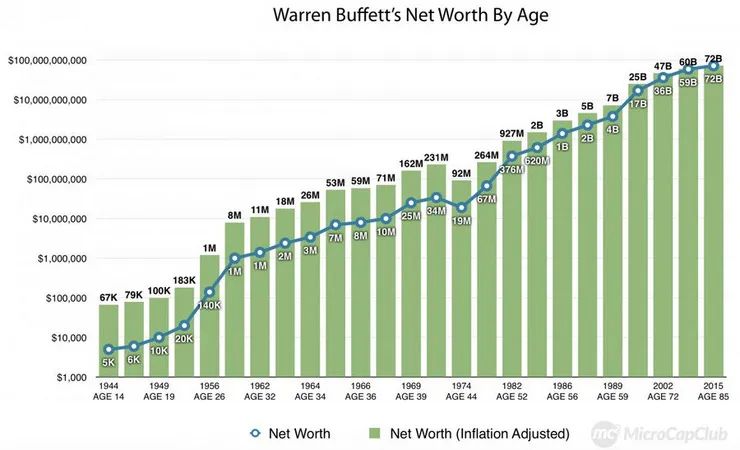
We all want to get rich quick, but success in the cryptocurrency market takes time. Slow and steady wins the race. Of Warren Buffett’s $84.5 billion fortune, $81.5 billion (over 96%) was accumulated after he turned 65. This is a reminder that patience and long-term persistence are the keys to wealth accumulation.
16. What you want is not retirement, but freedom
Many people think retirement is the goal, imagining themselves lying on a Caribbean beach on vacation. But retirement life can get boring after a week. The real goal is freedom - waking up every day to do what you want to do, creating value with interesting people, and having enough time to spend with family and friends. The cryptocurrency market may provide you with financial freedom, but don't forget to pursue more meaningful life goals.
17. The cost of working in cryptocurrency full-time
If you want to quit your stable 9-to-5 job and invest full-time in the cryptocurrency market, ask yourself if you are ready to be online 10 to 16 hours a day, 7 days a week, for several years. Even then, there is no guarantee of success. It takes a lot of self-discipline, patience, and mental toughness to invest full-time in the crypto market.
18. Reflection after success
When you "succeed" in the cryptocurrency market, you may find that this is not what you originally wanted. You have money, but you are still the same person. Money cannot solve all problems. If your only goal is money, you may feel empty or even depressed after success. Therefore, setting goals that are more important than money, such as personal growth, family happiness, or social contribution, can make your success more meaningful.