
Author: Monchi | Editor: Monchi
1. Bitcoin Market
From July 12 to July 18, 2025, the specific trend of Bitcoin is as follows:
July 12 : Bitcoin continued the weak consolidation pattern of the previous trading day, and it fell slightly to $116,738 during the session, then quickly stabilized and rebounded, and fluctuated sideways around $117,850. The intraday fluctuation range was limited, and the overall market trading sentiment tended to be cautious. The price fell slightly in the evening and closed at $117,138, maintaining a weak and volatile pattern.
July 13 : Bitcoin showed a mild upward trend overall. The price slowly climbed from the $117,500 level, reaching a high of $119,155 during the day. Although there was a pullback in the late trading, it remained in a high-level fluctuation range as a whole, and finally closed at $118,726, forming a small real positive line, reflecting the market's short-term bullish sentiment.
July 14 : After two days of sideways trading at high levels, Bitcoin achieved a strong breakthrough on the same day. Affected by the macro-tariff policy disturbance at the end of the day, there was a certain degree of profit-taking. The price rose step by step from $118,601, breaking through the key resistance level and reaching this week's high of $123,153. It then retreated to $121,460, stabilized briefly, and then experienced a round of deep adjustment, falling to a minimum of $119,399, indicating obvious selling pressure at high levels.
July 15 : The market entered a short-term technical correction phase. In the early trading, the bulls tried to attack $120,461 but failed. Then they fluctuated around $120,000 and then turned to a downward trend. Bitcoin continued to fall from $119,893, and the lowest point was $116,469. During this period, the bulls and bears fought fiercely. In the late trading, the bulls rebounded to $118,375 in the short term, but failed to stand firm. Then they fell back to $115,967 and finally closed at $116,377, forming a long upper shadow line, reflecting that the selling pressure from above is still heavy.
July 16 : Bitcoin showed an overall strong and volatile pattern, with the intraday fluctuation gradually shrinking. Continuing the rebound momentum of the previous trading day, the price rose slightly to $117,610 and then fell back, hitting a low of $116,447. Subsequently, the bulls gradually exerted their strength, and the price steadily rose to $118,127, $119,219 and $119,566, indicating that the market buying was gradually increasing.
July 17 : Bitcoin continued the volatile upward structure of the previous trading day, and once reached $119,994 in the early trading, but failed to stabilize. Then there was a technical correction, and the price fell back to $117,894. The bulls and bears fought repeatedly around the $118,000 area. After a brief rebound to $119,145, it fell again and hit the intraday low of $117,508. The overall trend showed a volatile bottoming in the correction. The buying power picked up in the evening, and the price started to rise, closing at $118,909 at the end of the trading, indicating that the bulls still maintained their intention to control the market, and the short-term trend was strong.
July 18 : Bitcoin continued the upward trend of the previous trading day, rising strongly to $120,825 in the morning, briefly breaking through the $120,000 mark. However, after failing to stabilize effectively, the price quickly fell back and entered a high consolidation range, correcting to around $119,500. As of writing, it is temporarily reported at $119,584, and the overall trend shows a high-level oscillation pattern. The market is still in the accumulation stage in the key resistance area, and the bulls are trying to brew a new round of upward breakthroughs. There is still a certain upward momentum in the short term, but it is necessary to pay attention to the coordination of volume and changes in macro-driving factors.
Summarize
This week, the overall trend of Bitcoin showed a rhythmic structure of "sideways accumulation of momentum - strong breakthrough - high-level adjustment - gradual climb". The structural rhythm was clear, and the technical and macro aspects resonated to interpret the bullish logic.
From July 12 to 13, Bitcoin maintained a narrow range above $117,000, with volatility shrinking, showing a typical sideways consolidation pattern, suggesting that bullish momentum is accumulating.
From July 14 to 15, the market ushered in a breakthrough. Bitcoin rose strongly under the stimulation of multiple factors, reaching a high of $123,153 this week, setting a new record high. The core factors driving this rise include: the continued strength of US stocks has enhanced the overall risk appetite of the market; Trump's policy pressure on the Federal Reserve has strengthened the market's expectations for future loose monetary policy; the passage of the "Big Beautiful Bill" to increase the fiscal deficit ceiling has triggered market expectations for liquidity release; the spot Bitcoin ETF continues to attract money, bringing new buying and structural capital inflows. However, after the rapid upward movement, the market showed obvious profit-taking behavior, and some shorts tried to take advantage of the rebound to short, causing prices to be under pressure from high levels. Combined with the new tariff policy disturbances at the macro level, it triggered short-term capital risk aversion and caused technical adjustments in prices. Although the adjustment is large, it is still a healthy restorative correction overall and has not destroyed the medium-term rising structure.
From July 16 to 18, Bitcoin re-entered the consolidation and climbing stage, and the price gradually stabilized above $118,000 and fluctuated upward. The price trend showed a slow upward pattern of "gradually raising the lows and repeatedly testing the highs", reflecting that the bulls are trying to build a new round of upward attack platform. The market is currently running at the lower edge of the key resistance range, and the bulls are in the stage of accumulating strength to break through. There is still room for upward expansion in the short term, but it is necessary to pay attention to the coordination of macro disturbance factors and volume follow-up.
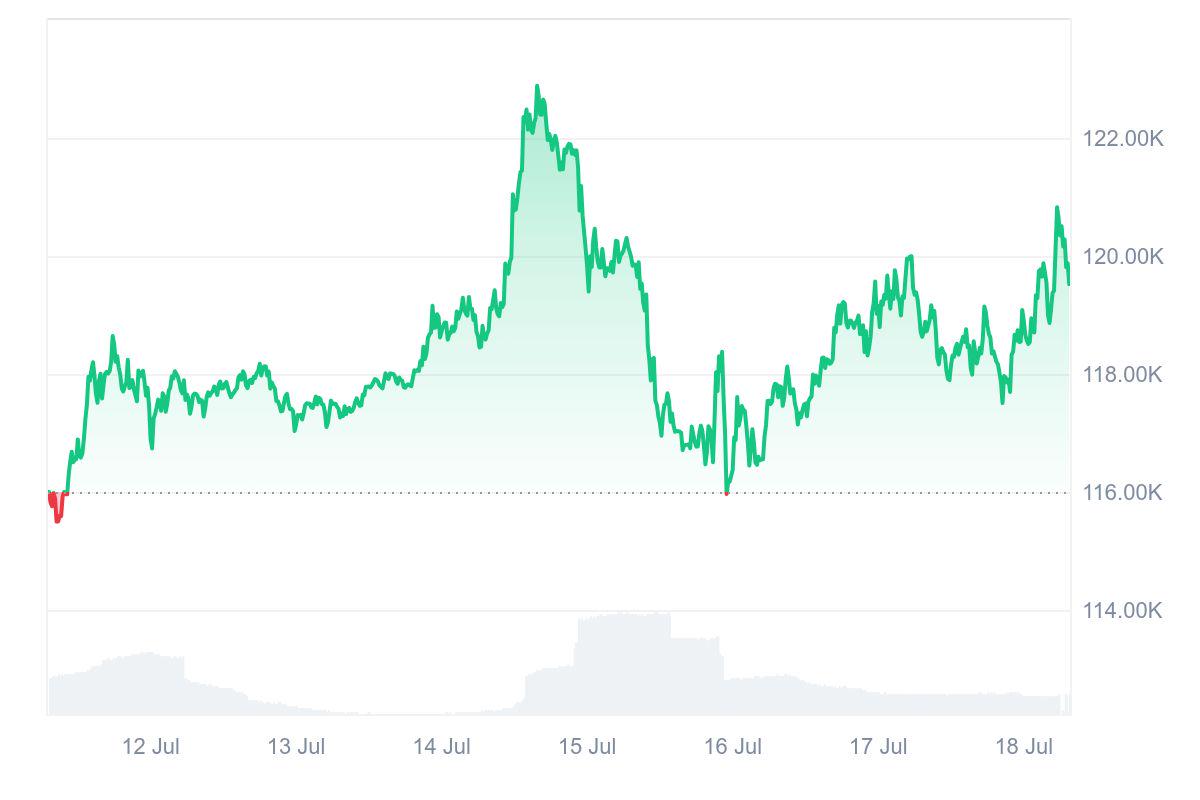
Bitcoin price trend (2025/07/12-2025/07/18)
2. Market dynamics and macro background
Fund Flows
1. Medium-sized institutions and high-net-worth individuals continue to increase their holdings of Bitcoin
According to data from July 13, wallets currently holding 100 to 1,000 BTC hold a total of about 4.76 million bitcoins, a significant increase from 3.9 million a year ago, with an annual growth rate of more than 20%. This shows that although retail investors have not yet entered the market in large numbers, medium-sized holders - including small institutions, funds and high-net-worth individuals - are continuing to increase their positions, providing stable support for the market.
2. Open interest exceeds $40.2 billion, and leveraged speculation heats up
As of July 14, the total amount of open Bitcoin contracts in the entire network reached US$40.2 billion, a record high in the past year. This data reflects a significant increase in market leverage activity, indicating the return of speculative funds and high market sentiment, but it also suggests an increase in short-term volatility risks.
3. Whale Fund Dynamics: Ancient Wallet Awakens, Over $5 Billion in Asset Restructuring
On-chain data shows that on July 14, an "ancient whale" that has held 80,000 BTC since 2010 transferred 10,000 BTC (market value of approximately US$1.17 billion) to a new wallet for the first time, which attracted widespread attention from the market. The next day (July 15), the whale transferred another 40,010 BTC (approximately US$4.69 billion) to Galaxy Digital's escrow address, with an average transfer price of US$117,391. At this time, the whale still retained about 40,000 BTC that had not been transferred. Finally, on July 17, the whale transferred all the remaining 40,192 BTC (approximately US$4.83 billion) to Galaxy Digital, achieving a complete migration of a total of 80,201 BTC (approximately US$9.6 billion).
None of the transfers flowed into the exchange, and there was no sign of selling. Analysts generally believe that this action is a structural reorganization of ancient assets or an institutional custody arrangement, which indicates that early Bitcoin holders are migrating towards a more professional and compliant direction. This is the largest and most far-reaching "ancient asset awakening" event on the chain since 2025, and it also further highlights the penetration trend of institutional participation among long-term holders of crypto assets.
4. Derivatives market: Bullish sentiment dominates, breaking through the critical range
According to a report by Bloomberg on July 15, although the rise of Bitcoin is still affected by the overall risk appetite of Wall Street, a large number of corporate buyers have entered the market in the current cycle, which is different from previous cycles. The bullish momentum of the futures market has not diminished, and the long demand in perpetual contracts continues to be higher than the short bets, indicating that the leveraged market is generally optimistic. However, analysts also warned that US political risks (such as Trump's re-mention of protectionism) may be a potential disturbance factor.
5. ETF funds continue to flow in
This week's daily ETF fund inflow/outflow details:
July 14: +$297.4 million
July 15: +$403.1 million
July 16: +$799.6 million
July 17: +$0.053 billion
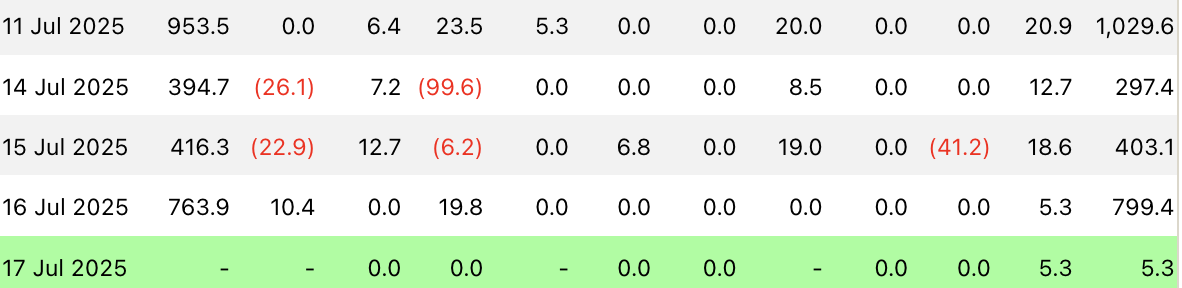
ETF Inflow/Outflow Data Image
ETF daily net inflow hits a new high: more than $1 billion for two consecutive days
As of July 12, the US Bitcoin spot ETF has achieved a daily net inflow of more than $1 billion for two consecutive days, the first time since the product was launched in January 2024. Nate Geraci, president of The ETF Store, pointed out that since its launch, the ETF's inflow has exceeded $1 billion in a single day only seven times, two of which were concentrated in the past two days. The last similar level of inflow occurred on January 17, at $1.07 billion. This phenomenon reflects that institutional funds are accelerating into the market and bullish sentiment has significantly increased.
Net inflows reached $2.72 billion last week, marking five consecutive weeks of positive growth
According to SoSoValue data, from July 7 to July 11, 2024 (Eastern Time), Bitcoin spot ETFs had a total net inflow of US$2.72 billion, recording net inflows for the fifth consecutive week.
BlackRock (IBIT) ranked first with US$1.76 billion, and its total historical net inflow reached US$54.4 billion.
Fidelity (FBTC) had a net inflow of US$400 million in a single week, and the historical cumulative inflow reached US$12.61 billion.
Grayscale (GBTC) continued to experience net outflows, with a single-week outflow of US$50.37 million, bringing the total historical net outflow to US$23.38 billion.
As of July 14, the total net asset value of all spot Bitcoin ETFs reached $150.6 billion, accounting for 6.43% of the total market value of Bitcoin. The historical cumulative net inflow reached $52.36 billion, showing that the systemic influence of ETFs in the global Bitcoin ecosystem is increasing.
BlackRock's financial report disclosed: IBIT quarterly inflow surged 366%
On July 15, BlackRock released its second quarter 2024 financial report, revealing that its IBIT received inflows of US$14 billion this quarter, a 366% surge from US$3 billion in the previous quarter.
In addition, digital asset products accounted for 16.5% of its total ETF inflows ($85 billion), a significant increase from less than 3% in the first quarter, indicating that digital assets have become one of the core growth engines.
During the same period, IBIT contributed $40 million in basic fee income, accounting for 1% of BlackRock's long-term income, an increase of 18% year-on-year. Although total capital inflows fell 19% month-on-month (from $84 billion to $68 billion), crypto products expanded against the trend, highlighting their strategic position in institutional asset allocation.
Technical indicator analysis
1. Relative Strength Index (RSI 14)
According to Investing.com data, as of July 18, 2025, Bitcoin's 14-day relative strength index (RSI) was 51.676, which is in the neutral range (usually defined as 30–70), showing that the current market is in a state of long-short equilibrium and lacks obvious overbought or oversold signals.
RSI is near 50, which means that the short-term market is in a stage of consolidation or waiting for a breakthrough. It is worth noting that although RSI has not shown extreme readings, its gradual upward trend may indicate that bullish momentum is accumulating. If RSI rises further and breaks through the 60-65 range, it will release a clear upward momentum signal; on the contrary, if it falls below 45, we need to be alert to the risk of short-term correction.
Currently, the RSI has not shown any overheating signals, and the overall technical outlook is still neutral and slightly bullish. It is necessary to combine price behavior and trading volume to further determine the direction choice.
2. Moving Average (MA) Analysis
5-day moving average (MA5): $119,119
20-day moving average (MA20): $111,564
50-day moving average (MA20): $108,731
100-day moving average (MA100): $98,722
Current market price: $119,751

MA5, MA20, MA50, MA100 data pictures
From the perspective of short-term and medium-term moving averages, the current price of Bitcoin has significantly stabilized above MA5, MA20 and MA50, and is in the upward trend of MA5 and MA20 golden cross, indicating that short-term bulls are dominant and the market is in an upward channel. In the medium and long term, MA100 continues to rise, and the long-term trend is healthy, reflecting the structural bullish trend of funds.
In addition, the gap between MA5 and MA20 continues to widen, indicating that the momentum of the upward trend has not been broken. If the price can continue to run above MA5 and maintain the long position of the moving average, it will support further upward movement.
The bullish structure is clear, but we need to be wary of excessive pressure from short-term deviations. If the price retraces MA20 without breaking, the effectiveness of the trend will be further strengthened.
3. Moving Average Convergence Divergence (MACD) Analysis
According to Investing.com data, as of July 18, the MACD fast line was 274.71, maintaining a large positive difference with the slow line. The DIF line and the DEA line continued to be in a golden cross state, and the histogram maintained a positive and large-volume trend, indicating that the medium-term upward momentum continued.
The MACD indicator currently releases a relatively clear "Buy" signal, indicating that the current trend is still strong. Especially since the end of June, MACD has repeatedly formed a golden cross with large volume, accompanied by prices breaking through multiple key resistance levels, further verifying the establishment of a bull-dominated pattern.
4. Key support and resistance levels
Support level : The current short-term key support levels for Bitcoin are $117,000, $116,000, and $118,000. From July 12 to 13, the price of BTC fell back to around $117,000 twice, both times receiving significant support and stopping the decline. On July 16, during the rapid correction, the price quickly stabilized after touching the $116,000 level, indicating that this range has strong support. On July 17, the price fell back after failing to break through $120,000, but the overall retracement was limited, and it received significant support in the $118,000 to $116,000 range, indicating that the buying power at the $118,000 level is strong and has a high willingness to take over.
Resistance : The main resistance level facing Bitcoin in the short term is $120,000, and the important pressure level above it is $130,000. From July 16 to 17, the price of Bitcoin built a short-term upward channel, but encountered obvious suppression when it went up to around $120,000 and failed to break through effectively, indicating that this level is an important challenge area for short-term bulls. Looking up, $130,000 is the next target level that the market generally pays attention to. On July 14, Bitcoin once broke through $123,000, setting a new historical high. Subsequently, market divergence intensified, and some investors were cautious about chasing highs near $130,000, believing that there were greater resistance and callback risks in this area.
On the whole, Bitcoin successfully broke through its previous high this week, setting a new all-time high of $123,000, reflecting that bullish sentiment is still dominant. In the short term, we need to focus on the price trend around $119,000.
Next, investors need to focus on two key points: first, whether Bitcoin can consolidate above $119,000 to accumulate momentum for subsequent upward attacks; second, whether the bulls have the momentum to effectively break through the $120,000 resistance level and open up further upward space. If this resistance zone is successfully broken, the medium- and short-term target is expected to rise to $130,000, or even challenge higher levels.
However, we should also be alert to the volatility risk caused by overheated market sentiment. $130,000 is a new psychological barrier above the previous high. Some funds may choose to reduce their positions and leave the market at this level, which will bring about periodic adjustment pressure. Therefore, we should remain flexible in our operation strategy, avoid blindly chasing high prices, pay attention to the coordination of volume and price and the main force behavior signals, so as to improve our ability to cope with fluctuations.
Market sentiment analysis
1. Emotional profile
This week, the overall sentiment of the Bitcoin market showed a dynamic evolution of "wait-and-see - warming up - optimism". As prices released momentum in high-level fluctuations, the market's expectations for short-term trends underwent a phased adjustment.
From July 12 to 13, the market as a whole was in a wait-and-see state. Technically, the price has been consolidating at a high level for several days, but bullish momentum is still accumulating. By July 14, the price of Bitcoin broke through the local high and hit a record high, market sentiment quickly heated up, and FOMO (fear of missing out) emotions emerged. However, affected by macroeconomic policies, the market released panic in the short term, causing prices to pull back quickly, starting a healthy technical correction. During this period, the sentiment fell from the high point, but did not turn pessimistic. On July 16, the market returned to the upward channel, and a new round of high and low point lifting trend was formed in the technical form, and investor sentiment turned optimistic. By July 17, the price had a slight correction, but it was a short-term technical adjustment, and market sentiment did not weaken significantly. Investors generally believed that the correction was to accumulate power for subsequent increases. The overall sentiment remained in a relatively optimistic range, and short-term risk appetite remained stable. On July 18, after a strong rise to around US$121,000, the price had a technical correction. Market sentiment remained positive. Investors generally believed that the rally was not over yet, sentiment continued to be in the "greed" range, and risk appetite remained at a relatively high level.
Overall, this week, Bitcoin prices successfully broke through and reached the historical high area. Even after a mid-term correction, market sentiment remained optimistic and positive. Indicators such as the number of active addresses on the chain and the long-term holders' open interest (LTH SOPR) all show that investors are confident and there is no large-scale selling pressure in the market. In the medium and long term, investors' expectations are still bullish, especially against the backdrop of increasing macro uncertainty and the increasing role of Bitcoin as a value storage asset. Sentiment supports continued consolidation and potential breakthroughs in prices at high levels.
2. Key Sentiment Indicators (Fear and Greed Index)
As of July 18, the Fear & Greed Index was temporarily reported at 71, which is in the "Greed" range, reflecting that the overall market sentiment is positive and optimistic, and investors' risk appetite is still high. This level shows that although prices have experienced a certain degree of correction, market confidence remains strong and there is no panic spread in the short term.
Looking back at this week (July 12-July 17), the daily values of the index were: 69 (greed), 68 (greed), 70 (greed), 70 (greed), 70 (greed), 68 (greed). From the trend point of view, the index has been stable in the "68-70" range in the first six trading days of this week, maintaining a clear "greed" level, reflecting that market sentiment continues to be high, the volatility is limited, and investors have shown a high tolerance and confidence in short-term adjustments. Especially from July 14 to 16, the index reported 70 for three consecutive days, which was synchronized with the Bitcoin price hitting a new historical high, showing a positive feedback between the sentiment and price behavior. Although the market experienced some technical adjustments on July 17, the sentiment index still ran steadily in the "greed" range, indicating that the overall confidence of market participants has not been shaken. On-chain data shows that long-term coin holders (LTH) have not shown obvious signs of loosening their chips, and the net inflow of exchanges has also remained low, indicating that the market is receptive to short-term price fluctuations and has strong resilience and stability at the sentiment level.
Overall, the Fear and Greed Index is running at a stable high level, reflecting that investor sentiment remains resilient during the high-level shock period. Although prices fluctuate in the short term, sentiment has not yet entered the overheated or panic range, providing support for the market to continue its strong performance.
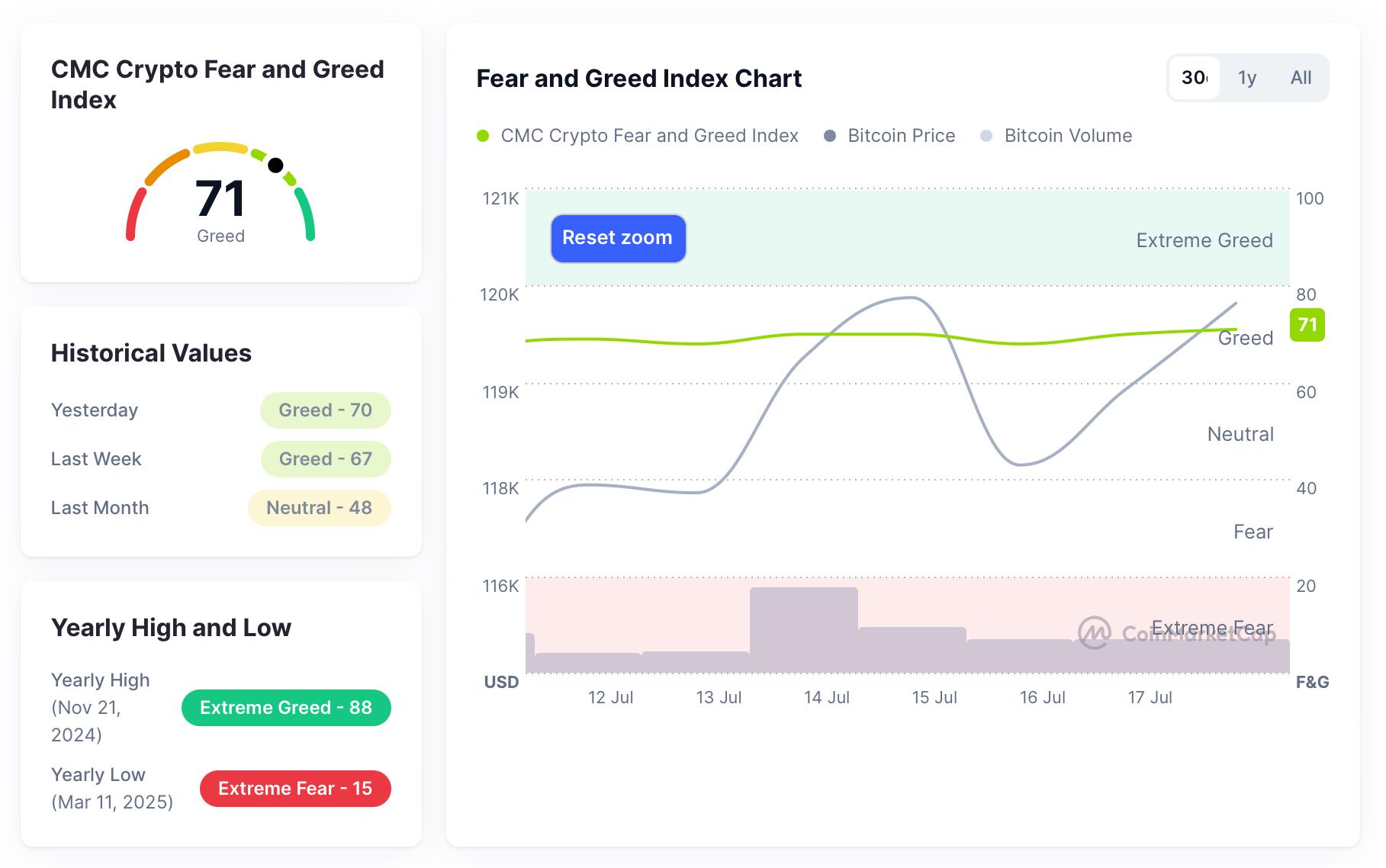
Fear and Greed Index Data Picture
Macroeconomic Background
1. Trump continues to put pressure on the Federal Reserve, calling for interest rate cuts to reduce debt costs
On July 16, former President Trump publicly called on the Federal Reserve to lower interest rates to 1% to reduce the federal government's debt costs and support its expansionary fiscal spending and tax cut plans. He also said that he might consider firing Federal Reserve Chairman Powell because he was dissatisfied with his "slow rate cuts." However, Trump later clarified that it was "highly unlikely" to do so unless fraud was involved. At the same time, CEOs of several large banks such as Goldman Sachs and JPMorgan Chase publicly defended the independence of the Federal Reserve and warned that political interference could disrupt the stability of financial markets.
2. The fiscal deficit and debt ceiling bills were passed by Congress, boosting expectations of easing
Congress passed the fiscal deficit and debt ceiling bill known as the "Big Beautiful Bill," which allows for larger fiscal deficit financing. Trump expressed support for the bill and used this legislative achievement as a reason to push interest rates lower. This "debt + easing" double-positive expectation indirectly enhanced the upward momentum of the crypto asset market.
3. Fed officials maintain a neutral attitude towards inflation and are not in a hurry to cut interest rates
John Williams, president of the New York Fed, said on July 17 that due to the impact of trade tariffs, inflation is expected to rise to the 3% to 3.5% range in 2025, and the current interest rate level of 4.25% to 4.5% is "completely appropriate" and not the time to cut interest rates. He pointed out that tariffs are expected to increase inflation by about 1 percentage point from the second half of 2025 to early 2026.
Boston Fed President Susan Collins said on July 15 that rising prices for imported goods pushed core inflation up to about 3%. She stressed the need to maintain policy patience, adopt an "active but not hasty" attitude, and continue to observe economic data to decide on the next policy.
4. “Crypto Week” legislation promotes the clarification of stablecoin regulation
In mid-July, the U.S. House of Representatives launched “Crypto Week”, focusing on reviewing a number of encryption-related legislation:
The GENIUS Act (Establishing a Regulatory Framework for Stablecoins) allows qualified non-bank institutions to issue USD stablecoins, and specifies that the Federal Reserve or the Office of the Comptroller of the Currency (OCC) is the primary regulator. The bill was passed by the House of Representatives on July 15, with support from some bipartisan Democratic members, and is now entering the Senate review stage. The industry sees it as the biggest positive for stablecoin regulation, and well-known companies such as Coinbase and Circle publicly support it.
The Clarity Act, which further clarifies the legal status of stablecoins, requires issuers to conduct transparent reserve audits, and establishes a unified federal and state regulatory interface, is currently under in-depth review by the Financial Services Committee.
The Anti-CBDC Surveillance State Act was proposed by Republican Congressman Emmer to prevent the Federal Reserve from issuing CBDC directly to the public. The bill has been passed by the House Financial Services Committee and is preparing for a full vote. This bill is obviously politically controversial, with strong support from the Republicans and partial opposition from the Democrats. Trump publicly supports the bill, emphasizing that "digital dollars will never be allowed to become a government surveillance tool."
The above legislative progress has greatly increased market expectations for clear regulation of stablecoins and digital assets, pushing the price of Bitcoin from approximately $118,000 to over $120,000, and subsequently hitting a high of $123,153.
5. Global trade tensions and escalating tariff frictions between the US and Europe
On July 17, the Financial Times reported that US President Trump announced that a 30% tariff would be imposed on EU imports from August 1, which triggered a rapid counterattack from the EU. The EU is preparing to impose retaliatory tariffs on the US service industry and plans to impose tariffs of up to 72 billion euros on US goods. The escalation of the US-EU trade friction has greatly increased the uncertainty of the global market, intensified investors' risk aversion demand, and promoted the popularity of safe-haven assets including Bitcoin.
6. The volatility of the US dollar index and the divergence of stock market performance affect market risk appetite
On July 16, the U.S. dollar index (DXY) fell slightly and closed at around 98.50. A weaker dollar usually increases the attractiveness of Bitcoin and other digital assets denominated in dollars because it reduces the cost of holding. At the same time, as of July 17, the performance of major U.S. stock indexes was differentiated, with the Dow Jones Industrial Average up 0.53%, the S&P 500 up 0.32%, and the Nasdaq Composite up 0.26%. The divergence of stock market sentiment reflects that investors remain cautious about macroeconomic and policy uncertainties, further pushing up the safe-haven demand for alternative assets such as Bitcoin.
3. Hash rate changes
Between July 12 and July 18, 2025, the Bitcoin network hash rate fluctuated as follows:
On July 12, the hash rate of the entire network showed a trend of "rising first and then falling", rising continuously from 927.90 EH/s during the day, reaching a maximum of 1.0004 ZH/s, and then falling back quickly, reaching a minimum of 851.08 EH/s, and rebounding slightly to 878.31 EH/s at the end of the day. On July 13, the hash rate fell back in the morning, reaching a minimum of 790.96 EH/s, and then fluctuated upward to an intraday high of 954.06 EH/s, and fell back to 830.74 EH/s in the evening, showing a strong intraday volatility feature. On July 14, the overall hash rate showed a trend of first decline and then rise. It gradually rose from a low level to 933.20 EH/s in the morning, fell back to 832.80 EH/s in the afternoon, and then rose again to a high of 967.39 EH/s. At the end of the day, it fell slightly to 946.55 EH/s.
On July 15, the hash rate of the entire network rose sharply, soaring from 961.71 EH/s to a staged high of 1.1946 ZH/s during the day, and then the hash rate retreated sharply, finally closing at 957.77 EH/s, showing a callback after a short-term concentrated release of hash rate. On July 16, continuing the adjustment trend of the previous day, the hash rate continued to fall, falling to a minimum of 860.42 EH/s, initially showing signs of redeployment of hash rate or withdrawal of some miners. It then rose briefly to 941.38 EH/s, and fell back to 814.25 EH/s at the end of the day, indicating that the network is still in a volatile reconstruction stage. On July 17, the hash rate continued to run at a low level and tended to stabilize. It gradually rose from 775.78 EH/s during the day, rising to a maximum of 887.38 EH/s, and the hash rate resumed a stable rhythm, which may indicate that some hash rates have completed migration and reconnected to the network.
This week, the overall hash rate of the Bitcoin network remained in a relatively low range, indicating that the network is still in a period of computing power adjustment: from July 12 to 14, the hash rate fluctuated mainly in the range of 800 EH/s to 1 ZH/s, with frequent intraday fluctuations, reflecting that the network is active but unstable in the short term. On July 15, the hash rate quickly rose to 1.1946 ZH/s, setting a recent high, and then quickly retreated to the 900 EH/s level, and the high computing power was difficult to sustain. From July 16 to 17, the hash rate fluctuations converged and remained in the range of 800 EH/s to 900 EH/s. No clear upward trend has been formed in the short term, and it is expected that future network deployment and changes in the macro environment will still need to be observed.
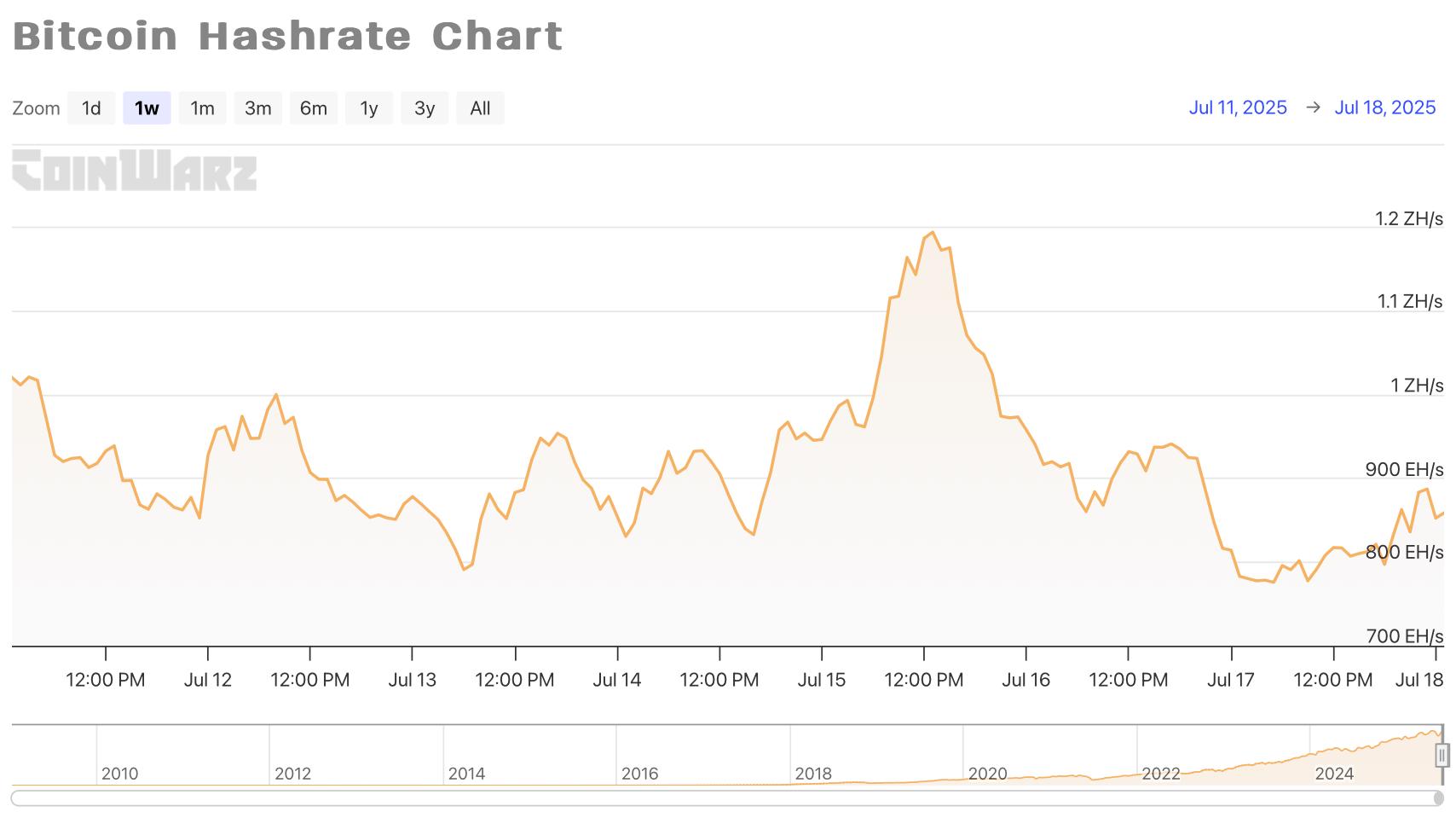
Bitcoin network hash rate data
4. Mining income
According to YCharts data, the total daily income of Bitcoin miners this week (including block rewards and transaction fees) is as follows: July 12: $56.61 million; July 13: $53.26 million; July 14: $56.96 million; July 15: $62.99 million; July 16: $49.06 million. Overall, the average daily income of miners this week has stabilized in the range of about $49 million to $62 million, performing relatively smoothly and showing a slowly upward trend. Among them, the intra-week peak of $62.99 million was recorded on July 15, setting a new high in recent weeks, indicating that the income environment of miners is gradually rising under the support of the macro economy.
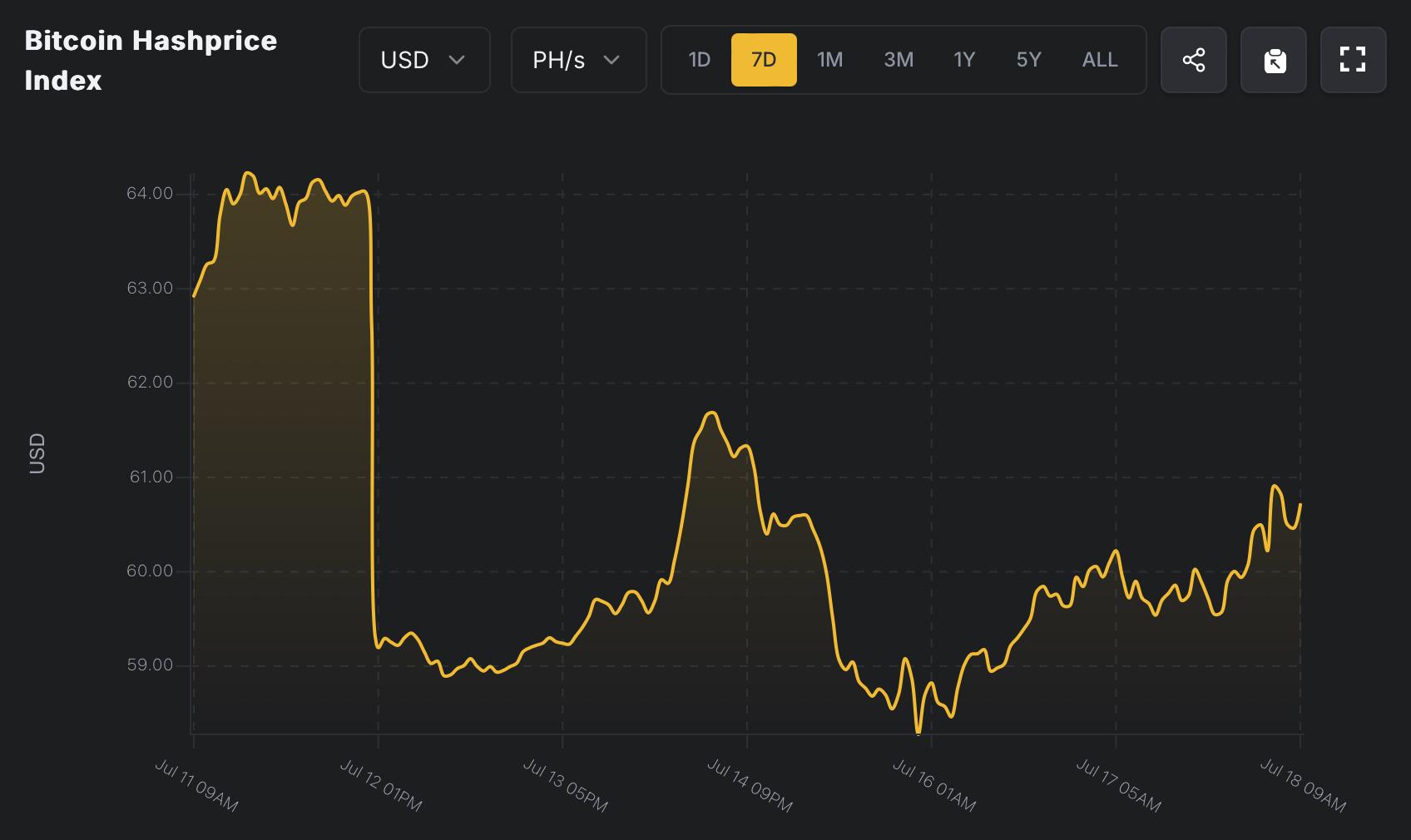
From the perspective of daily revenue per unit of computing power (Hashprice), Hashrate Index data shows that Hashprice has shown a downward trend this week. As of the time of writing on July 18, Hashprice was reported at $60.76/PH/s/day, which is lower than last week's high (about $64), but still in a relatively high range.
Specifically: On July 12, it quickly fell from $64.03/PH/s/day to $59.19/PH/s/day, mainly due to the dual influence of the short-term increase in computing power and the decrease in the proportion of handling fees on that day; on July 13, it maintained a small fluctuation in the range of $59-60/PH/s/day; on July 14, as BTC broke through the price high, Hashprice rebounded to $61.68/PH/s/day; on July 15, it fell to this week's low of $58.27/PH/s/day, reflecting the dilution pressure of the surge in computing power on unit revenue; from July 16 to 18, Hashprice showed a steady recovery trend, rising to $60.91/PH/s/day on the 18th, reflecting that the easing of market competition, the recovery of handling fees and the stabilization of Bitcoin prices support miners' revenue.
From the weekly trend, Hashprice has slightly declined month-on-month, and the overall fluctuation is controlled within a reasonable range. Although the unit computing power income this week has slightly adjusted compared with last week, due to the overall low level of the whole network computing power and small fluctuations, coupled with the high coin price and reasonable fee structure support, although the profit margin of miners has been slightly compressed, it has not caused a substantial impact on the industry, and profitability remains in a healthy range.
Comprehensive analysis shows that miners' profitability remains stable.
Combining the total income of miners and Hashprice performance this week, it can be seen that: although Hashprice has fallen, the stable block rewards brought by the high coin price are still the main pillar of income; the handling fee income has rebounded amid fluctuations, playing a good marginal buffering role; the total network computing power has fallen slightly this week, which helps to maintain the stability of unit computing power income. The overall profitability of miners is still at a healthy level, and there are no signs of capacity clearance or extreme income fluctuations in the short term. In addition, from a quarterly perspective, the mining ecology in the early third quarter of 2025 presents a benign structure of "high coin price + stable computing power cost", which provides support conditions for continued investment and expansion. If the price of Bitcoin can be maintained at a high level, accompanied by an increase in on-chain activities, it is expected that miners' income will continue to maintain a stable and rising trend next week and in the future.
Hashprice data
5. Energy costs and mining efficiency
Energy cost and mining efficiency analysis
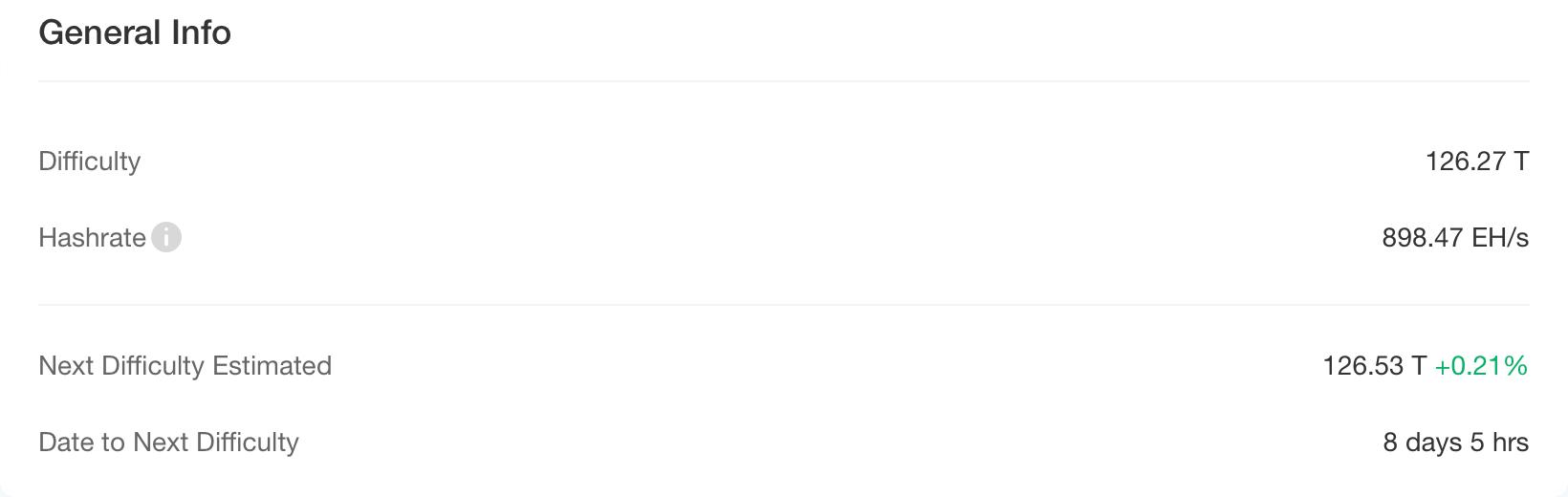
According to CloverPool data, the Bitcoin network has completed a new round of mining difficulty adjustment at block height 905,184 on July 12, 2025. The difficulty of this round has increased by 7.96% to 126.27 T, setting a new record high. As of July 18, CloverPool real-time data showed that the computing power of the entire network has reached 898.47 EH/s, which is at a historical high. Based on the current computing power level forecast, the next round of difficulty adjustment is expected to be around July 26, and the adjustment range is expected to be an increase of 0.21%. At that time, the mining difficulty of the entire network will rise to 126.53 T.
Although the price of Bitcoin remains strong, the growth rate of computing power has slowed down relatively, reflecting that the market is entering a new round of "efficiency optimization period" - some small and medium-sized mining farms may be forced to withdraw due to rising electricity costs, lagging equipment iterations and other problems. The global mining ecosystem is evolving towards high efficiency, low energy consumption and centralization.
Bitcoin mining difficulty data
Global computing power dynamics: The United States still leads, Russia rises strongly
According to the global Bitcoin computing power heat map released by Hashrate Index on July 13, the United States is still the global computing power center, currently with an effective computing power of 323.4 EH/s. Although it has declined slightly from last month, its global share still ranks first.
It is worth paying special attention to the rapid rise of Russia, whose global computing power share has increased from 15.652% to 16.61%, and its total computing power has reached 150 EH/s, ranking second in the world. This trend shows that Russia is forming a systematic advantage in energy prices, policy support and geopolitical stability. In China, although the overall regulatory environment has become stricter, the distributed deployment strategy and the flexibility of mines in marginal areas have caused its computing power share to rebound slightly to 13.84% (125 EH/s), ranking third in the world. In other emerging mining markets, Paraguay has a global share of 3.87% (35 EH/s) with its abundant low-cost hydropower resources; the United Arab Emirates (UAE) has achieved a global share of 3.54% (32 EH/s) through policy incentives and efficient cooling technology support, and continues to attract the attention of global mining capital.
Mining economics assessment: Profit margins are still ample
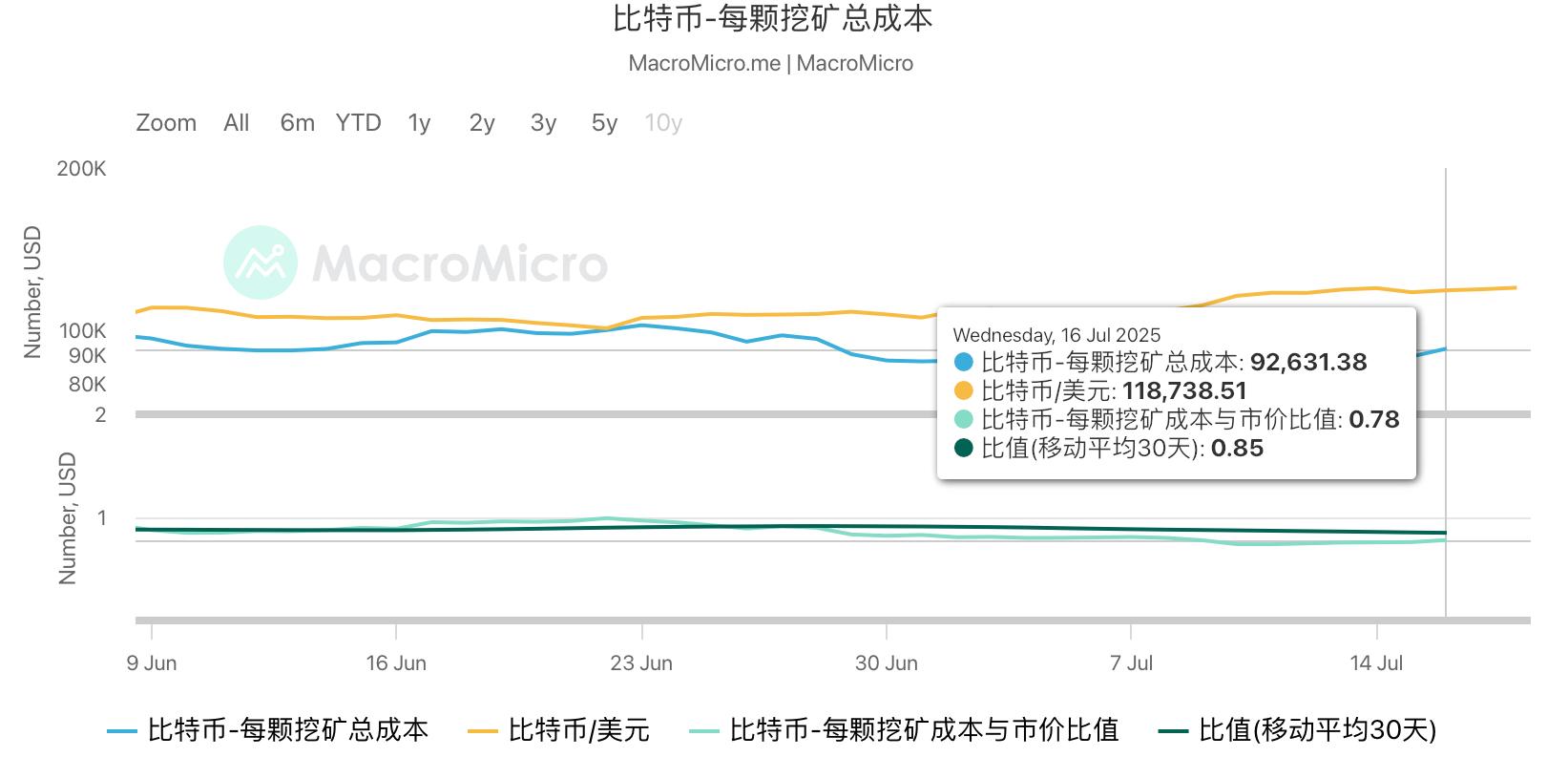
From a cost perspective, MacroMicro's latest model estimates that as of July 16, 2025, the unit production cost of Bitcoin is approximately $92,631.38, while the spot price of Bitcoin during the same period is $118,738.51. The price difference between the two is $26,107.13, which means that the profit margin of a single coin is still considerable. The current mining cost-to-price ratio is 0.78. This ratio is significantly lower than the critical value of 1, indicating that mining activities as a whole are still positively profitable, especially for mines that use the latest generation of ASIC mining machines and have the advantage of low electricity prices, whose unit profit margins are much higher than the industry average.
It is worth pointing out that under the background of continuous operation of high difficulty and high computing power, traditional high-energy consumption mining farms will be under further pressure. The sustainability of the Bitcoin mining industry in the future will rely more on green energy integration, operation and maintenance automation, and computing power structure optimization.
The total cost of mining each Bitcoin
Comprehensive analysis: Towards a new era of "high efficiency + low cost" mining
Overall, under the dual effects of high prices and rising difficulty, the Bitcoin mining ecosystem is undergoing a new round of structural adjustments, with the focus of competition gradually shifting from "competing in scale" to "competing in efficiency and controlling costs." The global computing power distribution pattern is also undergoing profound changes: the United States, Russia, and China are showing a "head concentration" trend, while emerging market countries are gradually building regional competitiveness with the help of energy and policy advantages.
In the coming cycles, the key variables that determine the survival and profitability of mines include:
Mining equipment upgrade: Liquid-cooled mining machines and AI mining control systems will become the new standard;
Optimization of electricity prices and energy structure: Prioritize renewable energy;
Evolving compliance environment: Geopolitical and regulatory trends have a significant impact on operational stability.
To sum up, Bitcoin mining is entering the "efficiency-driven" era. Only mining farms with significant advantages in cost control, technology upgrades, and rapid response can continue to dominate the next market cycle.
6. Policy and regulatory news
Trump: Members of Congress unanimously agree to vote on the GENIUS Act tomorrow morning
On July 16, Trump posted that he had met with 11 members of Congress in the Oval Office and reached an agreement on the GENIUS Act, and planned to vote on it tomorrow morning. House Speaker Mike Johnson attended the meeting by phone and supported a quick vote.
Trump and Republican hardliners reach consensus on encryption bill, and the bill is back on track
On July 16, Politico reported that President Trump announced that he had reached an agreement with Republican hardliners on the cryptocurrency bill. Previously, some Republican lawmakers had rarely defied Trump's wishes and obstructed the procedural votes on three cryptocurrency regulatory bills. After consultations at the White House meeting, these bills are now back on track.
7. Mining News
France plans to use surplus nuclear power for Bitcoin mining
According to Cryptoslate on July 17, French legislators submitted a bill to use excess electricity from nuclear power plants for Bitcoin mining, which is expected to generate $100-150 million in revenue each year. The five-year pilot program will allow mining centers to be co-located with nuclear power facilities and only start when there is excess electricity, while recycling the heat generated by mining for heating or industrial purposes. The proposal was submitted to the French National Assembly on July 11.

Related images
8. Bitcoin related news
Global corporate Bitcoin holdings dynamics (statistics for this week)
1. Strategy (formerly MicroStrategy):
According to news on July 14, Strategy increased its holdings by 4,225 BTC from July 7 to 13, and its total holdings currently reach 601,550.
2. Metaplanet (Japan):
According to news on July 14, Metaplanet once again increased its holdings by 797 BTC, bringing its total holdings to 16,352.
3. DigitalX (Australia):
According to news on July 14, DigitalX increased its holdings by 109.3 BTC, and its total holdings currently reach 367.3 BTC.
4. El Salvador (Country):
According to news on July 14, El Salvador currently holds more than 6,237 bitcoins.
5. K33 Asset Management Company:
According to news on July 14, K33 increased his holdings by 36 BTC, bringing his total holdings to 121.
6. Sequans (a US listed company):
On July 14, Sequans purchased an additional 683 BTC, and his current total holdings reached 1,053.
7. Sixty Six Capital (Canada):
On July 15, Sixty Six Capital increased its holdings by 6.1 BTC and currently holds a total of 132.8 BTC through ETFs.
8. Bitmax (South Korea):
On July 15, Bitmax added 51.06 BTC, bringing its total holdings to 400.25, making it the company with the most coins among South Korean listed companies.
9. Vanadi Coffee (Spain):
On July 16, Vanadi Coffee increased its holdings by 6 BTC, and its current total holdings reached 70.
10. Monochrome ETF (Australia):
On July 16, Monochrome's spot Bitcoin ETF holdings rose to 941 BTC.
Bitcoin Treasury Dynamics of Publicly Listed Companies (This Week)
1. Thai listed company DV8 transforms into a Bitcoin finance company
DV8 Public Company Limited appointed Chatchaval Jiaravanon, the former owner of Fortune magazine, as chairman and announced that it will reshape its finances with Bitcoin at the core, investing in DeFi, digital banking systems and digital infrastructure, and focusing on the Southeast Asian market.
2. Vaultz Capital raises £1 million to increase Bitcoin holdings
British digital asset company Vaultz Capital has completed a new round of equity financing and will use the funds to expand its Bitcoin treasury strategy.
3. Metaplanet CEO leads acquisition of SGA to promote Bitcoin strategy in Asia
The consortium supported by Metaplanet CEO Simon Gerovich acquired a controlling stake in South Korea's SGA and continued to expand its Bitcoin layout in Asia.
4. Matador plans to raise 900 million Canadian dollars for Bitcoin accumulation
Canadian listed company Matador has submitted a prospectus and may raise up to US$658 million through various means in the next 25 months to increase its Bitcoin holdings.
5. The Blockchain Group raises €6 million to advance its Bitcoin strategy
France's ALTBG completed two rounds of financing, introduced Bitcoin technology expert Adam Back, and increased its potential holdings to 1,983 BTC.
6. Hilbert Group adds 233 bitcoins
Swedish listed company Hilbert Group received 233 BTC from Deus X Capital. Together with the recent financing, its total reserves reached 430 BTC.
7. Active Energy purchased Bitcoin for the first time
British renewable energy company Active Energy launched a digital asset strategy and purchased BTC for the first time, but did not disclose the specific amount.
8. Cantor Fitzgerald plans to reach a $4 billion Bitcoin deal with Adam Back
Through the SPAC transaction plan, it plans to acquire more than 30,000 BTC to further develop the crypto asset market.
9. LQWD Technologies plans to raise $10 million for Bitcoin accumulation
The Canadian listed company announced the “ATM Project” to accelerate Bitcoin asset allocation while expanding its Lightning Network business.
10. Matador sets a goal of holding 1,000 BTC by 2026
Matador Technologies' board of directors approved a long-term Bitcoin reserve strategy, planning to hold up to 6,000 BTC by 2027, with a mid-term goal of 1,000 by 2026. The current holding is 77.4 BTC. To achieve this goal, the company has previously submitted a financing plan of up to 900 million Canadian dollars, which will be raised through equity issuance, convertible bonds, asset divestitures, etc.
11. Super Copper plans to allocate 20% of its reserve funds to Bitcoin
Super Copper Corp, a Canadian listed company, announced that it will include Bitcoin in its treasury strategy, planning to allocate up to 20% of its reserve funds to BTC as a store of value.
12. LiveOne plans to raise $8.9 million to promote Bitcoin profit strategy
LiveOne, a US-listed company, has launched a Bitcoin income treasury plan with an initial allocation of US$10 million. It has also priced a public fundraising of US$8.9 million and has been approved for a maximum investment amount of US$500 million.
13. Belgravia Hartford increased its capital by US$7.91 million to expand its BTC holdings
Belgravia Hartford, a Canadian listed company, announced that it has completed nearly $7.91 million in financing, including $5 million in convertible bonds and $2.91 million in private placements, which will be used to expand its Bitcoin reserve strategy. In June this year, the company purchased the first batch of 4.86 BTC for $500,000, with an average price of about $102,848.
14. Volcon raises over $500 million to launch Bitcoin financial strategy
Volcon, an American electric car company, announced that it will use Bitcoin as its core financial reserve asset. It has reached a private placement agreement with a number of institutions and qualified investors to issue more than 50.14 million common shares at $10 per share, with an estimated total fundraising of more than $500 million. The lead investor is Empery, and the participating parties include well-known crypto and traditional financial institutions such as FalconX, Pantera, Borderless, RK Capital, and Relayer Capital. The company plans to use at least 95% of the funds raised to purchase Bitcoin, and the issuance is expected to be completed around July 21.
Data: July is one of the most stable growth months for Bitcoin
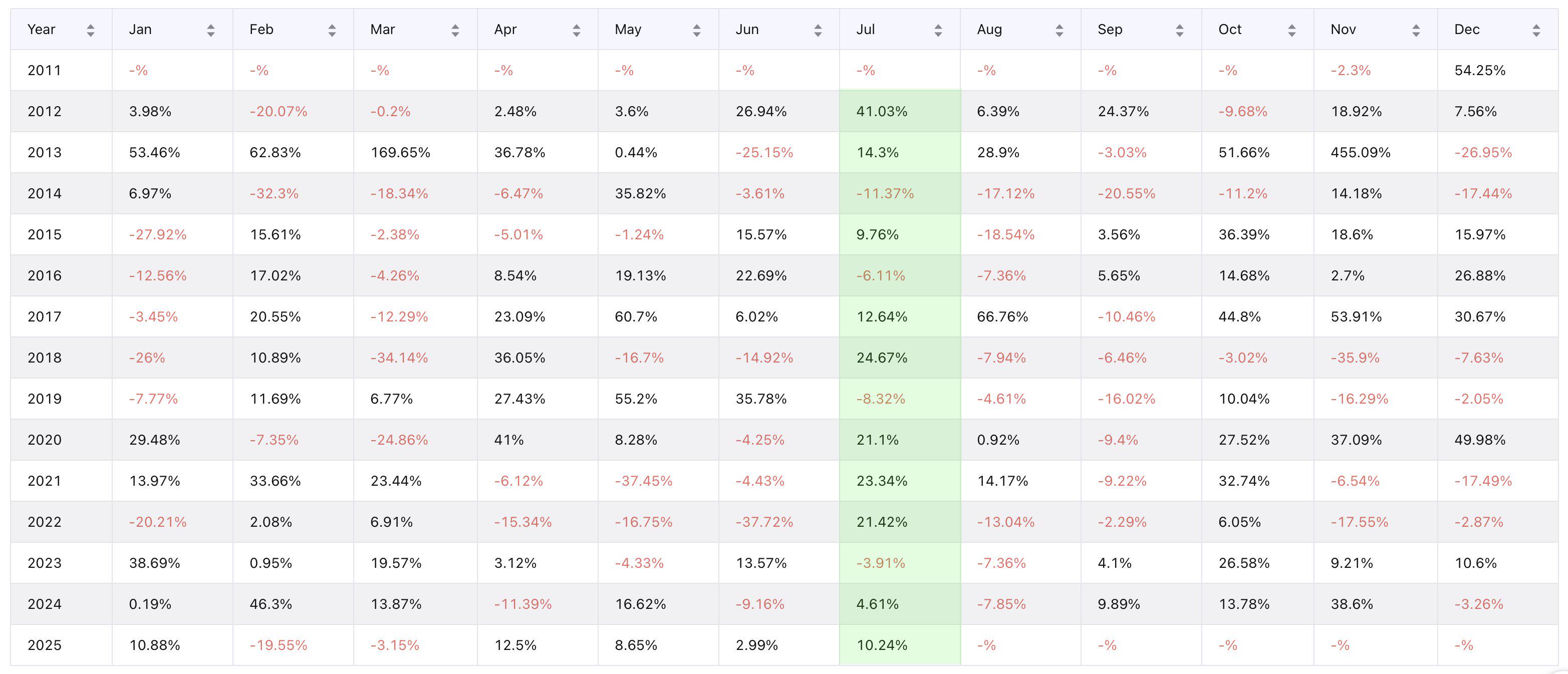
On July 12, Cryptoquant analyst Axel Adler Jr released a market analysis, saying that based on historical data from 2012 to 2025, July is one of the most stable growth months for Bitcoin: 10 of the 14 years (71%) recorded positive returns. However, October is more stable, with the proportion of years with positive returns reaching 77%, the highest in history.
Related images
Bitwise CIO predicts Bitcoin will reach $200,000 by the end of the year
On July 13, Bitwise Chief Investment Officer Matt Hougan said in an interview with CNBC that Bitcoin is expected to reach $200,000 by the end of 2025, and pointed out that the current rise is driven by structural factors and will last for many years.
Hougan emphasized that institutional funds continue to flow in, while the daily supply of Bitcoin is only 450, and there is a serious imbalance between supply and demand. He believes that the market is entering a new stage where "demand continues to exceed supply", and this force will drive BTC to rise in the long term.
He also said that favorable policies, legislative advancement, institutional adoption and macro uncertainty together constitute a "rare synergy" for Bitcoin, which is the fundamental driving force behind the current rise.

Related images
The author of "Rich Dad Poor Dad": I plan to buy another Bitcoin as soon as possible. Getting rich has never been so easy.
On July 13, Robert Kiyosaki, author of Rich Dad Poor Dad, wrote, "The price of Bitcoin is over $117,000. I plan to buy another Bitcoin as soon as possible. Getting rich has never been easier...even becoming a millionaire. Please study hard and see if Bitcoin is your way to become a millionaire. Take care. I love my Bitcoin...I love all Bitcoins."
CZ: Today’s new high will be only a fraction of Bitcoin’s value in a few years
On July 14, CZ said in a post that Bitcoin has exceeded $120,000, and the historical high of $1,000 in January 2017 is now insignificant. He believes that today's exciting historical high will only be a small part of Bitcoin's value in the next few years. BNB has been officially online for 8 years, with an issue price of $0.06. Today's price is $698, an increase of more than 10,000 times.
Bernstein: Bitcoin will reach $200,000 by the end of 2025 or early 2026
On July 14, Bernstein analysts predicted that Bitcoin will reach $200,000 by the end of 2025 or the beginning of 2026, and pointed out that as the market cycle expands beyond Bitcoin, the growth of networks such as Ethereum and Solana will also strengthen its investment thesis. Bernstein believes that this bull market will be "long and difficult", and unlike previous cycles driven by retail investors, the current cycle relies more on the participation and adoption of institutional investors.
Related images
Bitcoin skeptic Vanguard Group has become Strategy's largest shareholder
On July 15, Vanguard Group, which once called Bitcoin an "immature asset class" and considered it unsuitable for long-term investors, has now become the largest shareholder of MicroStrategy. According to Bloomberg, the institution, which manages $10 trillion in assets, holds 20 million shares of MicroStrategy through its funds, accounting for 8% of the outstanding shares, and is likely to have surpassed Capital Group to become the largest shareholder in the fourth quarter of last year.
Related images
Viewpoint: US conservative funds have begun to allocate Bitcoin, and such institutional shifts will drive inflows of up to $1 trillion
On July 15, The Kobeissi Letter published an article stating that when an asset provides a 90% return in one year, it can be judged as an "outlier". However, when an asset provides a 90% compound annual growth rate (Bitcoin) in 13 years, it can no longer be ignored. In addition, affected by factors such as the sudden adoption of cryptocurrencies by the US government, some US conservative funds have begun to buy, and the "conservative" funds interviewed have also allocated "1% of AUM" to Bitcoin. Currently, the scale of US institutional asset management is estimated to be approximately US$31 trillion. If only 1% of US institutional capital flows into Bitcoin, this could drive the asset to inflows of approximately US$300 billion or more. Taking into account global institutional AUM, we may see more than US$1 trillion flow into Bitcoin.
Standard Chartered Bank Launches Bitcoin and Ethereum Spot Trading Services for Institutional Clients
On July 15, Standard Chartered Bank launched spot trading services for Bitcoin and Ethereum for institutional clients through its UK branch to meet the growing demand for crypto assets. Standard Chartered Bank said it has become the first global systemically important bank to provide deliverable Bitcoin and Ethereum spot trading services with secure, compliant and scalable access capabilities.

Related images
James Wynn: Bitcoin may rise to $145,000 by the end of July, and the altcoin bull market is about to begin
On July 16, James Wynn tweeted that he thought we had seen the short-term top of Bitcoin in July as expected, and it might reach around $145,000 by the end of the month. After that, a sharp correction is expected to fall back to $110,000. In the next 1 to 2 months, there will be a strong altcoin bull market, which is when everyone really starts to FOMO.
Bitcoin's dominance has been maintained for too long, and altcoins are gradually rising. When the Federal Reserve begins to cut interest rates in the fourth quarter, Bitcoin will usher in a new round of increases, possibly rising to between $160,000 and $240,000.