Citigroup's 22,000-word "RWA Assessment Framework": Unpacking the Entry Code for the $16 Trillion Market

Citigroup's RWA Valuation Framework: Tapping into the $16 Trillion Tokenization Ocean

Citi's 22,000-word

Introduction

Real-World Asset Tokenization (RWA) is reshaping the global capital landscape at an astonishing pace. Ronit Ghose, Citigroup's global head of banking research, tracked the digitalization progress of 500 banks in 40 countries. He led 17 top analysts, including Sophia Bantanidis, head of Citigroup's global insights department, and took two years to complete the 162-page report " Money, Tokens, and Games》For the first time, a systematic demonstration of the core path of blockchain technology to achieve "one billion users + one trillion market" - RWA will become the biggest value engine. The report predicts that by 2030, RWA will drive the blockchain industry to form a $16 trillion market (10% of global GDP), with the scale of private sector asset tokenization surging 80-fold to $4 trillion and trade finance asset tokenization exceeding $1 trillion. Faced with such a vast market prospect and Citigroup's strong endorsement, the industry is naturally focused on: What does this 22,000-word Citigroup report, beyond its predictions about scale, say? What kind of RWA program would garner the attention of this top investment bank? What are the essential elements of a successful RWA program? This article will deeply analyze Citigroup's RWA evaluation system.

I.Industry Observation: How did RWA become the engine of a multi-trillion dollar market? Citigroup pointed out that the current crypto-native market, at just $1 trillion, is far from sufficient to support an industry explosion. The tokenization of real-world assets (RWA) represents the true "value black hole." Its core logic is embodied in three layers of innovation: Underlying innovation: asset fragmentation, fragmenting non-standard assets such as real estate and private equity. For example, Hong Kong's first RWA fund split an office building into 100,000 ERC-721 tokens, lowering the investment threshold per token to US$100. Efficiency innovation: a leap in liquidity, After tokenizing traditional trade finance assets, settlement time has been shortened from T+2 to real-time settlement, and the funding efficiency of a charging pile RWA project has increased by 300%. Boundary innovation: Incremental market expansion, private credit, climate assets, etc. Non-securities assets have become a tokenized blue ocean, with an estimated scale of US$4 trillion to US$5 trillion by 2030. The research report's core insight emphasizes: "The explosive growth of the RWA ecosystem relies not only on the participation of sovereign institutions but also on the proactive deployment of traditional enterprises. Manufacturing giants are leveraging equipment asset tokenization to revitalize existing assets, energy companies are generating new revenue streams through climate asset tokens, and financial institutions are expanding their service offerings through on-chain private lending. This will become a key lever for the real economy's value transformation." Blockchain infrastructure is providing an immutable collaborative foundation for this purpose.
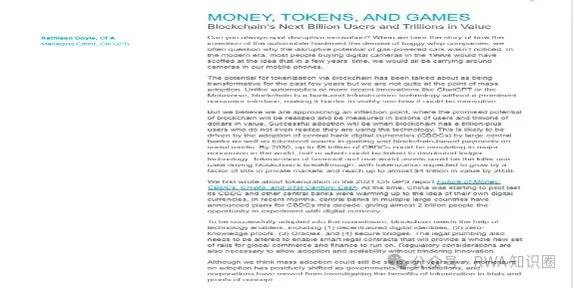
Citi's 22,000-word (Excerpt from a Citi report)

II.Project Assessment:Four Core Dimensions of the Citi RWA Assessment Framework

Based on Citi Global BankingDimension 1:How to identify high-potential assets?

Core Assessment Focus
  • Legal Title Confirmation: Proof of ownership must be complete and traceable.
  • Cash Flow Quality: Prioritize assets with highly predictable income rights (such as charging stations and photovoltaic power plants)
Dimension 2: How to Build a Technical Foundation for Risk Resilience?
Key Implementation Path
  • Data Source Verification: Deploying IoT + Oracle Dual Verification
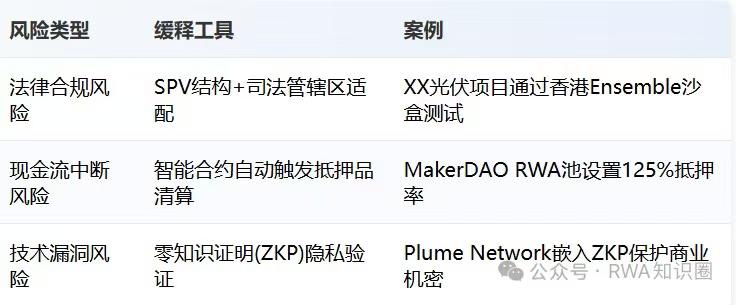
  • Simplified Citi RWA Assessment Matrix
Citigroup's 22,000-word
 

III. Compliance and Technology: Citi's Emphasis on the Two-Pillar Model

 These regulatory-proven vehicle architectures are becoming the cornerstone configuration for companies to enter the compliance market.
1. Asset-Backed Model (Mainstream Architecture)
  • ▸ Core Mechanism:SPV Risk Isolation (e.g., Centrifuge TVL exceeds $250 million)
  • The preferred option for securitizing heavy assets such as real estate and equipment
2. Direct Issuance Model (Regulatory Innovation)
  • ▸ Legal Breakthrough: Swiss DLT Act Supports Direct Registration of Tokenized Shares ▸ Corporate Value: Reduces equity circulation costs for listed companies by 30%

    Swiss DLT Act Supports Direct Registration of Tokenized Shares

  • Reducing Equity Circulation Costs for Listed Companies by 30% The sandbox mechanism provides a regulatory testing ground and cross-border channels for the aforementioned entities:
    Regulatory Sandbox: A Cross-Border Compliance Accelerator
    • ▸ Scenario Empowerment:The Hong Kong Monetary Authority's Ensemble Project enables cross-border settlement of electronic bills of lading and green bonds
    • Technical Risk Control
  • Five-layer Defense System

Citi's 22,000-word

Enterprise-level research and development transformation:

A technology company strictly adheres to the Citi RWA Assessment Framework:

  • Isolating operator risks using an asset-backed model
  • Access to the regulatory sandbox completes cross-border issuance of green bonds
  • Deployed a five-layer defense system and passed SEC audit

Achievement: Secured financing, reduced funding costs by 25%

Share to:

Author: RWA知识圈

This article represents the views of PANews columnist and does not represent PANews' position or legal liability.

The article and opinions do not constitute investment advice

Image source: RWA知识圈. Please contact the author for removal if there is infringement.

Follow PANews official accounts, navigate bull and bear markets together
Recommended Reading
12 hour ago
16 hour ago
20 hour ago
2025-12-07 00:00
2025-12-06 13:57
2025-12-06 08:58

Popular Articles

Industry News
Market Trends
Curated Readings

Curated Series

App内阅读