Author: Frank, PANews
The crypto market is full of stories of "dragon slayers", and the recent Keeta Network is undoubtedly the latest challenger trying to once again slash the "impossible triangle" in the payment field. With high-profile narratives such as "tens of millions of TPS" and "built-in compliance", and its token KTA's astonishing 8-fold increase since May, Keeta quickly attracted the attention of the market and the pursuit of capital.
However, under the dazzling halo of investment from the former CEO of Google, is Keeta a true potential unicorn, or just another carefully woven "air feast"?
Tens of millions of TPS, is it a gimmick or strength?
Keeta Network positions itself as a revolutionary Layer-1 solution that aims to unify the global payment network and enable the efficient circulation of RWA. Its core technical goals include: achieving a transaction processing speed of up to 10 million TPS, a final transaction confirmation time of 400 milliseconds, extremely low transaction fees (officially only a few cents), native integration of multi-token support, scalable permission system, atomic swaps, and digital identity and KYC/AML compliance frameworks achieved through X.509 certificates. Some early information even mentioned a higher goal of 50 million TPS.
Before discussing the feasibility, we may need to understand what 10 million TPS means? Compared with traditional payment giants, such as Alipay, which announced a transaction processing capacity of about 544,000 transactions per second during peak periods such as "Double Eleven", Visa's global network averages thousands of transactions per second, with a peak of tens of thousands of transactions. Keeta's claimed 10 million TPS not only far exceeds these centralized payment giants, but also significantly leads the existing mainstream public chains (such as Solana's claim of about 65,000 TPS).
Such a huge difference in magnitude makes people question the authenticity and feasibility of its technical indicators. Is this the theoretical upper limit of the original throughput capacity of the underlying blockchain, or is it the application layer processing capacity that has been verified by the market?
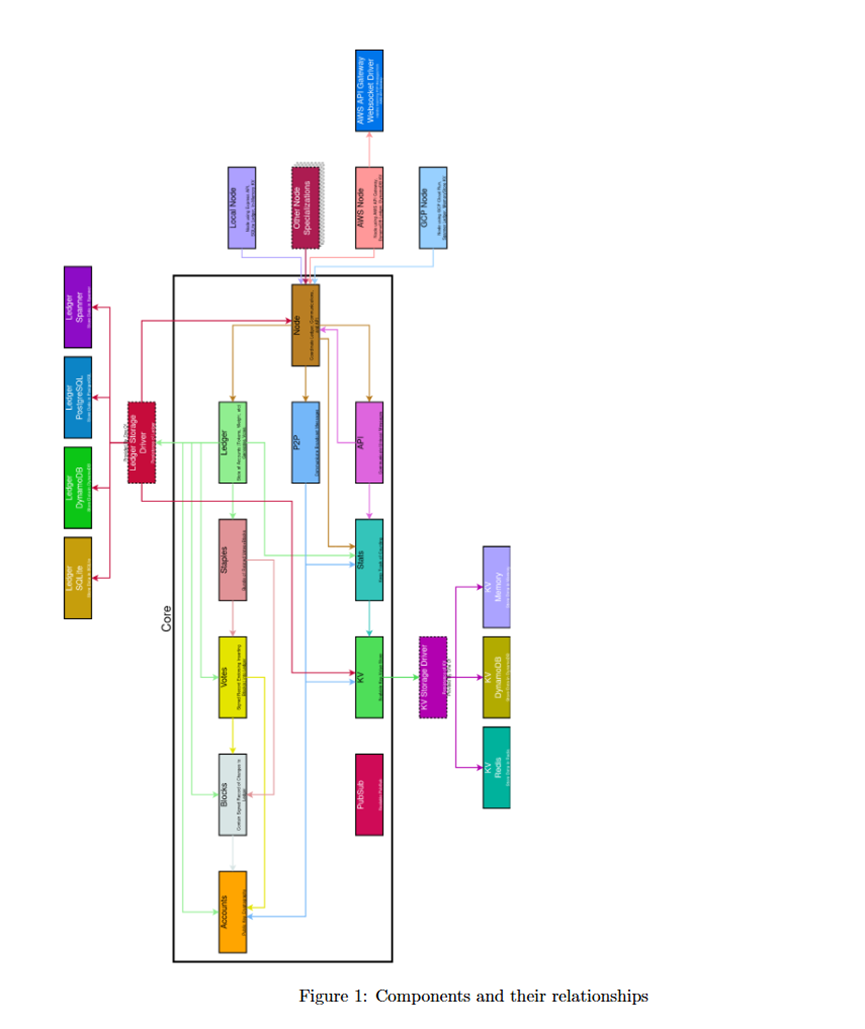
From the technical perspective, the Keeta white paper explains that it uses a hybrid architecture of the dPoS consensus mechanism and a "virtual directed acyclic graph" (virtual DAG). The dPoS mechanism itself has been widely used in public chains such as EOS and Tron. Its advantage lies in high efficiency, but the potential risk is that it may lead to a certain degree of centralization due to the limited number of block producers. DAG structures, such as IOTA and Nano, have been tried before. In theory, they have the potential to process high concurrency and solve the linear confirmation bottleneck of traditional blockchains. Academic research generally believes that DAG-based consensus algorithms have higher throughput potential, but they also face challenges such as high computational overhead, complex confirmation rules, and specific attack vulnerabilities.
Keeta claims that its "virtual DAG" is an innovative design, but as to how to overcome the above challenges and achieve tens of millions of TPS, the white paper and existing technical documents mainly provide design concepts and goals, but do not indicate more implementation details and results.
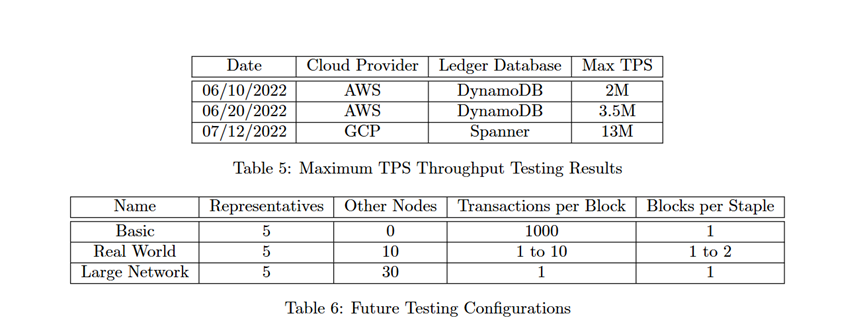
This technical route has the potential to achieve the so-called 10 million TPS in theory. However, it seems unlikely to break the limitations of the "impossible triangle", that is, extremely high efficiency requires compromise and weakening of security and decentralization. The test results published in the Keeta white paper show that the maximum test TPS reached 13 million, but there were only 5 nodes involved in the test. Whether the test results under this environment are of reference value is still a big question.
In a nutshell, Keeta's technical propaganda is full of temptation, but it is still like a beautiful "black box". Before the core data is verified, the code is strictly scrutinized, and the governance model is clarified, the market's enthusiasm may be more due to the gamble on its "potential" rather than the confirmation of its strength.
The capital and operation phantom behind the market boom
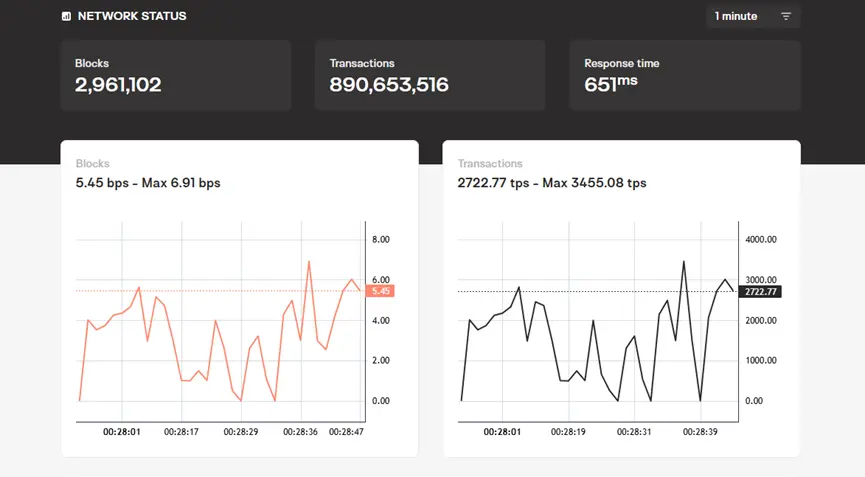
Currently, the Keeta testnet has been launched, and PANews tried to understand its performance and related data through the testnet browser. From the current operating status of the testnet, the current TPS is basically maintained below 5,000. The number of transactions displayed has exceeded 890 million, but there is no more information showing which applications these test data come from and how many nodes there are currently on the testnet.
So, why can such a project, which is slightly "foggy" in terms of key data, attract such high market attention in a short period of time, especially the surge in the price of its token KTA in May 2025?
The most direct and widely cited reason is undoubtedly the investment and endorsement of former Google CEO Eric Schmidt. In 2023, Eric Schmidt and venture capital firm Steel Perlot led Keeta's $17 million seed round of financing and served as project consultants. In addition, Keeta CEO Ty Schenk was also a partner of Steel Perlot. This "Google halo" quickly increased Keeta's popularity and market trust. Until recently, Keeta began to attract market attention through multiple Fomo endorsements of "tens of millions of TPS + Google CEO endorsement + silent TGE".
In March 2025, Keeta's governance token was quietly launched on the Base chain without any prior information. At first, the community thought it was another case of the official media of the project being stolen. But the subsequent official response and proof that this was indeed the official token launched. Its founder said that the reason for adopting this launch method was that marketing was not considered. But in fact, this listing method similar to MEME coins has triggered market discussions (when people find a VC project with background among countless quick-fix MEME plates, they will be more surprised).
Starting from May 6, KTA tokens began to rise sharply, from a minimum of 0.1 to a maximum of 0.83 US dollars, with a maximum increase of more than 8 times. However, it seems that there is no clear source for the rise of KTA on social media, but a lot of price discussions caused by the surge in the market, as well as ambiguous future expectations.
The hidden concerns behind the potential
The long-term value of a project will eventually return to fundamentals. Keeta's team configuration is also a typical elite faction. CEO Ty Schenk has entrepreneurial experience in BrainBlocks, and CTO Roy Keene came from AWS and Nano Foundation. Public information shows that Roy Keene left due to differences in the concept of Nano's institutional adoption and incentive mechanism.
However, looking at its community ecology and market transparency, Keeta's performance is a bit complicated. Although official social media channels have been established, the community's activity and developer participation do not seem to fully match its market popularity. As of May 20, Keeta's official Twitter followers were about 12,000. In addition, in the official release information, a large amount of content is about its technical goals, while there is little content about other cooperative institutions.
In addition, KTA tokens have not been listed on other mainstream exchanges except for several mainstream DEXs. Of course, it is not ruled out that the potential listing opportunity is one of the reasons that induces the rise of KTA tokens. 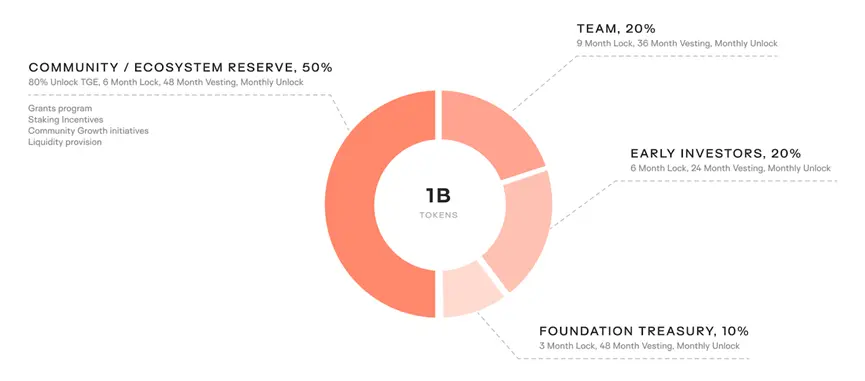
As for the token economics, according to its official data, 50% is allocated to the community, and 80% is unlocked during the TGE phase. The rest will be unlocked over 48 months. However, before the TGE, the community incentive plan and standards were not clear. Therefore, it is still unknown who is the specific controller of this part of the tokens. As of May 20, KTA has 72,000 holders, and the tokens of many large addresses are allocated by smart contracts rather than obtained through transactions, but the reason for obtaining such tokens is still unknown.
After comprehensive evaluation, Keeta has some elements to become a "potential stock" in terms of investor background, technical narrative and team experience. However, it still has obvious shortcomings and uncertainties in multiple aspects such as information transparency, core technology verification, community ecosystem construction and long-term risk control. If these "hidden concerns" cannot be effectively resolved, the bright halo may only be short-lived.
Keeta currently presents a complex situation with both potential and risks. It may be a dark horse that subverts the industry, or it may become mediocre due to failure to deliver on its promises or failure to effectively break through in the fierce public chain competition. While investors and market observers pay attention to the opportunities it brings, they must also be aware of the hidden risks and many questions that need to be answered. Keeta's future depends on whether it can steadily transform its technical goals into reality. This road to value realization is destined to be a long and arduous journey.