

Original article: Decentralised.io
Compiled by: Yuliya, PANews
In today’s Web3 marketing space, brand building and community operations have become a hot topic. For the Chief Marketing Officers (CMOs) of major organizations, whether they serve startups or multi-billion-dollar protocol projects, brand building faces unique challenges and opportunities.
Marketing in the Web3 space is like building a house of cards. In addition to the complexity of marketing itself, practitioners also need to deal with technical challenges, the pressure of token market volatility, and the trouble of false information. In this industry dominated by programmers and traders, building brand awareness is not easy.
It is based on this industry background that Safary Club came into being. As an elite marketing talent network, Safary Club brings together the best marketing experts in the Web3 field through an invitation system. These experts share experiences and collaborate on the platform to explore how to transform complex technical concepts into products that the public can understand and desire.
Research shows that modern society is experiencing a serious attention crisis. Product developers often find it difficult to get the attention they deserve in a market filled with emojis and AI robots. Simply developing high-quality products is not enough, and the attention economy has become a key prerequisite for growth. The core of business success lies in the ability to continuously capture user attention and convert it into effective business relationships.
There are many insights on this in the entrepreneurial theory community: Keith Rabois emphasized the importance of founder thinking, Paul Graham proposed the theory of non-scaled action, and Eric Reis advocated the lean startup method. However, how to build and maintain a brand with community attributes in practice is still a topic worth exploring in depth.
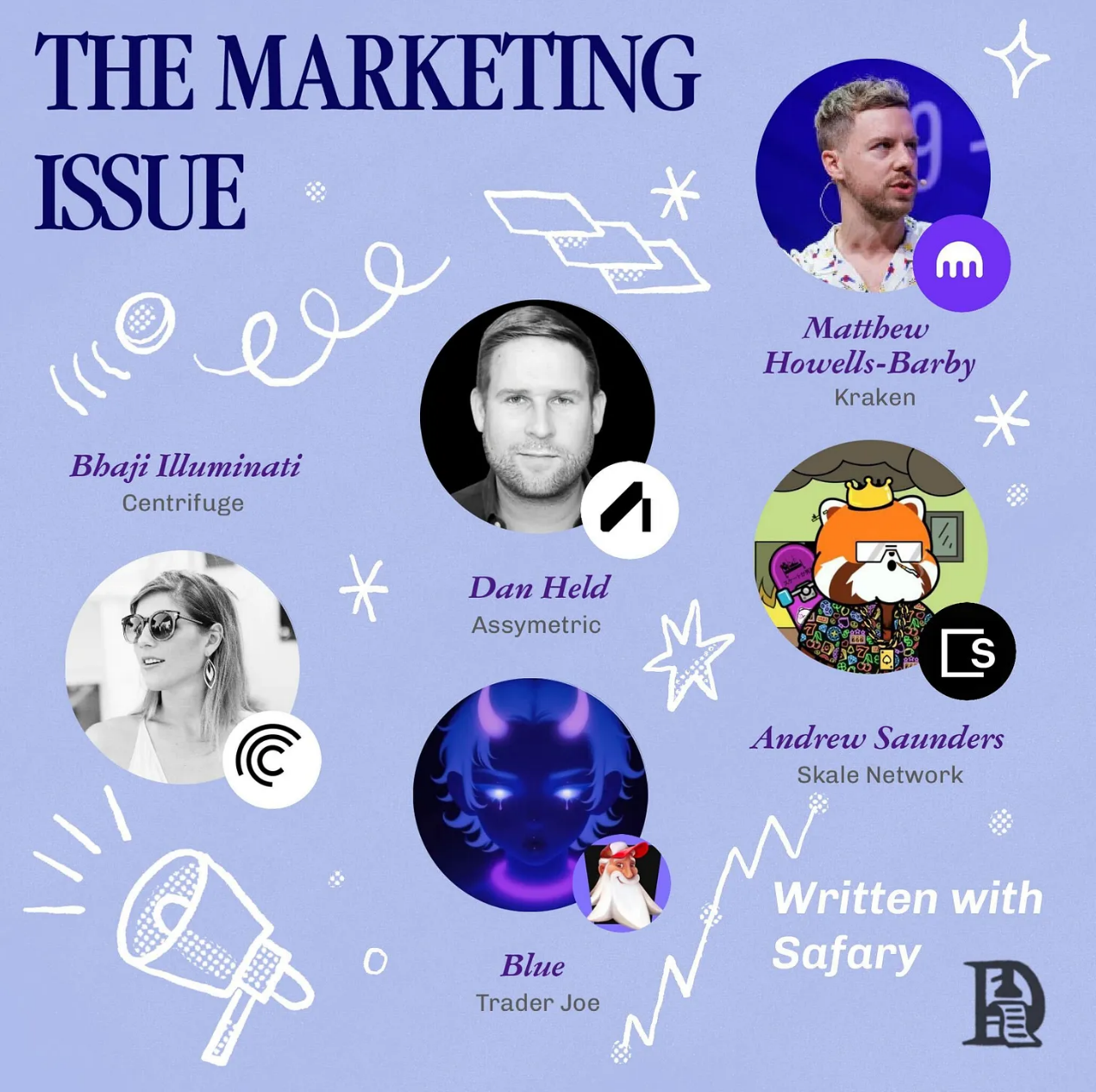
Justin Vogel, founder of Safary Club, has made innovative attempts in this regard. The platform adopts a similar operating model to Y Combinator, providing systematic training and communication opportunities for marketing talents. Through dialogues with five top CMOs in the industry, this article will provide founders with a practical guide for early brand building.
The following marketing experts provided valuable insights for this article:
- Bhaji Illuminati, Chief Marketing Officer, Centrifuge
- Blue, Chief Marketing Officer of LFJ Exchange (formerly Trader Joe's)
- Dan Held, General Partner at Asymmetric
- Matthew Howells-Barby, VP of Growth at Kraken
- Andrew Saunders, Chief Marketing and Growth Officer at Skale Network
The experience of these industry leaders covers all key aspects of Web3 brand building, from Twitter operations to token product management. The following content will expand on these insights in detail.
The power of human curation
In this era of digital content explosion, we are experiencing unprecedented information bombardment every day. Statistics show that the amount of new content added to YouTube every day is equivalent to 82 human years, 2.4 million emails are transmitted on the Internet every second, and the average person is exposed to nearly 10,000 advertising messages every day. In such an era of digital abundance but scarce attention, the increase in choices has not brought about a corresponding increase in trust.
Faced with a vast amount of information, people naturally seek professional opinions as a reference for decision-making. Modern content platforms mainly screen content in two ways:
- One is algorithmic screening, where platforms such as Twitter, TikTok, and Facebook use data analysis to determine the reach of content;
- The other is manual curation, which is more in line with the natural laws of human cultural evolution. In the field of digital marketing, this kind of manual curation often manifests itself as following opinion leaders in niche areas.
For start-ups, since it is difficult to get support from well-known opinion leaders in the early stage, small closed communities have become an ideal entry point. Many founders choose to share their product ideas in carefully planned small chat groups. These closed and planned communities play an important role in the stage from 0 to 1, and they can provide valuable feedback from precise user groups.
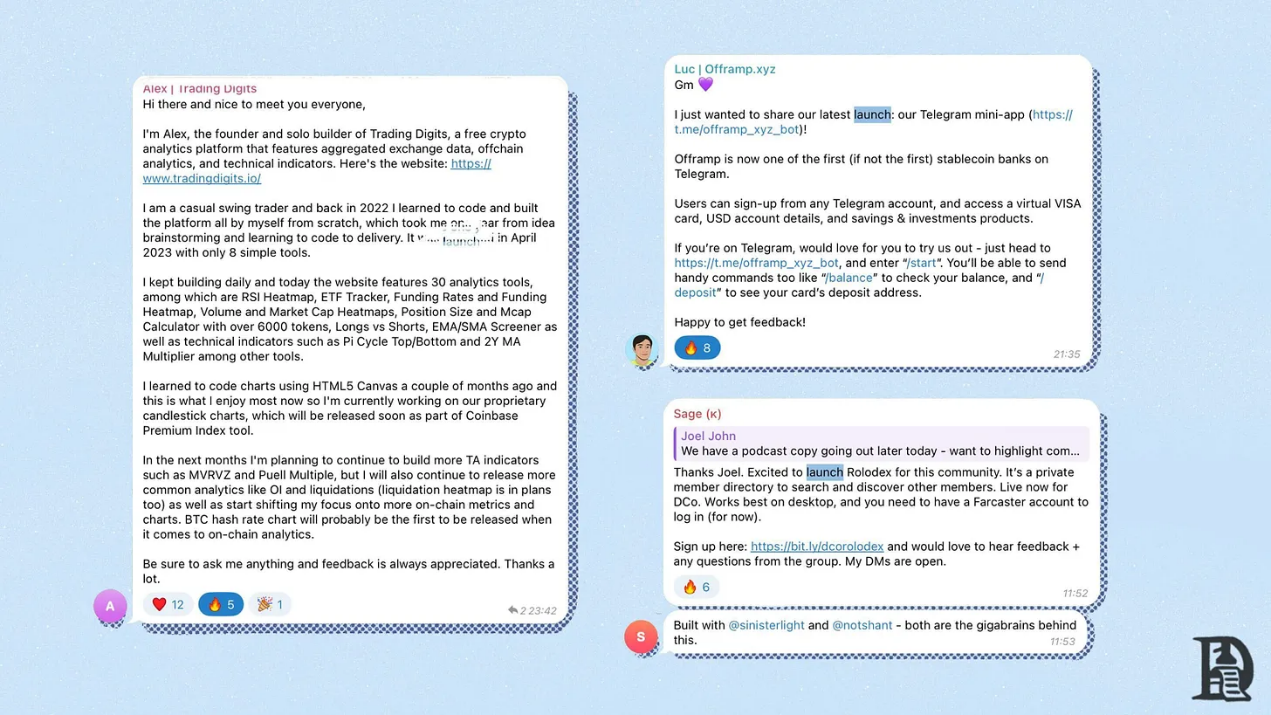
In community interaction, founders need to strike a delicate balance. Excessive marketing can lead to user rejection, while lack of product demonstrations can cause the project to be gradually forgotten. Experience shows that the most effective way is to build trust by providing substantial value to the community. People are often more willing to discuss problems rather than passively accept education on solutions, so highlighting the severity of the problem can often create opportunities for the promotion of solutions.
When founders continue to provide value in their communities, even if that value is not directly related to their product, they can accumulate important reputation capital. This approach can cultivate a group of early supporters who often become powerful ambassadors for their products when the founders finally show their products. This confirms a simple truth: people tend to trust people before they build trust in brands.
However, curation communities often have their own specific rules and entry barriers. The formation of high-quality communities is inseparable from effective management, which sometimes conflicts with business needs. For example, on Reddit, any impersonal marketing attempts may lead to account bans. Therefore, after acquiring the initial users, how to achieve scale growth becomes a key issue.
Y Combinator provided an answer to this problem by creating curation platforms like Hackernews. Successful projects like Dropbox and Coinbase were initially discussed on Hackernews. Similarly, ProductHunt has become an important platform for helping startups expand their user base.

These human curation platforms help founders bypass the limitations of algorithmic distribution, but they also require real interpersonal relationships and meaningful interactions. More importantly, the trust of the community must be earned. Founders who want to simply outsource marketing in the early stages often encounter a harsh reality: the essence of sales is to build relationships.
Dan Held's success story illustrates this point well. As an industry opinion leader with 744,000 followers, his success stems from years of continuous high-quality content output.
His successful strategy is based on educating the masses. Dan focuses on highly technical and controversial topics, such as Bitcoin's energy consumption or the mechanism of forking, and translates these complex concepts into content that ordinary people can understand. He uses a unique approach: sacrificing 5% of the details in exchange for a larger audience of 95% . This simplification strategy works particularly well on platforms like Twitter because it is better able to capture the attention of users.
As Bitcoin gains more and more recognition between 2018 and 2024, Dan's status as a core educator grows. In this rapidly evolving field, research analysts who can convey complex concepts in simple language remain scarce. It is this scarcity, coupled with his continued output of high-quality content, that makes the entire community willing to endorse and spread his content, especially in the fight against false information.
Building a "legitimacy" position is a long process. As Dan said, his only secret is to keep doing the same thing year after year. Instead of rushing to promote his Substack subscription on Twitter, he chose to selflessly contribute value to the community. This confirms a marketing truth: the best sales are often shared without any sales intentions.
In the early days of building his personal brand, Dan did something that many people overlook: he carefully thought about and listed the keywords that best described him. These words guided him to find the right content topics and shape his unique expression style. He knew that the content we consume affects the way we create, so he paid special attention to the tone and expression.
Dan always focuses on meeting the needs of the audience. Many creators tend to get caught up in their own world of creation and ignore whether the audience really cares about the content. In contrast, Dan's approach is more pragmatic: timely, practical, and in-depth research on hot topics on Twitter . It is this audience-centric approach that has gradually made him an authority in the field of emerging assets.
The success of this methodology is not only reflected in the establishment of personal brand, but also helped him successfully participate in the creation of several recognized cryptocurrency projects, such as Taproots Wizard and Mezo. Whether it is building a personal brand, Bitcoin NFT series or Bitcoin L2 project, Dan always adheres to the same principle: to provide value continuously and authentically. This consistent attitude is the key to his continued success in the field of digital marketing.
From Follower to Owner
Before social networks became the main source of information, Wikipedia demonstrated the tremendous power of volunteers. A legendary figure made more than 2.5 million edits on Wikipedia from 2004 to 2018 without receiving any ownership rights. This spirit of selfless contribution is amazing, but it also raises a question: how to transform contributions into meaningful ownership rights?
In the blockchain space, whether it's Bitcoin miners or Ethereum stakers, the core of incentive mechanism design is to allow stakeholders to be rewarded through meaningful participation. This concept also applies to the marketing field. In 2021, Axie Infinity's success is largely due to the "play to earn" narrative, which makes participants believe that they can convert their contributions into long-term ownership. This reveals an important truth: no one will promote harder than those who think they are the owner.
Airdrop design is a powerful mechanism for creating a sense of ownership. For example, Hyperliquid integrated a points system before the token was launched, suggesting the probability of obtaining tokens in the future, thereby creating a cycle of continued user participation and interaction. This points mechanism, pioneered by Blur in 2022, provides users with a metric to measure the value of their contributions without directly issuing tokens.
Unlike the " play to earn " model, which requires bootstrapping both the supply and demand sides of a token or NFT , a points system provides a middle ground. It allows products to accumulate a critical mass of users, providing a valuable feedback loop for development teams. Of course, not all users can contribute meaningfully enough to the network to become part owners.
Trader Joe's Blue has a unique view on community members. In traditional concepts, only users who convert assets on decentralized exchanges are considered "valuable". But in Blue's view, any user who interacts with the product or its related media assets (such as Twitter , Discord or Telegram ) is a community member. These users may not convert immediately, or even use the product for the time being, but their presence as social signals can influence other potential users to eventually convert.
In Blue's view, the acquisition of this type of user has reached saturation point. In 2021, due to the huge interest in the DeFi field, a protocol can build a community simply by building a product in this category. Attention and capital will happily switch between products and protocols in pursuit of returns. But by the fourth quarter of 2024, the situation is very different. Users have formed their own preferences, and the novelty of trying new DeFi primitives has greatly diminished. When the core audience is no longer paying attention to what you build, exploring new areas becomes an inevitable choice. This is exactly what Blue hinted at his upcoming move.
He believes that the internet is transitioning to a short-form content phase. For Trader Joe, this means exploring how to incorporate YouTube short videos and Instagram Reels into its content strategy. This conversation in September sounded strange at the time, and it seemed unlikely to use a traditional social network like TikTok as a growth engine for crypto-native assets. However, in the following months, multiple meme assets like Chill Guy and PNUT did find a foothold in TikTok viral videos.
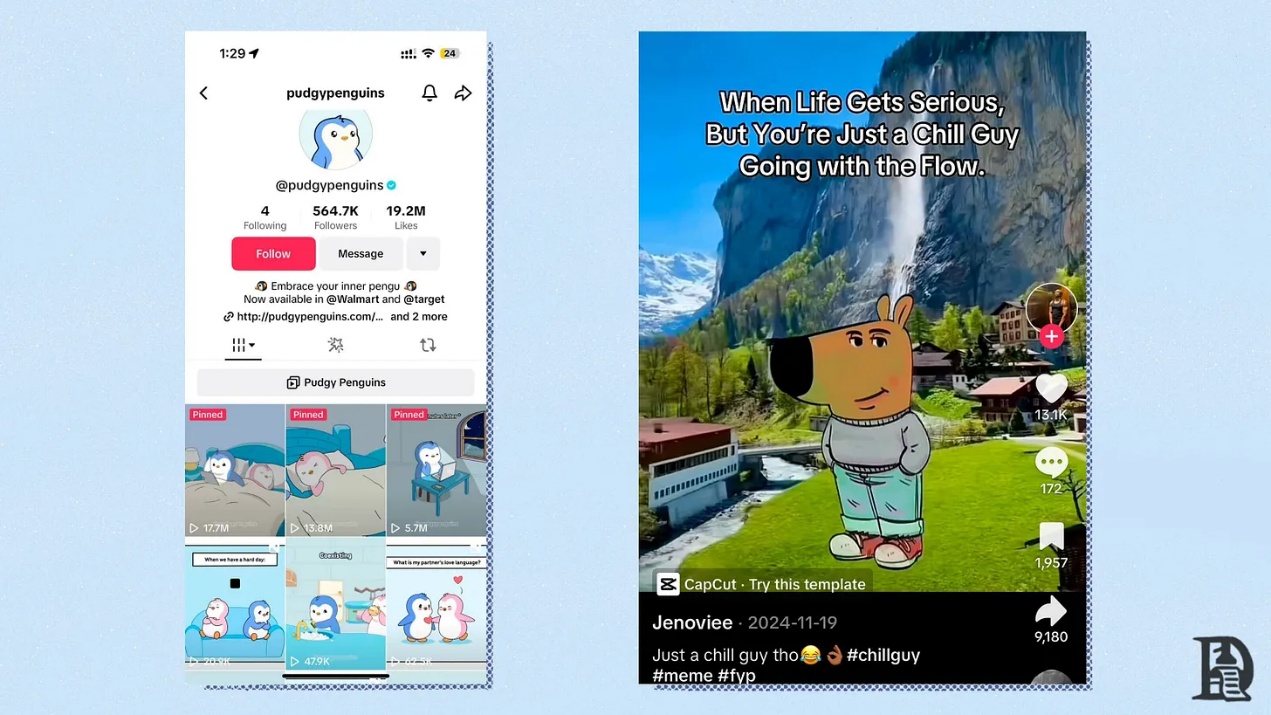
In the era of social networks, tokens like Chill Guy, Pnut, and WIF may seem short-lived, but they demonstrate the power of capital coordination in the era of social networks. These meme assets, which are not backed by traditional VCs, can reach a market value of billions of dollars, which contains profound revelations. Meme assets, like other "contribute-to-earn" assets, have the characteristic of "fairness". They provide individuals with enough room for growth to become core supporters of the product. Although founders cannot expect to invest their entire lives in meme assets, the way these assets work does provide valuable experience:
If you can make enough people rich in a short enough time, you may not have to worry too much about distribution.
However, not all early operators have the ability to make community members rich quickly. Maybe the project is still far from going public, or worse, there is no say in how the points system works. In this case, what other levers can managers use?
The essence of ownership is not just about being able to trade or own an asset, but more importantly, it is about cultural identity and the overall experience that users have when interacting with a product.
Taking Nansen’s early development as an example, when analysts discussed the product on Twitter, they often received retweets from the official account. This approach provides a lever of influence: analysts actively create Nansen-related content because they know they can get opportunities for content distribution. As more and more analysts showcase their work through Nansen, the product has gradually become the preferred tool for investment funds to build market views.
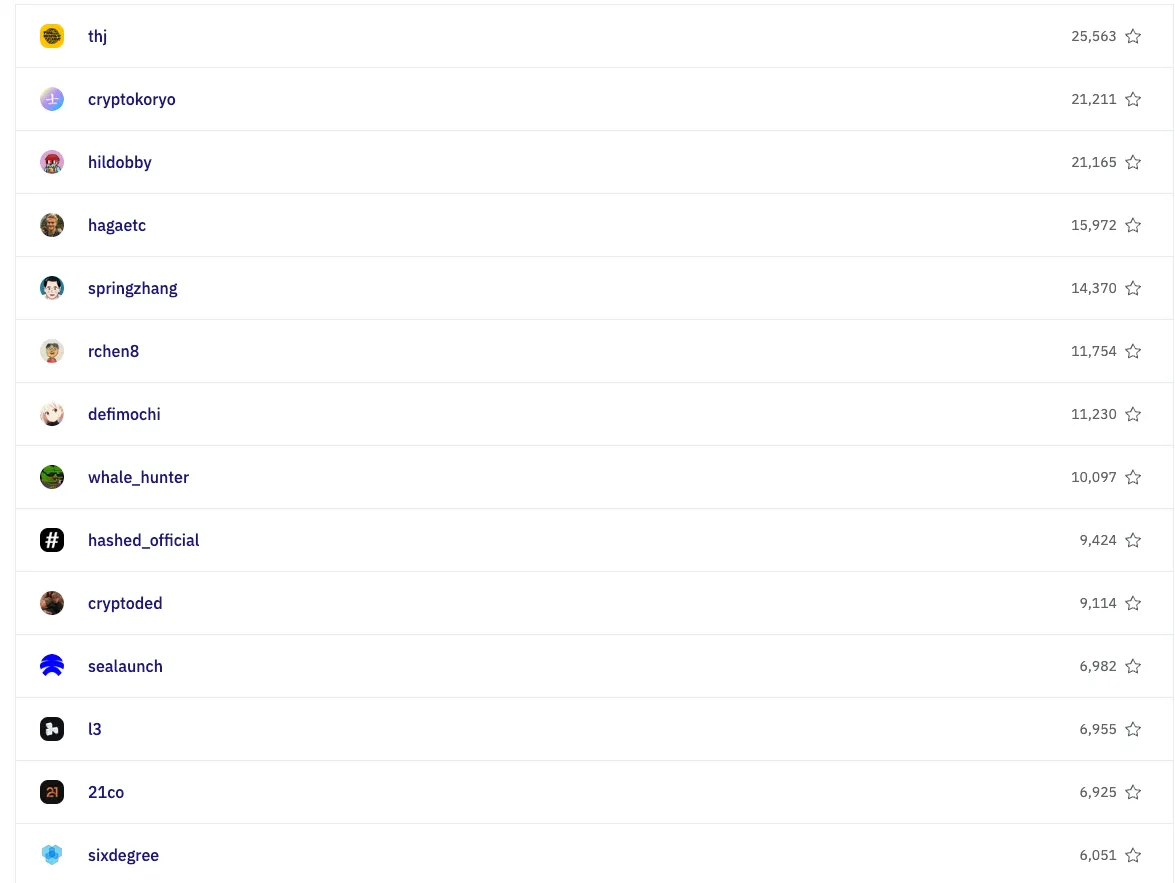
Likewise, Dune's creator leaderboard has evolved into a great platform for discovering emerging analysts. Well-known analysts like Tom Wan and Hildobby gained initial development opportunities through their contributions to the product. In these cases, the sense of "ownership" does not come from a direct interest in the product itself, but through the growth of personal reputation along with the product. Although these analysts did not directly benefit from Dune's growth, their reputation grew with the product.
Allowing users to build reputation through products is another way that ownership affects product perception. Because in the final analysis, reputation is the most valuable asset people truly have. This cognition is of great significance to understanding the user incentive mechanism in the digital age, and also provides new ideas for community building in early projects.
Category Creation
Creating new categories in emerging markets requires the ability to change the focus of product strategy. Most marketers do not have the ability to "make users rich" or incentivize users to use products through tokens. They often strive for maximum attention with limited resources, which is especially difficult in emerging markets that have not yet been recognized.
Case in point: in 2019, if someone had suggested that BlackRock or Deutsche Bank would develop their own L2 solution, they would have been laughed at. Yet by 2024, as the RWA (real world asset) space matures, this has become a reality.
Category creation, like content creation, is essentially a relationship-based game. This is best illustrated by the experience of Bhaji Illuminati, CMO of Centrifuge. As a serial entrepreneur, she has led organizations to billions of dollars in value many times in her career. She found that in enterprise sales, decisions often come down to a single person, usually the C-suite executive (CXO). These executives receive a large number of proposals every day, but it is difficult to distinguish between the good and the bad.
An often overlooked way to solve this problem is to create niche content that targets specific decision makers. Take RiseWorks, for example, a platform that allows team members to choose between cryptocurrency or fiat currency as a salary payment method. While the salary solution itself is not exciting, the topic of how to manage a global team is fascinating.
For first-time entrepreneurs, how to keep teams engaged across cultures and time zones is an important but under-represented topic. According to Bhaji, teams selling HR technology would be best served by creating niche content, particularly in podcast format, to build credibility.
Although there are already thousands of podcasts vying for attention, adding a new podcast will not solve all distribution problems. But it provides a platform for industry experts to share their views without spending a lot of time organizing their thoughts. For CXOs, being invited to participate in a podcast is a good opportunity to build their personal brand.
However, podcasting isn’t for everyone. For sensitive topics, an alternative is to create small, select working groups. A good example is the experience of Matthew Howells-Barby, head of growth at Kraken, who joined Hubspot in 2014 and later created a community of professionals focused on growth roles at startups during his career break.
Unlike podcasts, which are open to everyone, closed Slack groups bring together small groups with specific expertise. This model works because people often have career issues that are not suitable for public discussion, but need targeted, high-quality advice.
Matthew spotted this gap in the market during the 2020 lockdown and sold the business to SEMRush in 2021. Similarly, Safary has built a network of over 300 marketing professionals to advise CMOs on supplier evaluation and event planning.
While podcasts and private groups help identify target decision makers, creating new categories will take more work. Just as no one believed in 2019 that lending or real estate would move completely on-chain, people are now skeptical about the future of autonomous agents like Virtuals or Ai16z.
In emerging categories, companies are better off joining together to create working groups. Centrifuge’s Bhaji faced the challenge of bridging the two very different worlds of blockchain and traditional finance when building credibility for her protocol. She partnered with large institutions such as Coinbase and Circle to form the Tokenized Asset Alliance, which has grown from seven founding members to more than 700 companies applying to join.
Such alliances are successful because they are able to communicate in a way that is specific to the field, rather than in industry-wide terms. For example, rather than discussing "quick access" to a DeFi pool, one could analyze in detail the transaction efficiency that comes with on-chain lending. Alliances like the one created by Bhaji are able to do this, and therefore have a unique market position.

After establishing a select community, creating an environment conducive to active discussion, collaboration, and business partnerships becomes the next logical step. Traditional Slack private messages or Zoom meetings often fail to fully achieve this goal. Although most transactions in the cryptocurrency space are conducted digitally, organizations like Safary and the Tokenized Asset Alliance have begun to expand offline events to strengthen relationship building.
Offline activities can turn usernames in the online world into real faces. For example:
- Bhaji organizes Real World Asset Summit
- Justin from Safary organizes offline meetups for his community
Both marketing experts stressed that building communities in niche markets requires fostering real human interactions.
Whether it’s Dan Held working to build an audience for Bitcoin-native content or Matthew Howells Barby creating a curated audience for growth-related matters, relationships are the foundation of effective sales. Building a community requires the following qualities:
- Continuous consistency
- Authenticity
- Integrity
- Moderate selfless dedication
These requirements may conflict with the fast pace of development expected by startups. For early-stage startups, investing time in asset alliances may be difficult to gain internal buy-in.
Looking at the success stories of Justin, Bhaji, and Dan, we can find a common feature: they all focused on selflessly providing value over a long period of time to build credibility and reputation. This approach ultimately formed a trust flywheel effect that accelerated the development of their careers.
This trust-building strategy takes time and patience, but it leads to more lasting success. By continuously providing value, they not only build a strong community foundation, but also create a sustainable business ecosystem. Although this investment is large in the early stages, it can lead to a more stable market position and a more valuable business network in the long run.
Attention is everything
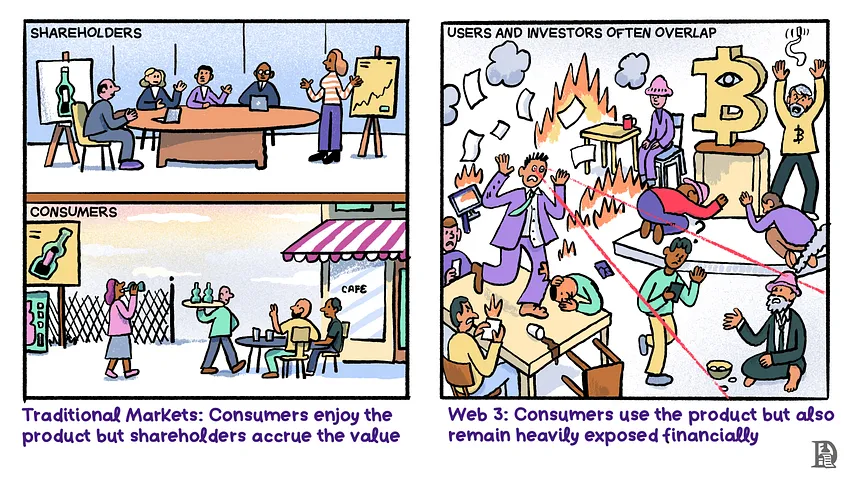
A common mistake marketers make is confusing loyalty to the token with loyalty to the product. Kraken’s Matthew explains this situation with a vivid analogy:
When consumers buy Coca-Cola, they only care about the dopamine rush that the drink brings, not the stock price of Coca-Cola - that is what institutional investors such as Warren Buffett need to pay attention to. However, in the field of cryptocurrency, users are closely connected to assets:
- Most users focus on assets first
- Often less concerned with the underlying product itself
This may explain why Web3’s user base is primarily concentrated in exchanges rather than decentralized applications (dApps).
How to attract users in a period when the public's attention is mainly focused on the assets themselves? Andrew Saunders of Skale made several important points on this:
- The primary goal of marketers is to form a sticky community: not users who leave after the airdrop, not users who come only for testnet incentives
- Two main tools: using influencers (KOLs) and building a sustainable community
Using celebrities to build a user base has been a core strategy in tech cycles:
- In 1995, Matthew Perry and Jennifer Aniston, actors from "Friends", taught how to use Windows.
- In 2002, Will Ferrell shot an iPod commercial;
- Jay-Z also made a commercial for Rhapsody.
These cases show that celebrities can make emerging technologies " hot " in the early stages. But due to budget constraints, most marketers turn to cryptocurrency-native alternatives - creators with huge influence in Web3. However, there are two main problems with KOL marketing: the lack of necessary disclosure to the audience, and the difficulty in verifying whether the quality of the content is effective in educating the target audience. Recently, Kaito has solved these problems by providing creator audit capabilities. The platform verifies the influence of creators through algorithms, evaluates the quality and frequency of interactions, and generates a Yap score (a centralized quantitative indicator of the utility of creator content). This approach helps the protocol incentivize the right user groups and improve marketing effectiveness. Through this systematic approach, project parties can better evaluate and select partners, ensure the effective use of marketing resources, and provide users with more valuable content.

Kaito also offers a protocol-native Yap dashboard. For example, if a project like Monad or EigenLayer wanted to understand who their top "Yappers" (or contributors) are on the social media platform, the platform would be able to map that out for them. Marketers could then use those ratings to incentivize creators through airdrops. While it’s all still early days, it’s safe to say that Kaito is already having a substantial impact in terms of user education and creator discovery. That doesn’t mean that marketers’ jobs have become any easier with their dashboard. Often, spreading stories and guiding users requires a combination of emotional intelligence and raw data. Andrew’s experience provides a great example.
Andrew worked at Amazon in his early days. One of their marketing policies was not to work with individuals with an arrest record. At some point, the company decided to work with multiple hip-hop artists to expand their market reach. Given the high rate of arrests of hip-hop artists, Andrew had to work hard to change internal policies to move forward with this campaign. At this point he had reached the final stage needed to bring in creators: changing the culture. Often, company (or protocol) policies prevent great creators from joining and helping spread emerging technologies.
Marketers with enough influence in early protocols have the ability to define their own culture. Dan Held of Asymmetric is well known for his involvement with Taproot Wizards. One of the requirements to mint a Wizards NFT is that you have to take a shower photo. While most communities would relax the requirement for large influencers or investors, Taproot stuck to this promise. Every member of the NFT community must go through the same awkward process to mint an NFT. Most of Taproot’s external communications maintain this quirky energy that seems disconnected from traditional marketing, but it helps foster a culture that is loyal to the community. This is also reflected in their manifesto.
Few marketers have the power and influence needed to bet on emerging creators. The work is often less about analyzing click-through rates or view counts and more about being able to appreciate the impact that independent creators can bring to the table.
- In 2008, Barack Obama made history as the first president elected primarily through social media attention. He was a young politician who bet on emerging technologies to fuel his campaign.
- In 2024, President Trump received a large amount of support from crypto native supporters, who are single-issue voters.
In both cases, emerging technologies had a significant impact on a country’s fate.
Between the ongoing drama on Twitter and the emotions evoked by falling prices, we tend to lose sight of the fact that a cryptocurrency’s success ultimately depends on its ability to attract users.
This affects marketers more because they are often the first to be laid off in a downturn and it is difficult to quantify the direct impact of their work. However, our industry's evolution from darknet currency to mainstream has relied heavily on marketers' ability to turn code into stories that leave an imprint in people's minds . If we are to attract the next billion users, we must simultaneously empower them, value them, and celebrate them.
* Note: Decentralised.co is one of the largest holders of Kaito NFTs. These NFTs were obtained as part of an airdrop to paying subscribers. They have been users of the platform since Q1 2024.