
Author of this article: Crypto, Fat Meimei
In today's wave of globalization, Web3 projects are moving towards the international stage at an unprecedented speed, and Chinese companies are a force that cannot be ignored. However, the uncertainty of China's industry policies, the lack of laws, and the ambiguity of regulatory attitudes have made the development of Web3 companies hesitant. These factors work together to make Web3 projects face compliance challenges in domestic development, and many practitioners have to turn to overseas or seek breakthroughs within a limited compliance framework. However, by paying close attention to policy trends and combining the preferential policies of various countries, and rationally building a corporate compliance framework, the Web3 industry may still find a suitable development model.
Purpose of going overseas
1. Market opportunities
The global market provides Web3 projects with a broader user base and growth potential. Especially in regions such as Asia and Europe, users are more receptive to blockchain technology and cryptocurrency, which brings more business opportunities and development space for projects.
2. Regulatory environment
Different countries have significantly different regulatory policies on blockchain and cryptocurrency. Some countries, such as Singapore and Hong Kong, have relatively relaxed and friendly regulatory environments, which provide greater flexibility and security for the operation and development of Web3 projects. In contrast, strict regulations in some countries may restrict the development of projects. In some countries, Web3 projects may face legal and compliance challenges. Going overseas to countries with more friendly legal environments can effectively reduce these risks and ensure the long-term stable operation of the project.
3. Talent Acquisition
Web3 is a technology-intensive field, and attracting top developers and experts is crucial to the success of the project. By going global, the project can find and recruit outstanding talents around the world, thereby accelerating the innovation and development of technology and products.
(IV) Funding and Investment
Going overseas enables Web3 projects to reach more potential investors and funding sources. Especially in regions with active venture capital and cryptocurrency investment, such as the United States or Southeast Asia, projects can more easily obtain financial support and promote their rapid development.
(V) Industrial cluster effect
Due to their inherent advantages in technology and policies, different countries and regions have gathered into different industrial clusters and formed regional supply chains, providing different basic support for local Web3 companies.
(VI) Risk Diversification
Conducting business in multiple countries can disperse risks and avoid major impacts on projects caused by economic, political or regulatory changes in a single market, thereby improving the project's risk resistance.
Compliance and risk isolation
When choosing an overseas destination, Web3 companies must prioritize the local regulatory framework to ensure legal and compliant operations.
1. Compliance policies of various countries and regions
Hongkong:
Hong Kong has implemented a virtual asset service provider (VASP) licensing system since 2023, requiring all virtual asset trading platforms (VATP) to obtain a license from the Hong Kong Securities and Futures Commission (SFC). As of January 2025, the SFC has issued operating licenses to platforms such as PantherTrade and YAX, with a total of 7 licenses obtained since mid-2024. Since 2020, Hong Kong has officially licensed 10 exchanges, including 4 in December 2024, showing its cautious openness to the virtual asset industry. Licensing requirements include strict KYC processes, asset protection and cybersecurity measures, aimed at protecting investors and preventing money laundering risks.
Singapore:
The Monetary Authority of Singapore (MAS) provides regulatory support to enterprises by allowing fintech companies to test innovative products in a controlled environment through the Regulatory Sandbox. Coinbase's compliance layout in Singapore shows its friendly adaptation to regulation: it obtained the preliminary approval (In-Principle Approval) from MAS in 2022 and further obtained the full license (Major Payment Institution License) in 2023. This shows that Singapore has become the Asia-Pacific hub for Web3 enterprises, and Coinbase has set up its Asia-Pacific institutional business here, showing its confidence in the local regulatory environment.
Other regions: Europe, Asia Pacific and North America:
The EU’s Markets in Crypto-Assets Regulation (MiCA) will come into force at the end of 2024, unifying regulatory standards for crypto assets. MiCA requires crypto-asset service providers to register and adhere to transparency, liquidity, and consumer protection standards.
In the Asia-Pacific region, Japan requires virtual asset service providers to obtain a license from the Financial Services Authority (FSA), while Australia requires them to register as digital currency exchange service providers and be regulated by the Australian Transaction Reports and Analysis Centre (AUSTRAC). In North America, the US SEC has stricter regulation of crypto assets. For example, Binance and Coinbase have faced lawsuits, but they are still actively communicating with regulators to seek a clear framework.
2. Risk Isolation
The risk isolation mechanism is an important part of the Web3 project's compliance framework in cross-border operations. Its core goal is to ensure that risks in different business segments or regions will not be transmitted to each other through the reasonable design of the enterprise architecture, thereby protecting the overall stability and sustainable operation capabilities of the enterprise. In the globalized Web3 industry, the risk isolation mechanism is particularly critical due to the significant differences in regulatory policies, legal environments, and market risks in different jurisdictions.
For example, independent subsidiaries are established in different countries or regions. Each subsidiary is an independent legal entity responsible for business operations in a specific market. Legal, financial and operational risks can be limited to specific entities to prevent risks from spreading to the entire corporate group. Each entity operates independently and does not interfere with each other. Even if a region faces regulatory changes or legal challenges, other entities can still operate normally. This design not only improves the company's ability to resist risks, but also makes it easier to adjust strategies according to the needs of specific markets.
Placing core assets (such as technology patents, intellectual property rights, brands, etc.) in a specific holding company or trust structure to protect them from the risks of the operating entity. For example, a company can register its core assets in a holding company in the British Virgin Islands (BVI) or the Cayman Islands, while placing high-risk operating businesses in subsidiaries in other regions. Even if the operating entity faces litigation or financial difficulties, the core assets can still be protected, thereby ensuring the long-term development of the company.
Through contracts and agreements, the rights and obligations of various entities are clarified to ensure that risks are effectively isolated at the legal level. For example, enterprises can clearly divide the business boundaries and responsibilities of various entities through service agreements, license agreements or fund transaction agreements. This approach not only reduces the possibility of risk transmission, but also provides flexibility and transparency for enterprises to operate in compliance with global regulations.
By reasonably establishing an enterprise architecture isolation mechanism, Web3 enterprises can respond flexibly to regulatory requirements and risk challenges in different markets, ensure the security of core businesses and assets, and maintain the stability of global operations.
Major overseas destinations for Chinese enterprises
1. Hong Kong
As an international financial center, Hong Kong has mature financial infrastructure and a sound legal system, providing a stable operating environment for Web3 companies. Compared with other regions, Hong Kong has a looser supervision of Web3 projects, which makes it easier for start-ups to quickly conduct business. In recent years, the Hong Kong government has actively promoted the development of blockchain technology, and has created good development conditions for Web3 companies through policy incentives and support measures.
2. Singapore
Singapore is Asia's leading fintech hub, with an advanced technology ecosystem that has attracted a large number of Web3-related companies. The Singapore government is open to blockchain and Web3 technologies, and has formulated clear regulatory policies to help companies grow rapidly while complying with regulations. Singapore's tax system is relatively favorable, which reduces operating costs for Web3 companies and enhances their attractiveness.
(iii) BVI (British Virgin Islands)
BVI is known for its fast and simple company registration process and low registration fees, which is suitable for Web3 startups to set up quickly. BVI provides strict privacy protection policies to ensure the security of company and shareholder information, which is very suitable for privacy-focused Web3 projects. The local legal system is flexible and provides significant tax benefits, making it an ideal choice for offshore registration.
The structure of the overseas architecture
The underlying logic of the global compliance layout is to establish different entities, build a regionalized compliance framework, and give full play to the unique advantages of each region through shareholding or substantial control. This approach makes offshore companies no longer just a synonym for "evading regulation" or "tax havens", but through reasonable planning, they become a "strategic hub" for companies to build a global compliance system and optimize the allocation of funds and resources. Enterprises can flexibly build a multi-level, multi-ecological corporate strategic system such as a single-entity structure, a multi-entity structure, and a parallel structure according to the needs of different development stages to adapt to the demands of different scenarios and stages.
1. Architecture Applicability
In terms of the applicability of the architecture, different enterprise architecture designs can meet the goals of the enterprise at different development stages and business needs.
(1) Single Entity Architecture
A single-entity structure is suitable for startups or small companies that want to quickly validate their business model and focus on a single market.
This structure is simple, has low management costs, and is easy to start and operate quickly. For example, a startup company registers a single entity in Singapore, which can quickly enter the market and enjoy local tax incentives while avoiding complex cross-border management burdens.
However, as the scale of enterprises expands and the business becomes more complex, the shortcomings of the single-layer architecture gradually become apparent. It may not be able to meet the compliance requirements of the global market, such as differences in regulatory standards in different regions, and it is difficult to achieve efficient allocation of resources and effective isolation of risks. When enterprises need to enter multiple markets at the same time, a single entity may face tax, legal or operational bottlenecks.
(2) Multi-entity architecture
The multi-entity structure is suitable for enterprises with long business lines, complex sectors and diverse equity structures.
By establishing subsidiaries or affiliates in different jurisdictions, a multi-entity structure can achieve risk isolation, tax optimization and market adaptation. For example, a technology company sets up a subsidiary in the EU to comply with GDPR (General Data Protection Regulation) requirements, and at the same time sets up a holding company in the Cayman Islands to optimize the global tax structure. This structure controls legal and financial risks in specific regions by dispersing entities, while enhancing the company's operational flexibility around the world. It supports the allocation of resources between companies in different markets and enhances global competitiveness through a regionalized compliance framework.
Suitable for companies that have entered the expansion stage and need to deal with multi-national regulatory environments and diversified business needs. For example, some leading exchanges have established subsidiaries in Southeast Asia, Europe, and North America, and launched different versions of apps to adapt to local consumer habits and legal requirements.
(3) Parallel architecture
A parallel structure is another more complex design, which is generally a direct combination of equity or business in multiple multi-entity structures. It is particularly suitable for companies that need to operate multiple business segments independently.
The parallel structure ensures that each business segment does not interfere with each other legally and financially by establishing multiple independent entities. For example, a group may operate manufacturing, retail, and financial services at the same time. Through the parallel structure, each segment can establish an independent legal entity to prevent the risk of a certain segment from spreading to other businesses. However, through equity control or business combination, there will still be close connections and synergies between the various segments. A Web3 company can independently operate technology development and business promotion in different regions, which not only meets local compliance requirements but also optimizes global resource allocation.
This design not only improves management clarity, but also enables greater flexibility and stability in the global compliance layout, and is more suitable for companies with diversified businesses.
(II) Analysis of architectural advantages
(1) Single Entity Architecture
The characteristic of a single-entity structure is that an enterprise can take full advantage of the policy and regulatory advantages of the chosen jurisdiction to achieve rapid compliance and operation. The regulatory environment in different regions provides unique opportunities for enterprises.
For example, if an enterprise values financing or the technology cluster effect, it can choose Singapore as its place of registration. Singapore's financing legal supervision is relatively loose, especially in terms of capital markets and financial innovation. This provides Web3 enterprises with flexible financing channels, which helps to quickly raise funds and promote project development. In addition, the Singapore government actively encourages the development of high-tech enterprises and provides enterprises with a number of policy support and financial incentives. Enterprises can use these policies to reduce R&D costs and accelerate technological innovation.
If the company pays more attention to taxation and shareholder privacy, it can choose BVI as the place of company registration. BVI is known for its strict privacy protection policy and is particularly suitable for Web3 companies that focus on information security and shareholder rights protection. Companies registered here can enjoy a high degree of commercial confidentiality protection while benefiting from simplified regulatory requirements and a low tax environment.
(2) Multi-entity architecture
Case: China → Singapore → Domestic Company
The characteristic of a multi-entity structure is that it can organically combine the regulatory advantages of different regions and optimize compliance and operations by establishing subsidiaries or affiliated companies around the world.
For example, a BVI holding company is established to control a Hong Kong financial company, and then the Hong Kong company controls a domestic operating company. BVI companies have the advantages of low tax rates and privacy protection, Hong Kong holding companies enjoy Hong Kong's financial convenience and tax incentives, and operating companies enjoy scientific research-related subsidy policies and technology industry advantages in the Chinese domestic center, optimizing the global holding structure and protecting core assets.
Through a multi-entity structure, companies can not only flexibly allocate resources between different markets, but also control legal and financial risks in specific regions, ensuring that the company operates in compliance with regulations around the world.
(3) Parallel architecture
For example:
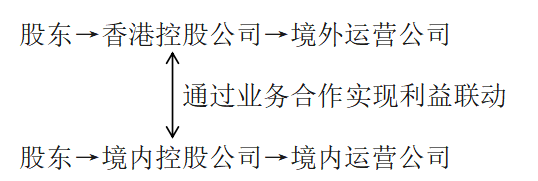
The regulatory characteristics of the parallel structure are its high flexibility and risk isolation capabilities, which are particularly suitable for enterprises with group structure, diversified businesses and complex equity needs.
For example, by setting up multiple independent entities, the parallel structure ensures that each business segment does not interfere with each other in terms of law and finance, and avoids the regulatory risks of one segment from affecting other businesses. A Web3 company may independently operate technology development and business promotion in different regions, which not only meets local compliance requirements but also optimizes global resource allocation.
Although each entity operates independently, through equity control or business combination, each sector can still achieve close connection and synergy. A multinational company set up a technology R&D center in Singapore and a Web3 service company in Hong Kong. The two cooperated through equity or business transactions to jointly promote technological innovation and market expansion.
The parallel structure not only improves the flexibility and stability of enterprises in their global compliance layout, but also provides a solid foundation for enterprises to achieve sustainable development in a complex regulatory environment.
Tax advantages of the structure
When choosing the registration location for a structured entity, it is necessary to keep abreast of local regulatory policies, technology and cost-cutting and efficiency-enhancing needs, as well as in-depth cooperation between local service providers and compliance services, and in particular, pay attention to tax differences and preferential agreements in various regions.
1. Single Entity Architecture
A single-entity structure refers to an enterprise directly investing or operating overseas through a single overseas subsidiary. It is suitable for enterprises with concentrated business, small scale or a single target market.
Advantages: simple structure, easy to manage and control.
Disadvantages: May face relatively high tax burden and lack of risk isolation mechanism.

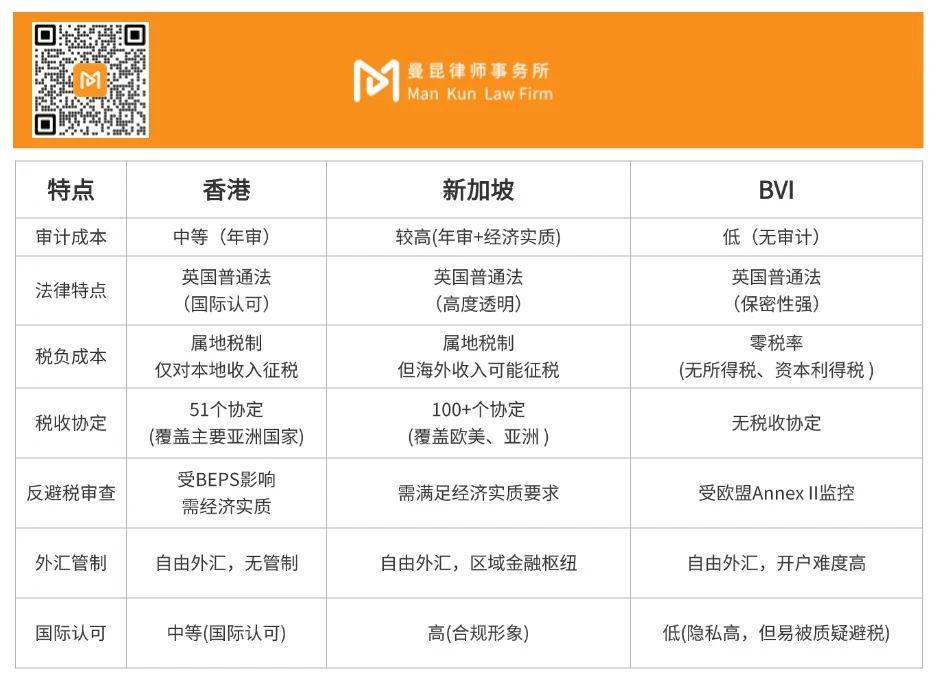
1. Hong Kong: The tax rate for the first 2 million profits is 8.25%, and more than 50 countries are exempt from double taxation.
Advantages: Corporate income tax (profit tax) 8.25%-16.5% (halved for the first HK$2 million in profits), no capital gains tax or value-added tax, tax treaties signed with more than 50 countries, free foreign exchange convertibility, and convenient listing and financing;
2. Singapore: 17% tax rate, wide coverage of bilateral tax treaty network
Advantages: 17% corporate income tax, tax exemption for the first three years, and bilateral tax agreements with more than 100 countries, which facilitates cross-border tax avoidance;
3. BVI: zero tax haven, strong confidentiality
Advantages: 0 corporate income tax, 0 value-added tax, 0 capital gains tax, extremely simple company registration process, and strong confidentiality of shareholder information;
(II) Multi-Entity Architecture
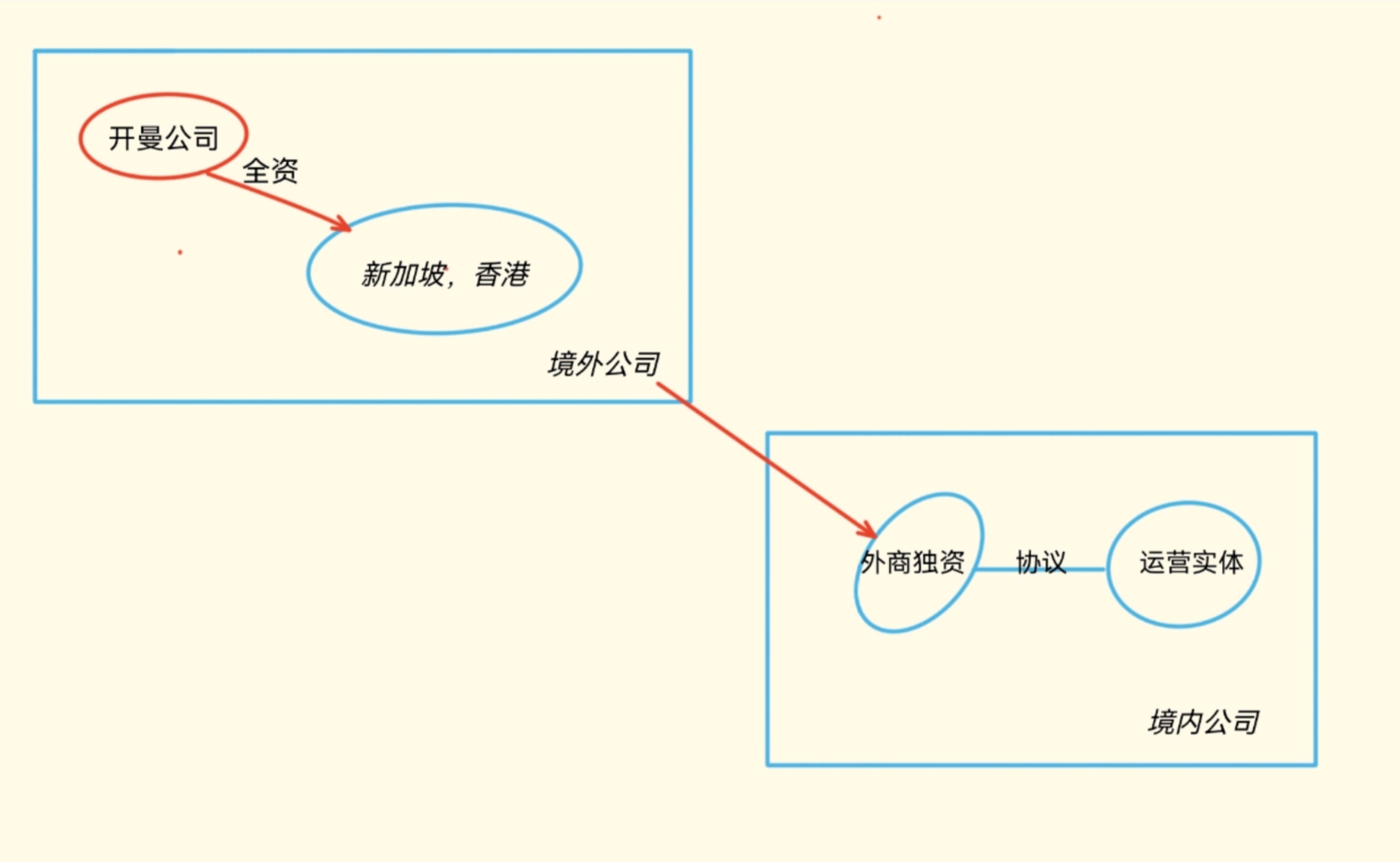
The use of a multi-entity structure allows for more effective tax planning. Domestic companies invest in target investment countries by establishing one or more intermediate holding companies in some countries or regions with low tax rates (usually Hong Kong, Singapore, BVI or Cayman). Taking advantage of the low tax rates and confidentiality of offshore companies, the overall tax burden of the company is reduced, while protecting corporate information, dispersing parent company risks, and facilitating future equity restructuring, sales or listing financing.
Advantages: You can take advantage of the tax preferential policies of various countries, reduce investment costs, and support global layout.
Disadvantages: Management is complex and tax compliance costs will also increase.
1. Top level: high confidentiality + low tax rate + free flow of capital
Place of registration: Cayman Islands, British Virgin Islands (BVI) and other offshore financial centers
Functions achieved: Shareholder and beneficiary information is protected by law, avoiding single market risks (dispersing geopolitical shocks).
2. Operational layer: connecting top-level investors with bottom-level operating entities + improving investment returns + profit reservation
Place of registration: Hong Kong/Singapore (trade compliance), Ireland/Netherlands (EU market), Dubai (Middle East market)
Function: Sign a double taxation avoidance agreement (DTT) with target investors to increase overall investment returns.
3. Actual operating company: business implementation + direct/indirect holding
Place of registration: Local companies in the target market
Functions implemented: on-site production, marketing, and localized services to meet localized operation requirements and select the place of registration based on business projects.
Case: Cross-border e-commerce
Architecture design:
Holding layer: BVI company (confidentiality) + Hong Kong company (financing and supply chain coordination)
Operational level: Hong Kong company (offshore trade tax exemption) + Dubai company (Middle East warehousing and logistics)
Physical layer: China mainland factory (export tax rebate) + Brazilian subsidiary (localized sales)
By holding a controlling stake in a Hong Kong company through a BVI company and then investing in the operating entity layer, the overseas holding company can achieve control over the operating entity company through a layered structure using the VIE agreement.
As the top-level holding company, the BVI company is exempt from withholding tax on dividends paid from Hong Kong to BVI, and future equity transfers are exempt from capital gains tax, thus protecting the privacy of the founder.
Case: Xiaomi Corporation
Architecture design:
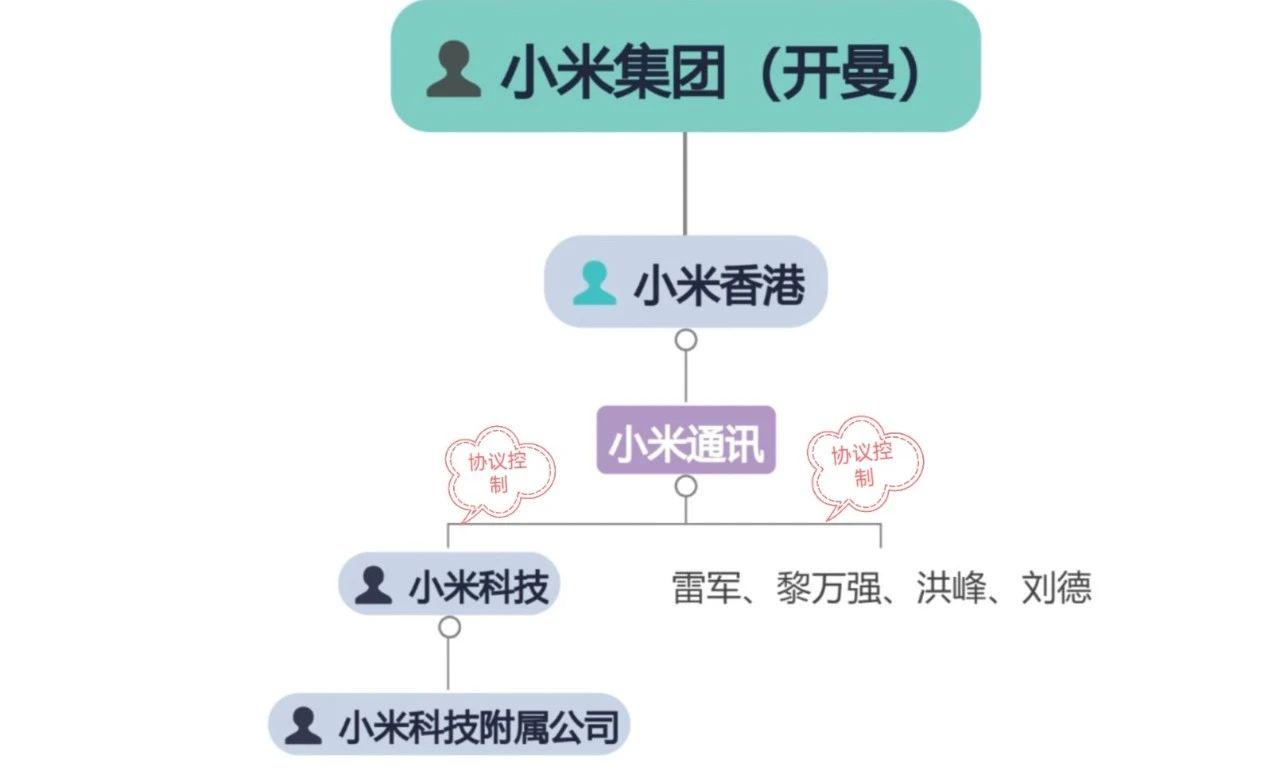
Holding layer: Xiaomi Group (Cayman)
Operational level: Xiaomi Hong Kong (global procurement + profit retention)
Physical layer: Xiaomi Communications (direct-to-consumer), Xiaomi Technology, and Xiaomi Technology subsidiaries
Xiaomi Group (Cayman) controls Xiaomi Hong Kong Company and then invests in Xiaomi Communications and other entities. Xiaomi Communications signs an agreement to control legal documents with Xiaomi Technology and its shareholders registered with the Industrial and Commercial Bureau, controls Xiaomi Technology and indirectly controls Xiaomi Technology's subsidiaries through the VIE agreement.
Summarize
In the context of globalization, Web3 projects going global has become a key strategy for Chinese companies to break through domestic regulatory restrictions and expand overseas markets. By going global, companies can not only effectively avoid compliance risks, but also seize international market opportunities, attract high-quality resources and achieve risk diversification. For example, Hong Kong, Singapore and BVI have become ideal destinations for Web3 companies due to their relaxed regulatory environment, tax incentives and sound infrastructure.
In terms of structure design, enterprises can flexibly choose single entity, multi-entity or parallel structure according to their own scale and goals to ensure compliance and isolate potential risks. At the same time, with the help of local policy advantages, enterprises can optimize capital flow through multi-entity structure and significantly reduce tax burden.
Looking ahead, with the global development of Web3 projects, enterprises are shifting from a single architecture to a hybrid architecture to achieve risk isolation, capital flow, strategic synergy and tax planning. By establishing multiple entities in different jurisdictions, enterprises can effectively isolate market risks and ensure compliance, while using offshore companies and holding structures to optimize capital flow, reduce tax burdens, and integrate global resources to enhance innovation capabilities and market competitiveness, and take advantage of the new opportunities brought by globalization for blockchain technology.