
Author: Lin Honglin, Zheng Hongde
This season, despite the shift in the strict U.S. digital asset regulatory environment under Trump, the world’s most popular product, perpetual contracts, which account for the vast majority of daily trading volume on global crypto trading platforms, remains off-limits to U.S. investors. Major global crypto trading platforms continue to restrict U.S. users from accessing their derivatives services due to regulatory requirements from the CFTC and SEC.
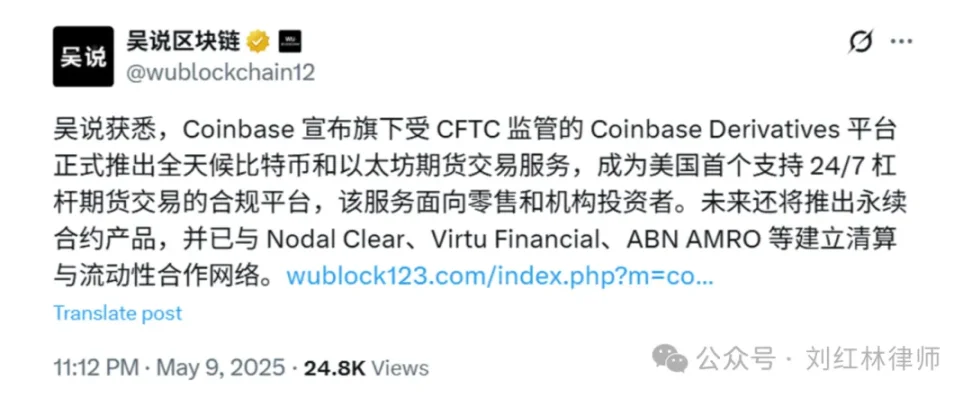
But just a few days ago, on May 9, 2025, Coinbase issued an announcement:
Coinbase announced that it has become the first compliant platform approved by the U.S. Commodity Futures Trading Commission (CFTC) to provide 24/7 Bitcoin and Ethereum futures trading, and the service is officially launched. This innovation breaks the trading hours restrictions of the traditional U.S. derivatives market, and investors can trade contracts at any time.
What is more noteworthy is that the announcement on Coinbase's official website emphasized that 24/7 futures trading is just the beginning, and perpetual contracts will be launched soon. Coinbase is actively working to introduce perpetual contracts, allowing American retail traders to trade one of the most widely used derivatives in the cryptocurrency field in a regulated environment. If all goes well, Coinbase will also become the first exchange to provide regulated perpetual contract services to American retail investors.
Friends who follow Mankiw’s WeChat account know that not long ago, Mankiw also compared the regulatory landscape of crypto exchange perpetual contracts in major countries and regions around the world in “Mankiw Research | Is Cryptocurrency Perpetual Contract Trading Gambling or Financial Derivatives? Mankiw Compares Global Regulatory Status Horizontally”. So soon, the content of the US part needs to be updated.
Furthermore, in the cryptocurrency world, when it comes to "security and compliance", Coinbase is almost an unavoidable name. This exchange has won the trust of retail investors and institutions with its strict regulatory compliance and transparent operations. It can be said that it is truly a "top student in the cryptocurrency world." With this news, Coinbase has once again set a new industry benchmark.
In this article, Attorney Mankiw would like to use Coinbase’s compliance history as a perspective to talk about how the “top student in compliance in the cryptocurrency world” has come to where it is today. He would also like to update everyone on the regulatory trends in the U.S. crypto derivatives market, talk about the trend of 24/7 trading, and discuss the regulatory landscape of perpetual contracts in mainland China and major countries and regions around the world.
A top student in the cryptocurrency world, looking back at the history of Coinbase
The story of Coinbase began in 2012 in San Francisco, California, USA. At that time, the cryptocurrency market was still in its infancy, the price of Bitcoin was still hovering in the double digits, and the industry was full of speculation and gray areas. However, founders Brian Armstrong and Fred Ehrsam saw a different future: they believed that if cryptocurrency wanted to become mainstream, it had to follow a compliant path. Therefore, Coinbase issued a military order of "legal operation" from the beginning, actively embraced supervision, and tried to set a benchmark for the entire industry.
Coinbase's road to compliance began with strict compliance with the U.S. Bank Secrecy Act. It was the first to introduce a comprehensive KYC and anti-money laundering process, requiring users to submit identity information and verify the source of funds. This practice was not popular at the time - after all, early users of cryptocurrency were mostly "liberals" who pursued anonymity and decentralization. But Coinbase understood that compliance was a stepping stone to the mainstream market.
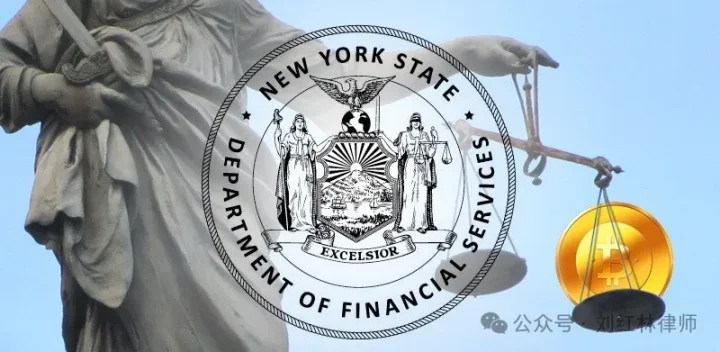
In 2015, Coinbase reached a key milestone: it received the "BitLicense" issued by the New York State Department of Financial Services (NYDFS). This "birth certificate" for virtual currency business was the most stringent regulatory license at the time, requiring companies to meet high standards in anti-money laundering, consumer protection and network security. Coinbase, which obtained the BitLicense, left its competitors behind in the compliance track and became the preferred platform for institutions and cautious investors. At the same time, many competitors were either directly cleared out of the US market due to regulatory pressure, or were struggling in the gray area.
On April 14, 2021, Coinbase went public directly on the Nasdaq, becoming the world's first publicly listed cryptocurrency exchange. This not only marks the commercial success of Coinbase, but also symbolizes the crypto industry's move toward mainstream finance. In the pre-IPO roadshow, Coinbase showed investors not only its impressive financial data, but also the transparency of its compliant operations. Public financial reports, strict audit processes, and cooperation with traditional financial giants such as PayPal and Visa have attracted institutional investors on Wall Street, including Goldman Sachs, Morgan Stanley, ARK Invest, etc.
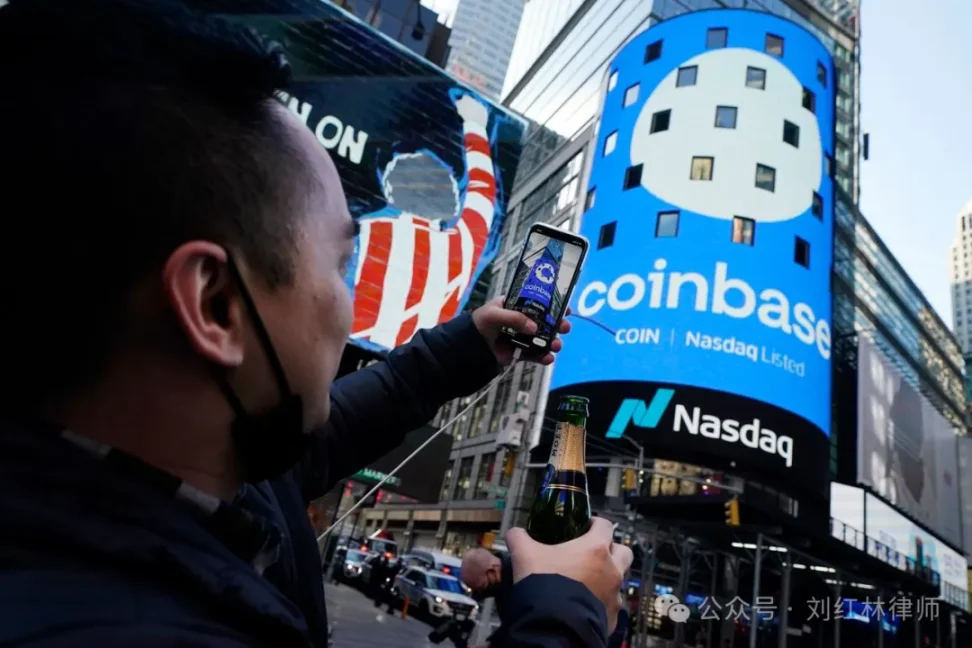
Naturally, retail investors also favor Coinbase. Many users call it the "safest exchange", and its compliance image also makes it a "safe haven" for newcomers and traditional investors to test the crypto market.
Compare with your peers and see who has made mistakes
Compliance is not an easy task, and even a strong company like Coinbase has encountered troubles. In 2023, the US SEC filed a lawsuit against Coinbase because its staking service was not registered as a security. Faced with regulatory pressure, Coinbase showed resilience: on the one hand, it actively responded to the lawsuit and hired a top team of lawyers to confront the SEC; on the other hand, it continued to promote dialogue with regulators in an attempt to obtain a clearer regulatory framework for the industry.
In comparison, the experiences of other exchanges are more like a mirror, reflecting the foresight of Coinbase's compliance strategy.
BitMEX: The cost of not registering
BitMEX was once the king of derivatives trading. Even the perpetual contract itself was invented by Arthur Hayes, the founder of BitMEX. High-leverage contracts attracted countless speculators. However, the aggressive operating strategy buried many hidden dangers. BitMEX has not been registered as a legal trading platform in the United States for a long time, but it provides services to American users, which violates the Commodity Exchange Act and the regulations of the Commodity Futures Trading Commission (CFTC).
In October 2020, the CFTC and the U.S. Department of Justice launched a joint enforcement action against BitMEX, accusing it of illegal operations and violating anti-money laundering regulations. As a result, BitMEX was fined $100 million, and its founders and executives Arthur Hayes and Ben Delo were criminally prosecuted. Afterwards, BitMEX lost a lot of users, and its market share was quickly eroded by Binance and FTX.
Binance: The devastating blow of noncompliance
As the world's largest crypto exchange, Binance has long been known for its "borderless" operations. However, this strategy has also become a double-edged sword in an environment of increasingly tightened regulation. In November 2023, the U.S. Department of Justice, CFTC, and the Treasury Department's Financial Crimes Enforcement Network jointly launched an investigation into Binance, accusing it of violating AML regulations, facilitating illegal capital flows, and even involving money laundering and terrorist financing.
The results of the investigation were shocking: Binance was fined $4.3 billion, setting a record for fines in the crypto industry. Founder Zhao Changpeng CZ was forced to resign as CEO and pay a personal fine of $50 million. More fatally, Binance was required to withdraw from the US market, and the business of its US subsidiary Binance.US shrank significantly and plummeted.
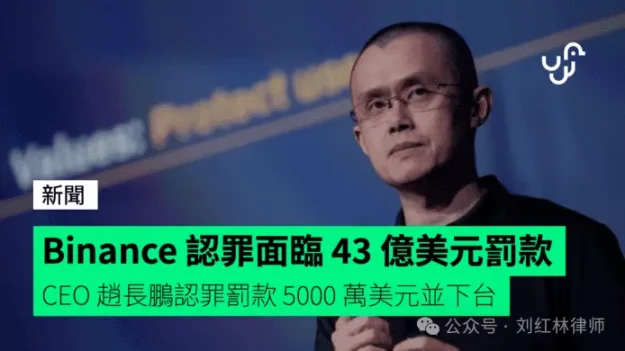
It can be seen that exchanges seem to have formed two paths in development:
The first path is to act first and ask for permission later. As CZ once mentioned: It is better to ask for forgiveness later than to ask for permission in advance.
In some places, supervision is still imperfect, and some exchanges choose to enter the market quickly to pursue expansion and solve compliance problems afterwards. Once supervision is tightened, these exchanges often face huge fines, business restrictions or even market withdrawal.
The second path is compliance first, which is what today’s article mentions, with Coinbase as an example, as an exchange that takes compliance as the core of its strategy.
Similar to Coinbase, Hong Kong exchange Hashkey also actively embraced regulation. In 2020, HashKey obtained a virtual asset trading platform license issued by the Hong Kong Securities and Futures Commission (SFC), becoming one of the first compliant exchanges in Hong Kong. After Hong Kong opened retail crypto trading in 2023, HashKey quickly attracted a large number of local users, and its market share far exceeded that of unlicensed competitors.
We all know that in this increasingly mature global regulatory environment, exchanges that put compliance first always have some advantages. Here are a few simple points:
1. Get regulatory approval before competitors and take over the market legitimately;
2. It is easier to be favored by traditional institutions and become the first choice for "old money" to enter the cryptocurrency circle;
3. Avoid small mines, avoid big mines, and establish sustainable development.
The lessons of BitMEX and Binance are clear: ignoring compliance may bring short-term dividends, but in the long run, it is a bit like dancing in a minefield. In contrast, although Coinbase and Hashkey's compliance strategies are more thoughtful and invested, they have won them regulatory trust and more certain sustainable development.
Year after year, the crypto market is gradually coming to the fore, but there is still a long way to go, and sometimes - slow is fast.
Highlights: Coinbase builds a "compliant ecosystem"
Attorney Mankiw noted that Coinbase also had another highlight this time. In the announcement, Coinbase also introduced many partners one by one:
“Together with our first-day clearing partner Nodal Clear, leading market maker Virtu Financial, and top futures commission merchants – ABN AMRO, Wedbush Securities Inc., and Coinbase Financial Markets – we are bringing 24/7 trading to the regulated U.S. futures markets for the first time.”
In terms of trade clearing, Coinbase has partnered with Nodal Clear to ensure that all trades are cleared through a CFTC-regulated clearing house, providing strong transparency and compliance.
In the hope of establishing reliable liquidity, Coinbase has partnered with experienced market makers such as Virtu Financial to help the growing digital asset ecosystem and bring continuous liquidity.
In addition to financial markets, Coinbase offers 24/7 trading through leading FCMs such as ABN AMRO and Wedbush Securities Inc., supports CDE products, expands availability, and provides a seamless onboarding experience for all types of traders in the U.S.
The compliance endorsement attracted better partners, built a stronger ecosystem, and Coinbase's development entered a positive cycle.
Bob, Executive Vice President of Wedbush Securities, said:
“The launch of 24/7 trading on U.S. futures is a milestone that redefines access, flexibility, and responsiveness in modern markets. We are excited to be working with Coinbase Derivatives to support a structure that finally lives up to the global, always-on nature of cryptocurrency with the safeguards of a regulated exchange.”
This ecosystem is a microcosm of the maturity of the crypto derivatives market. A journey of a thousand miles begins with a single step, and Coinbase, which puts compliance first, is taking each step more steadily.
All-weather trading and perpetual contracts are the trend
Interestingly, the appeal of 24/7 trading has already spread beyond the cryptocurrency world. Traditional stock exchanges are also worried:
- New York Stock Exchange's Arca platform announced plans to expand to 22 hours a day in 2024
- Nasdaq has applied to regulators for 24-hour trading, five days a week.
- Traditional exchanges in Singapore have begun testing crypto perpetual futures, targeting institutional and professional investors.
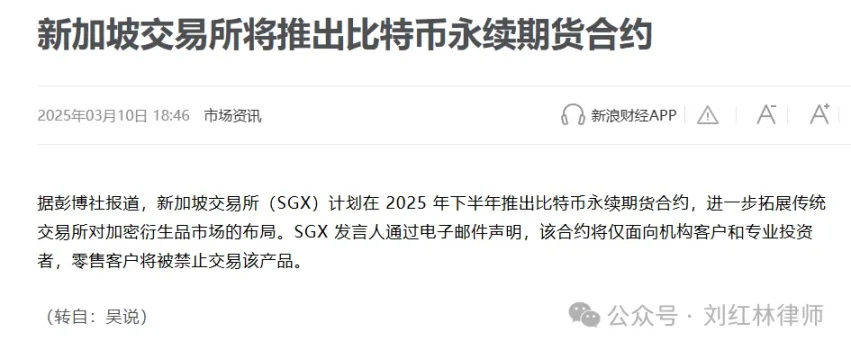
These actions show that all-day trading is not an exclusive carnival in the cryptocurrency circle, but the future direction of the financial market. Traditional exchanges are accelerating their exploration to meet the growing demand of institutional investors for all-day trading. As the initiator of the trend, the crypto market has ushered in traditional followers. Standing at the forefront of this wave, Coinbase continues to set an example for traditional finance with the CFTC's supervision and compliance ecosystem. All-day trading is a trend, and perpetual contracts are also a trend.
Review: Global Regulatory Landscape of Perpetual Contracts
Lawyer Mankiw has made a systematic horizontal comparison in previous articles. In mainland China, perpetual contracts are still considered as "opening a casino" by some judicial authorities, which is different from the regulatory style of major countries and regions in the world:
- The EU's MiCA Act and MiFID II define perpetual contracts as "crypto asset derivatives" and regulate them in the same way as traditional derivatives;
- The Monetary Authority of Singapore (MAS) considers perpetual contracts as financial derivatives, which have high entry barriers and can only be operated by licensed exchanges;
- Spot trading is now open in Hong Kong, and the regulation of perpetual contracts is pending. It tends to be positioned as a financial instrument, and there are also voices that crypto derivatives will be gradually tested...
- In the United States, crypto derivatives are regulated separately by the CFTC and the SEC. Coinbase was the first to obtain approval from the CFTC to launch 24-hour Bitcoin and Ethereum futures trading, and plans to introduce regulated perpetual contracts, which is to lead the market to further breakthroughs and move towards standardization.
In summary, the global regulatory style is generally consistent: perpetual contracts are financial derivatives, belonging to the same family as futures and options.
Looking at Coinbase's "slow is fast" path, it can be said that it has shown foresight: actively embracing regulation not only wins trust, but also promotes the maturity of the regional crypto derivatives market. Compliance is the core strategy, actively cooperating with supervision, and even guiding the development of crypto derivatives regulation in turn.
Attorney Mankiw's Summary
Coinbase has made a big move this time, becoming the first compliant platform approved by the CFTC to launch 24/7 Bitcoin and Ethereum futures trading, breaking the "9 to 5" restriction of the US derivatives market. What is more worth looking forward to is that perpetual contracts are also on the way, which not only reflects the new trend of US crypto derivatives regulation, but also makes this "compliance master" shine more brightly.
As an "excellent student" of the exchange, Coinbase is serious about compliance: from honestly doing KYC and anti-money laundering in 2012, to obtaining BitLicense in 2015, to ringing the bell at Nasdaq in 2021, it has always regarded supervision as a friend. This time, it has brought in a number of excellent partners such as Nodal Clear and Virtu Financial to create a transparent and compliant trading ecosystem. Coinbase's slow is fast and compliance first not only avoids minefields, but also wins the trust of institutions and retail investors, and firmly grasps market share.
Perpetual contracts are a trend, and global regulators classify them as "financial derivatives." However, mainland China's regulation seems to be lagging behind. Coinbase's success has given Web3 entrepreneurs a profound lesson: Only by adhering to compliance and embracing regulation can you go further.