
Author: Ismay
This morning, Virtuals announced that it will use the 12,990,427.85 $VIRTUAL accumulated through post-bonding transaction income to repurchase and destroy relevant proxy tokens in the ecosystem based on the time-weighted average price (TWAP) within the next 30 days. The top repurchased tokens such as GAME, CANVO, and AIXBT all increased by more than 20%.

At the same time, Virtuals has updated the value accumulation mechanism. The main changes include:
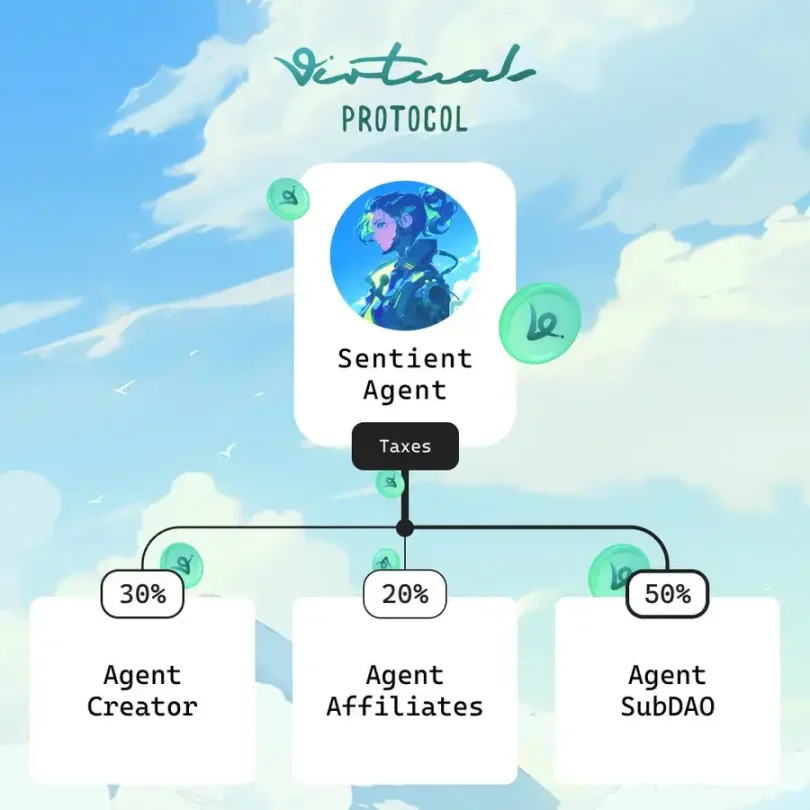
Later pledge tax distribution: 30% is allocated to Agent Creators, 20% is allocated to Agent Affiliates, and 50% belongs to Agent subDAO as a fund reserve for future governance decisions;
Creator Reward Collection Method: The reward will be sent directly to the wallet of the agent deployer.
Agent Affiliates Mechanism: To achieve revenue sharing between various trading platforms or interfaces (such as Telegram Bot) and Virtuals ecosystem. After becoming an agent alliance, the platform will receive 20% of the subsequent staking tax generated by the exchange it facilitates, in order to motivate its community and subsequent project planning.
Why this upgrade happened and what impact does it have
Each Virtual token will create a liquidity pool with $VIRTUAL as the paired asset (such as AIXBT/VIRTUAL), and the platform accumulates a large amount of $VIRTUAL as income through transaction fees.
However, these revenues cannot be sold directly, otherwise it may cause market panic and damage the ecosystem, because the price drop of $VIRTUAL will also affect the proxy tokens pegged to it. In addition, if the funds are not handled properly, the platform may face huge tax burdens due to this part of unusable revenue.
Therefore, the platform chose to utilize this income by repurchasing and destroying ecological tokens.
Two types of tokens that benefit
1. Transaction fees are higher than the market value of the token
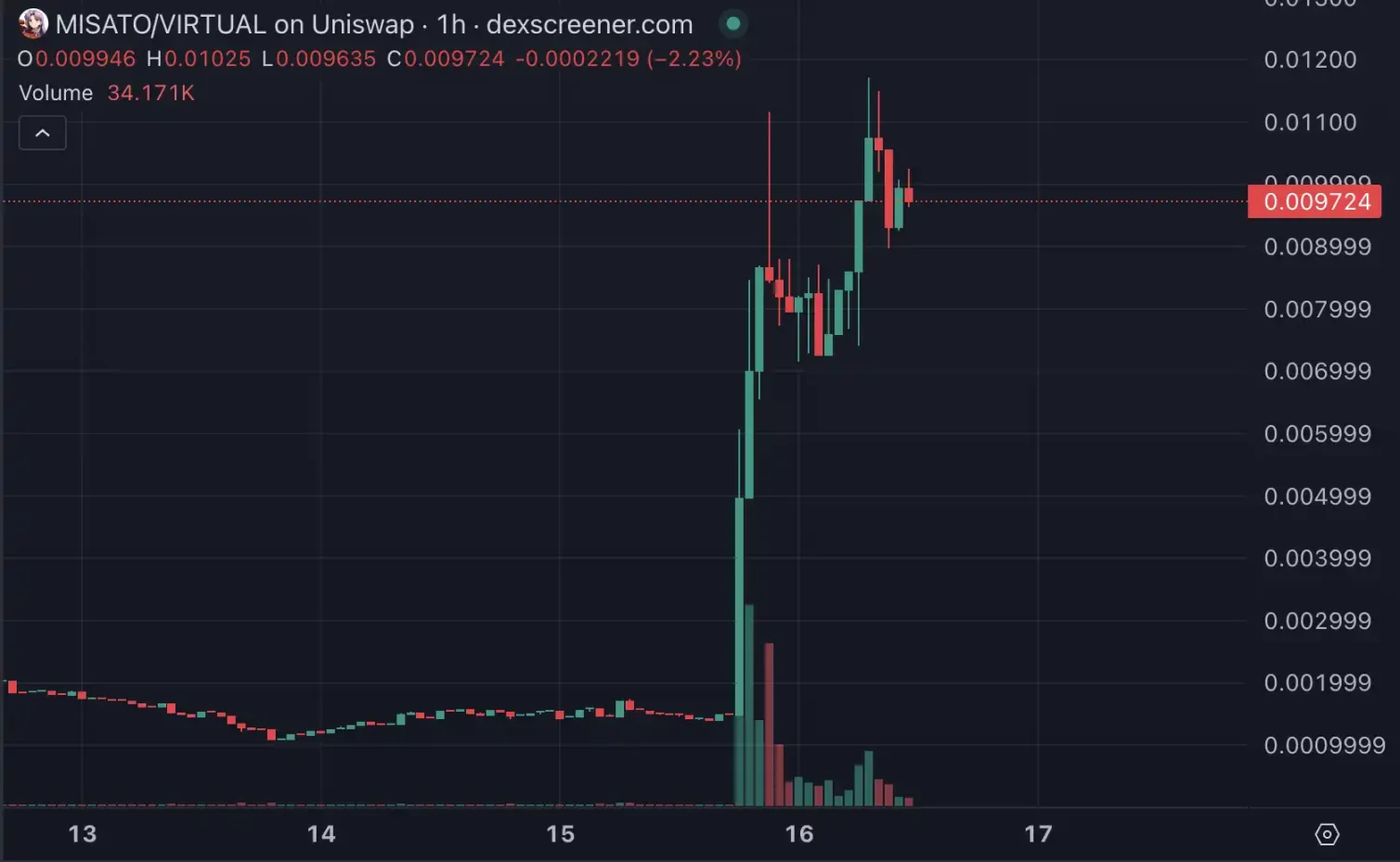
The repurchase amount depends on the accumulated amount of transaction fees, so tokens with a larger overall trading volume but a relatively lower market value will receive a larger proportional incentive.
For example, tokens like MISATO surged on the buyback news.
2. Tokens with most liquidity in non-VIRTUAL pairing pools
The unit of account (VIRTUAL) of such tokens is less affected by selling pressure, but still receives incentives from buybacks. For example, $AIXBT actually received about $2.5 million in incentives, but because its main liquidity is in other pools, it is less affected by VIRTUAL selling pressure.
The damaged groups
1. $VIRTUAL Holders
The $48 million sell-off is a significant amount, as the price of $VIRTUAL has benefited from the continued accumulation of transaction fees (equivalent to $48 million in value).
However, now these fees are converted into cBTC, which starts to exert selling pressure on the market. The positive cycle that drove $VIRTUAL up has now reversed into a negative cycle.
2. Tokens with only VIRTUAL pairing pool or low trading volume
These tokens receive less incentive and are subject to price pressure from the $VIRTUAL sell-off. Newly minted tokens are particularly affected as they accrue less fee income.
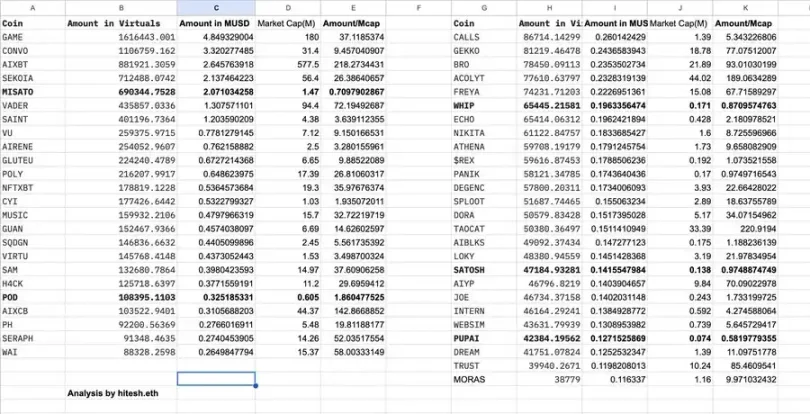
On-chain analyst hitesh.eth analyzed the top 50 tokens based on buyback and destruction allocations based on the 30-day time-weighted average price (TWAP) and found that the buyback pressure on some of these tokens even exceeds their current market value.
What does the community think of this buyback?
It can be said that this upgrade has brought stronger value support to the Virtuals ecosystem, but the community has expressed objections to the updated repurchase and distribution model. Some people believe that why Virtuals chose to sell $VIRTUAL instead of destroying these tokens directly. "This practice runs counter to the best interests of holders and the team, because the team actively created $48 million in selling pressure. For the ecosystem, part of the incentives flow to the proxy tokens whose liquidity is mainly located outside, causing funds to flow out of the ecosystem."
Crypto KOL Liam said that although Virtuals' conversion of handling fees to cBTC is the right direction of transformation, the platform should significantly reduce handling fees to reduce excessive extraction of the ecosystem. At the same time, the distribution of handling fees should be standardized according to the launch time of the token, so that new and old tokens stand on a fair starting point.
However, the view that "buybacks will bring huge selling pressure" has also been questioned as untrue, because these Agent tokens are paired with $VIRTUAL, and using $VIRTUAL to buy Agent tokens does not sell any $VIRTUAL, but only adds $VIRTUAL to the liquidity pool. If the liquidity pool is denominated in WETH, then $VIRTUAL will be converted to WETH first, but this is not the case this time.
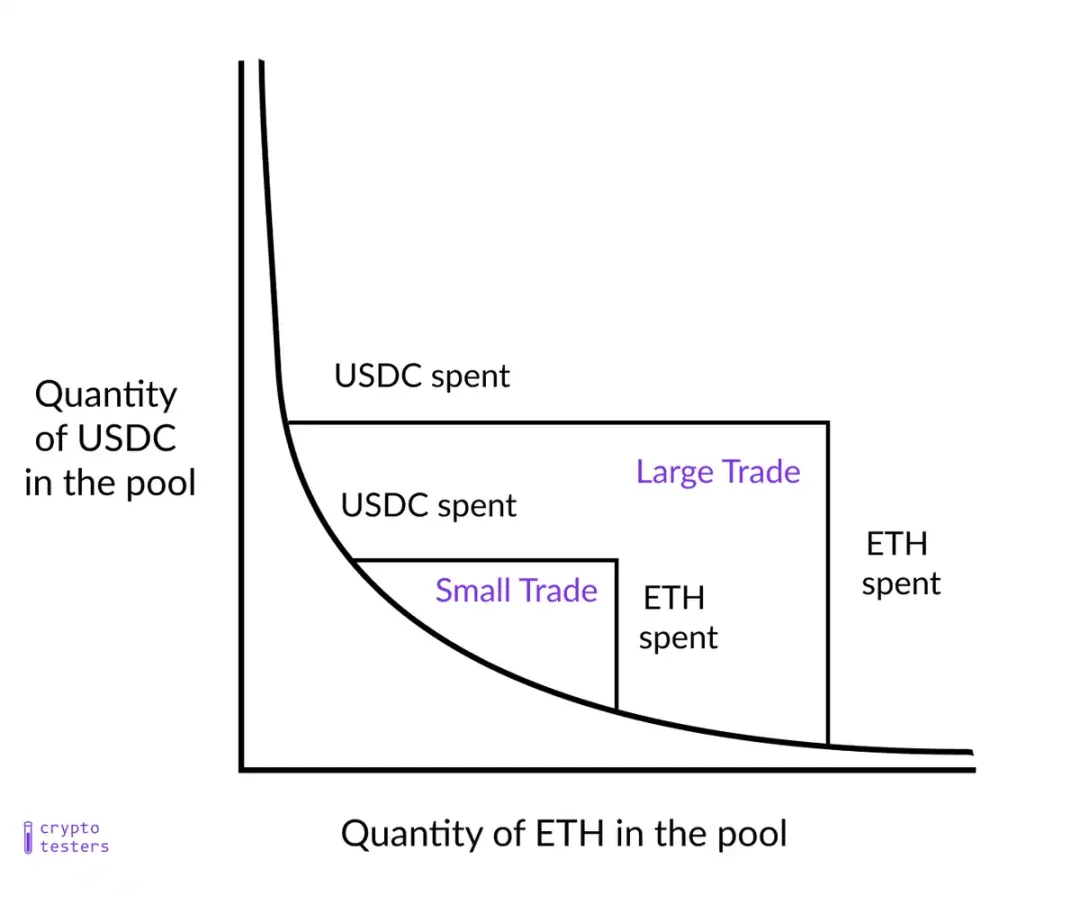
However, this does create indirect selling pressure, as the value of the token will increase due to the increase in the amount of $VIRTUAL in the liquidity pool, and holders may sell more $VIRTUAL. However, due to the nature of the liquidity pool and the price impact, and the low liquidity of many of these tokens, it is impossible for them to sell all the tokens directly.
Leftcurve DAO member mcSleuth believes that the announcement will not bring direct selling pressure, and the indirect selling pressure is almost negligible, especially considering that $VIRTUAL has a market value of US$3.6 billion and extremely high liquidity.