

Author: Deep Tide TechFlow
introduction
Nobody dislikes stories of underdogs achieving unexpected success.
On March 28, 2026, Chinese motorcycle manufacturer Zhangxue Motorcycle won the World Superbike Championship (WSBK).
The thrill lies not only in the nearly 4-second absolute lead, but also in the names left behind: Ducati, Kawasaki, Yamaha... For the past 37 years, the WSBK championship trophy has never left these European, American, and Japanese brands.
This is yet another perfect example of "overtaking on a curve," and it once again proves that:
In a field where there are many strong competitors and a dominant player, variables are often easily overlooked.
This phenomenon also deserves serious scrutiny on another track.
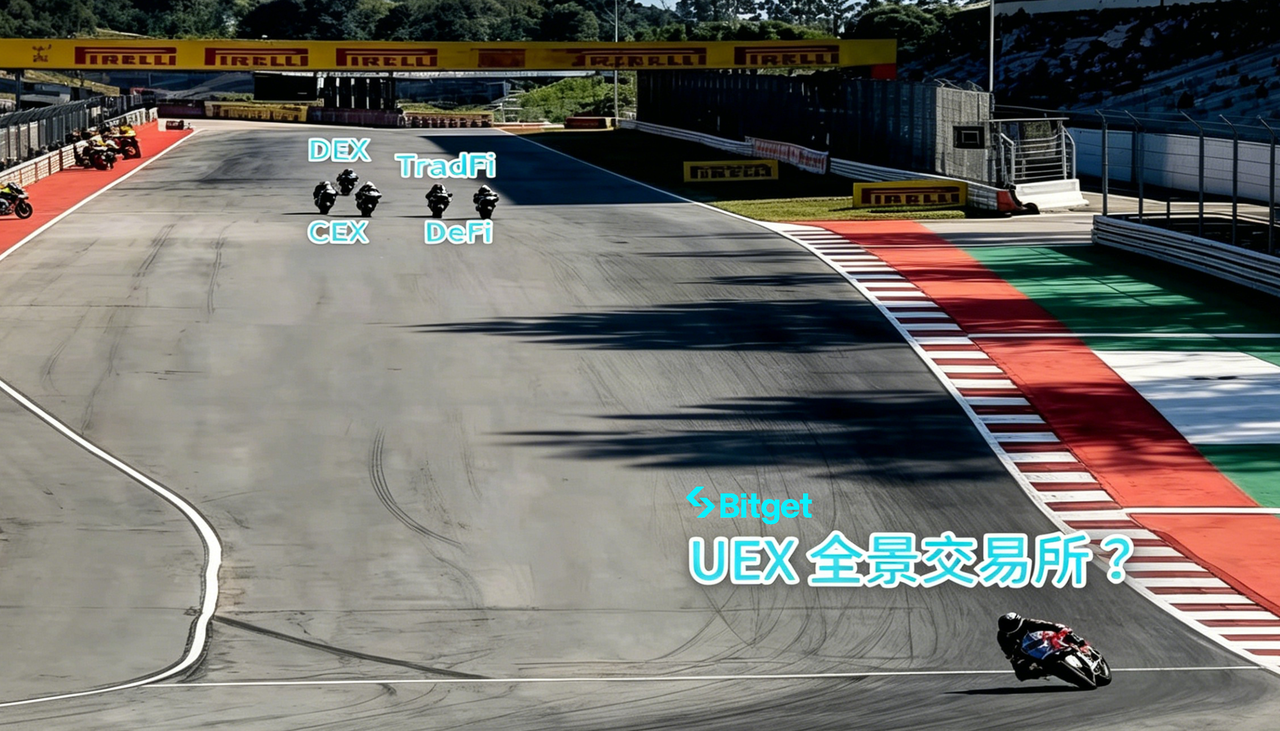
For the past decade, the power structure of cryptocurrency exchanges has remained largely unchanged, with most people's attention always focused on a handful of giants. However, as more and more platforms seek to break down the boundaries of traditional centralized exchanges (CEXs) and incorporate more TradeFi assets such as US stocks, gold, and crude oil into their trading systems, are more and more people also noticing:
Bitget was the first to set a full-asset trading platform as a strategic goal and to propose the concept of "UEX Panoramic Exchange".
Coincidentally, Bitget has a deep connection with motorcycles: Bitget is not only a regional partner of MotoGP, another top motorcycle racing series, but also launched the "Salute to the Courageous Pursuit of Dreams, Trade to Win Zhang Xue's Motorcycle" series of events immediately after Zhang Xue's motorcycle won the championship . This natural affinity for the spirit of challenge may not be accidental.
If Zhang Xue's motorcycle's rise to fame has prompted the outside world to re-examine the possibilities beyond the established giants, then is Bitget, which insists on betting on the UEX route in the exchange sector, seeking to replicate the "Zhang Xue script"?
To fully understand this issue, we might need to start by talking about UEX.
Freedom of trade, trapped in 72 apps
The success of Zhang Xue Motorcycles stems from the founder's understanding and dedication to motorcycles, while Bitget's selection of UEX as a strategic direction is due to its deep understanding of the needs of trading users.
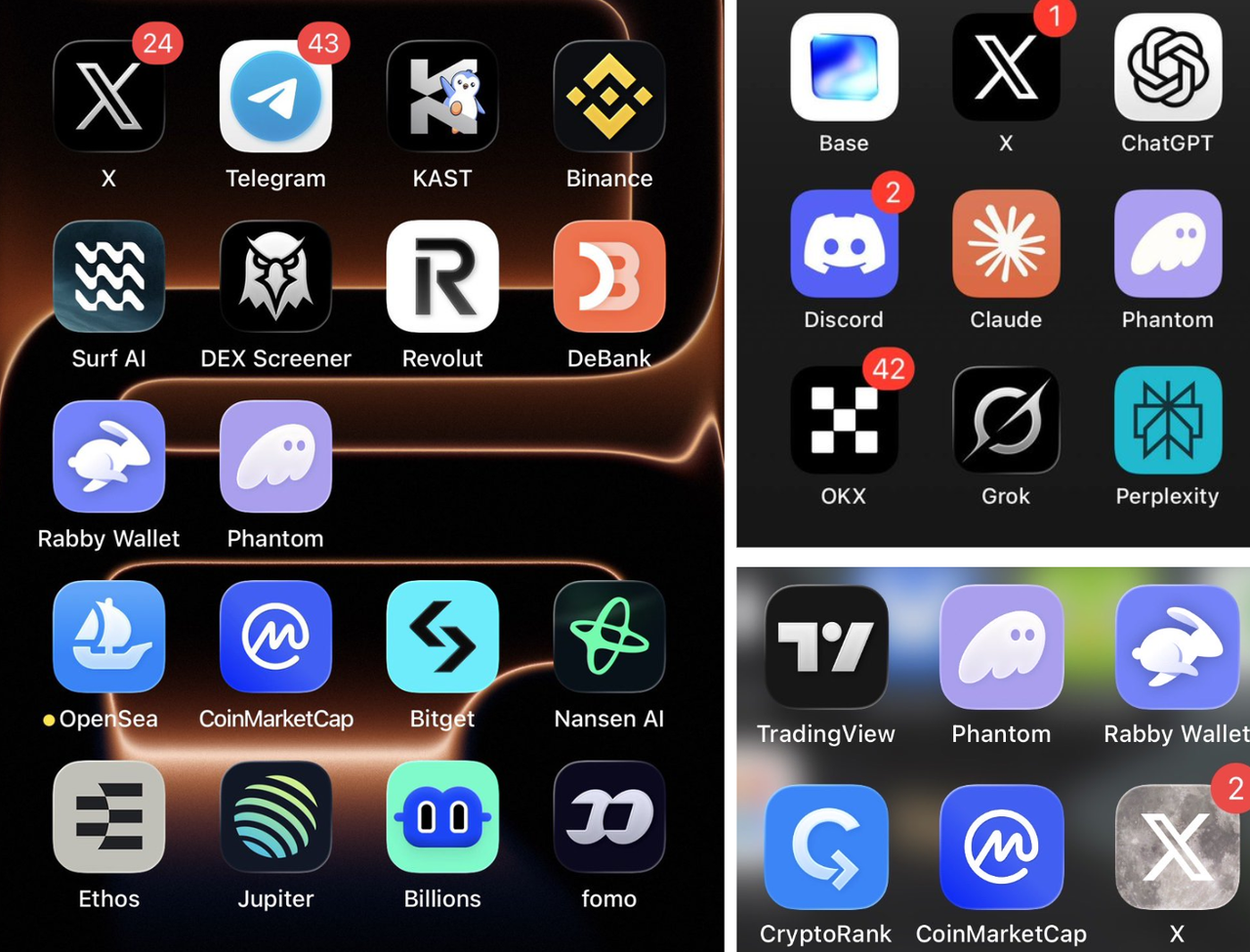
It's unclear when it started, but users have become more and more like traffic chips trapped in an app matrix: traders aren't facing a lack of tools, but rather too many fragmented entry points.
Crypto KOL @oxtochi once tweeted:
I'm certainly not the only person with 72 Crypto-related apps on my phone.
This post received hundreds of likes and sparked numerous resonant replies in the comments section.
Another crypto KOL, @Defi_Scribbler, recently shared his 45 most frequently used apps, ranked by actual usage frequency, covering various categories such as exchanges, data monitoring, and social media information.
Behind the complexity lies a structural dilemma for the entire trading community.
On the one hand, there is the anxiety caused by information asymmetry. The market changes rapidly, and missing a piece of news may mean missing a transaction. Therefore, you need more data sources, more analytical tools, and more information channels.
On the other hand, there is the fragmentation of the transaction itself. Different platforms support different assets, and on-chain operations require understanding the various requirements of wallets, bridges, and chains.
Now, this predicament is intensifying: geopolitical conflicts are escalating, bringing gold and safe-haven assets into the spotlight for traders; AI tools are emerging, with everyone scrambling to access the latest analytical models; and the main investment arena is shifting, with the correlation between crypto assets and traditional finance continuing to rise.
You are no longer just a "crypto trader," but need to keep an eye on on-chain data, macroeconomics, geopolitical news, and AI signals at the same time, using dozens of apps, playing dozens of roles, and fighting on dozens of battlefields simultaneously.
The more apps you use, the more scattered your attention becomes, and the higher the transaction friction will be.
The root of the problem is that the existing infrastructure was never designed for "all-asset traders" from the beginning.
Tear down the walls that stand in the way of traders and rebuild a market without walls.
This was the key opportunity that led Bitget to first propose the concept of UEX (Universal Exchange):
Create a super portal that allows users to connect their global assets within a single app and account.
Keep tearing down the walls until a "panoramic" view is revealed.
So how does Bitget "break down the wall"?
With the core concept of "the simpler, the freer", this is a reconstruction starting from the foundation, building a new infrastructure for "all-asset traders".
The first barrier: Freedom of global asset trading
Connect the three worlds of CeFi, DeFi, and TradFi.
Bitget Onchain, as a super channel for CEX accounts to directly access the on-chain world, allows users to trade millions of tokens on Ethereum, BSC, Base, and Solana directly with their CEX accounts. There is no need to create a separate Web3 wallet, manage private keys, manually cross-chain bridges, or calculate gas fees. For the first time, the speed and security of CEX and the asset openness of DEX truly coexist in the same account.
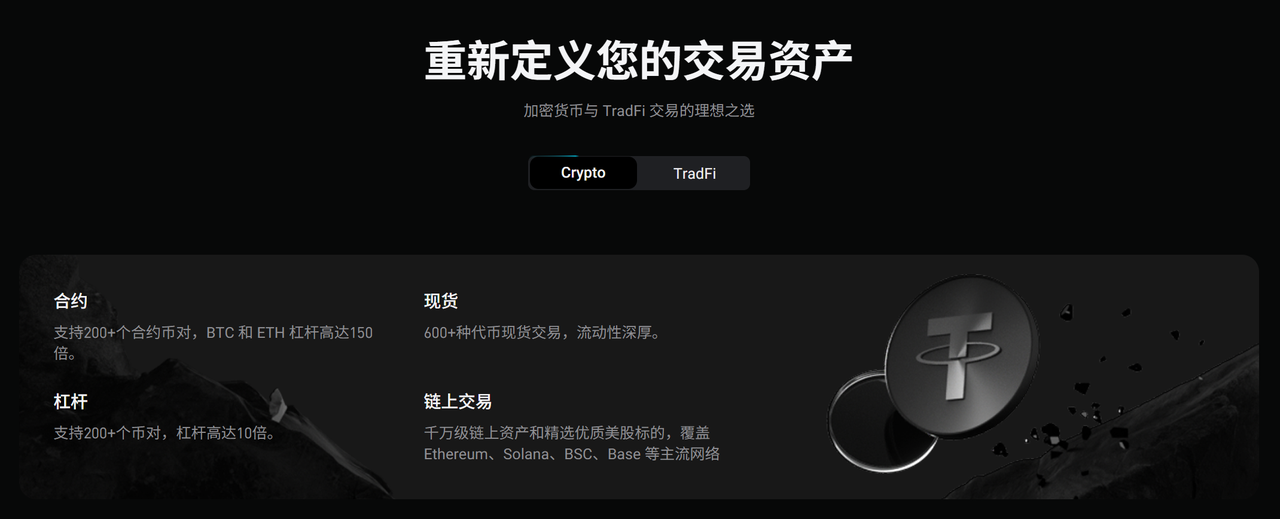
But that's not enough. Including TradFi is the key to making UEX truly "panoramic".
On January 5, 2026, Bitget launched TradFi, taking a significant step towards "buying global assets with one account": through deep cooperation with Ondo Finance and xStocks, Bitget has already listed 200+ mainstream US stocks and ETFs, and the platform plans to expand to 1000+ by 2030; in terms of stock contracts, Bitget also supports 40+ stock perpetual contracts, with a maximum leverage of 100x; in addition, the TradFi CFD module integrates with MT5 and also covers forex, gold, crude oil, and indices, with a maximum leverage of 500x.
Similarly, all asset transactions share a single USDT/USDC balance, supporting margin reuse and cross-asset risk hedging, eliminating the need to switch apps and enabling single-account management.
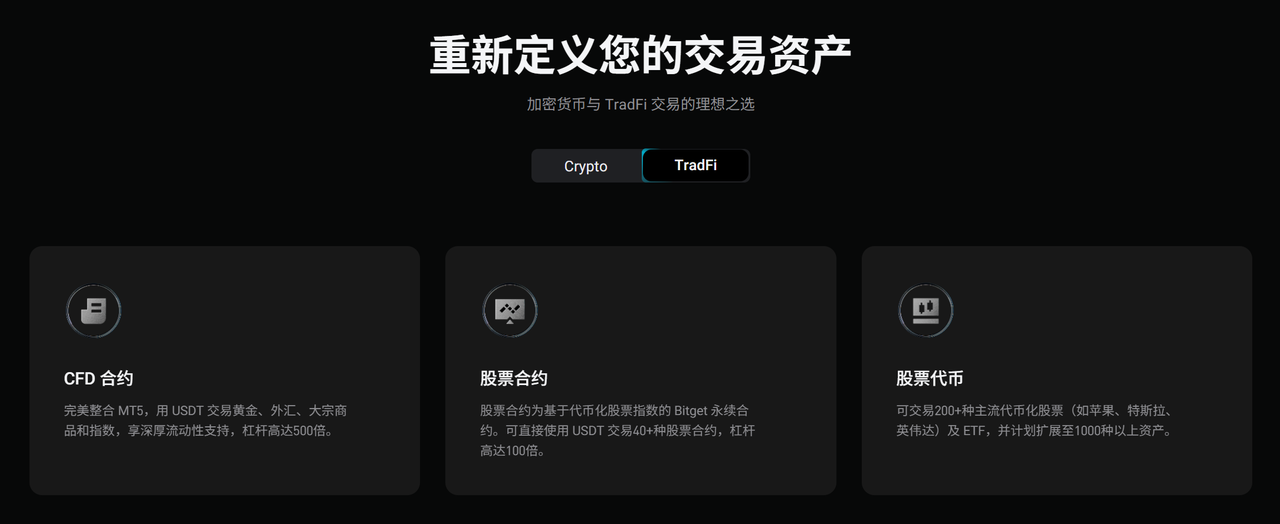
While offering broad asset coverage, Bitget also aims to provide more balanced and sustainable trading depth through incentive initiatives and institutional innovation, as well as deliver more significant fee advantages through a combination of UEX unified accounts, BGB discounts, and the VIP system.
The second barrier: Preventing information from preceding execution.
The assets have been integrated, but the problem is still not solved.
Because often, you see an opportunity, but you may not have enough time to turn it into action.
Bitget used AI to dismantle this wall.
Currently, Bitget's core AI products include:
- GetAgent, Bitget's core AI trading assistant, integrates 50+ professional tools and supports natural language interaction. It can read your positions, understand your trading preferences, infer your "investment MBTI," and then execute directly for you.
- Agent Hub goes a step further by adding five new AI Skills, including macro analysis, technical signals, sentiment monitoring, and market intelligence, along with 19 data tools, to further streamline the entire closed loop of "analysis → judgment → execution," and fully cover all asset classes, including Crypto, Onchain, and TradeFi.
- GetClaw, launched in April 2026, empowers AI with independent trading accounts, transforming it from a mere "advisor" into a true "executor." Users set rules, and the AI autonomously runs strategies in its own dedicated environment, ensuring transparency and control. It even supports cross-platform operation via Telegram natural language commands.
In the information-saturated trading market, Bitget never simply regards AI as a decorative chat box, but as a key engine to solve the problems of "information overload" and "trading complexity": from enabling AI to understand you, to enabling AI to assist in market analysis, make judgments, and even execute directly, Bitget aims to help users capture opportunities through AI, and is committed to bridging the last mile from user intent to actual execution through natural language.

The third wall: Safety and compliance build a foundation of trust.
If the first two walls are functional walls, then this one is a psychological wall.
Because if assets and transactions are comprehensive, it often means that risks are also comprehensive.
Therefore, in building a comprehensive trading platform, trust cannot rely solely on promises, but must be built upon mechanisms.
In terms of security, Bitget has been issuing Proof of Reserves (PoR) quarterly since 2022, with a reserve ratio consistently above 100%. Additionally, Bitget operates the second-largest user protection fund, peaking at over $800 million, to cover extreme security risks.
Of course, compared to "whether or not compensation will be paid if something goes wrong," the goal should be "to prevent things from going wrong in the first place." Therefore, Bitget uses AI on the front lines of risk control: whether it's real-time identification of abnormal transactions, filtering for rug pull signals, or checking for malicious contracts. According to official data, in 2025, Bitget successfully intercepted over $30 million in abnormal withdrawals, identified over $79 million in abnormal profits, and handled over 400 abnormal fund incidents, achieving remarkable results in "preventing risks before transactions occur."
On the compliance side, Bitget has assembled a professional compliance team of over 70 people to strictly enforce KYC/AML screening, fund tracking, and Travel Rule compliance. It supports the requirements of regulatory frameworks such as MiCA for stablecoins and works closely with global regulatory agencies to promote compliance implementation in multiple countries, allowing users in different regions to enjoy the UEX capabilities within a compliant framework as much as possible.
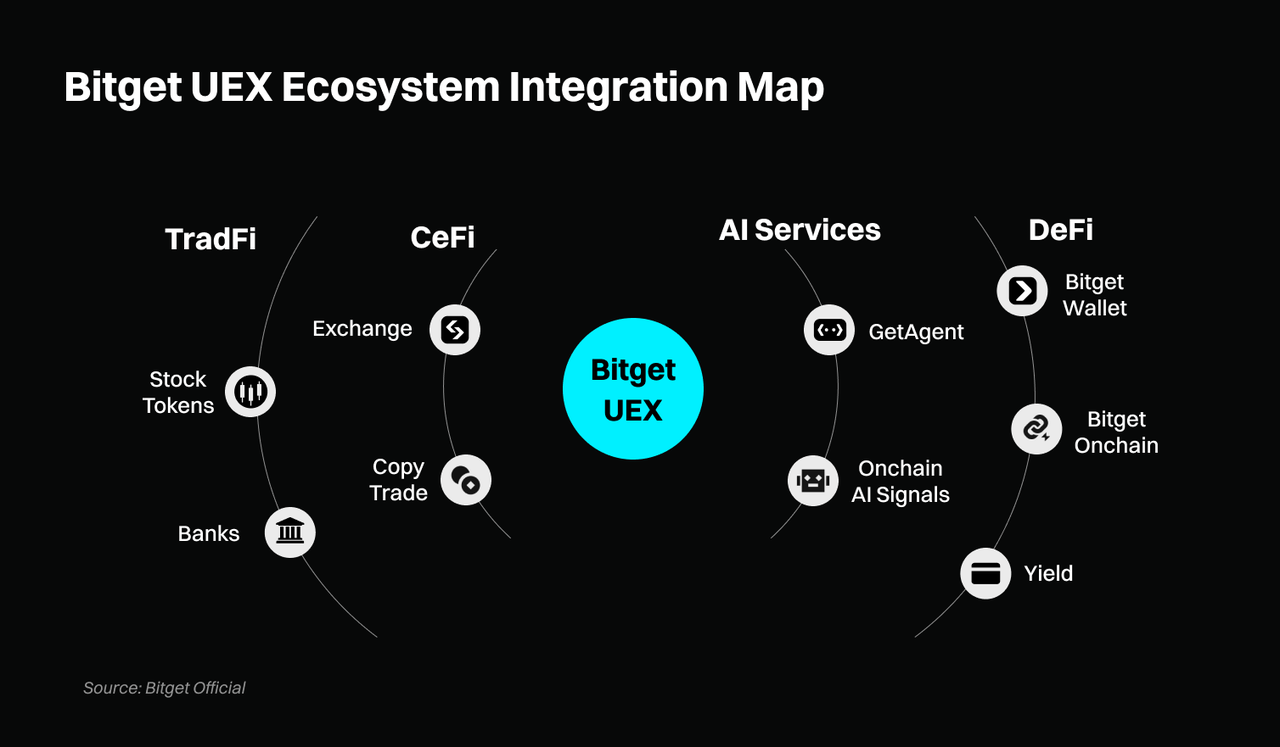
Looking at these three things together, Bitget's UEX construction logic becomes clearer. UEX cannot be simply understood as an "exchange with more functions," but rather as a completely new platform form:
One app, one account, to accommodate as many assets, as much information, and as many strategies as possible, while also mitigating more complex risks.
Rome wasn't built in a day, and neither can a panoramic trading platform be achieved overnight.
But at least for now, Bitget has deeply embedded the three most crucial pillars of UEX—comprehensive asset coverage, AI-driven intelligence, and a security and compliance framework—into the foundation of its trading ecosystem.
As industry giants start copying their strategies, Bitget's non-crypto asset trading volume has exceeded 40%.
In September 2025, when Bitget announced its full shift to building the UEX panoramic exchange, most people were curious about this new term.
Today, few people question the correctness of its direction.
The best proof is that peers have started "copying homework".
On February 24, 2026, Binance announced a partnership with Ondo Finance to launch 10 tokenized US stocks, ETFs, and commodities on the Binance Alpha platform.
On March 5, 2026, OKX announced a strategic partnership with Intercontinental Exchange (ICE), the parent company of the New York Stock Exchange, with plans to launch tokenized NYSE stocks and derivatives.
In a short period of time, many exchanges have made similar explorations. The integration of TradeFi with tokenized assets has become a standard direction for mainstream CEXs, especially in tokenized stocks, precious metals and CFDs. Industry consensus is rapidly forming. For Bitget, which announced its strategic transformation a few months ago and has already listed more than 200 tokenized real-world assets, UEX has become its most distinctive differentiating label.
Of course, some people may ask: when the absolute leaders enter the market, is the first-mover advantage still valid?
We can see that, while both are moving towards the direction of a "panoramic trading platform", Binance, being a large and difficult ship to turn around, appears more cautious and is in a state of small-scale exploration, while OKX is still in the planning and cooperation announcement stage.
Whether it's recognizing trends earlier or starting infrastructure development earlier, Bitget has at least secured a leading position in these two areas: the infrastructure is running smoothly, institutional users' trading habits are being cultivated, and a deep integration between AI tools and user strategies is being established.
If following the lead of peers proves that the direction is correct , then growth data is proof of the ability to deliver on that promise.
According to CoinGlass' 2025 Annual Derivatives Market Report, Bitget's annual derivatives trading volume reached $8.17 trillion, ranking it among the top four centralized exchanges globally.
Beyond trading volume, Bitget's liquidity performance is also noteworthy. According to TokenInsight's "Cryptocurrency Exchange Liquidity Report," Bitget excels in BTC and ETH contract order book depth, maintaining a leading position in both the 0.05% and 0.1% key spread ranges.
This means that Bitget not only has a large enough trading volume, but also a stronger capacity to absorb transactions and a better trading experience, which has brought positive feedback in terms of capital inflows: According to CoinMarketCap data, Bitget achieved a net inflow of $206 million in February this year, ranking third among centralized exchanges globally, further confirming the market's recognition of its platform efficiency and asset carrying capacity.
Beyond trading activity and capital inflows, Bitget's steeper growth curve in its TradeFi business provides a more penetrating testament to the "correctness of the UEX approach."
Let's look at the most intuitive transaction data first: According to the Bitget report, in the first quarter of 2026, the transaction volume of non-crypto assets on Bitget accounted for more than 40%.
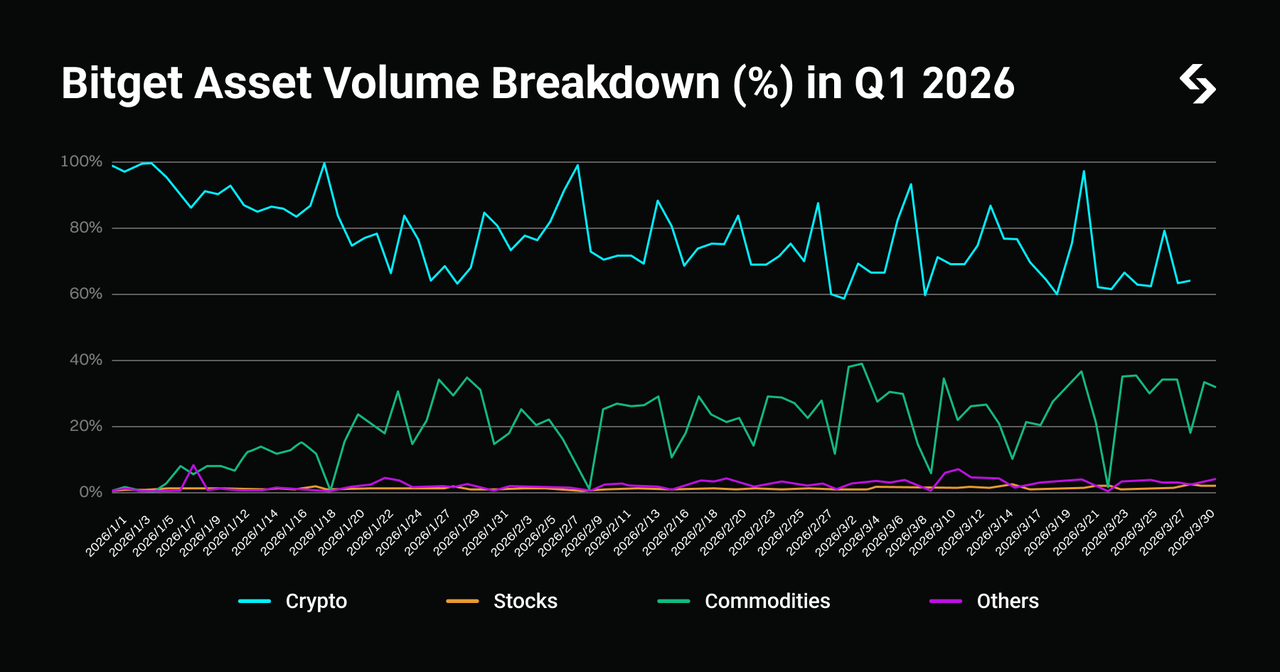
Behind this 40% is the high trading activity across multiple TradeFi sectors:
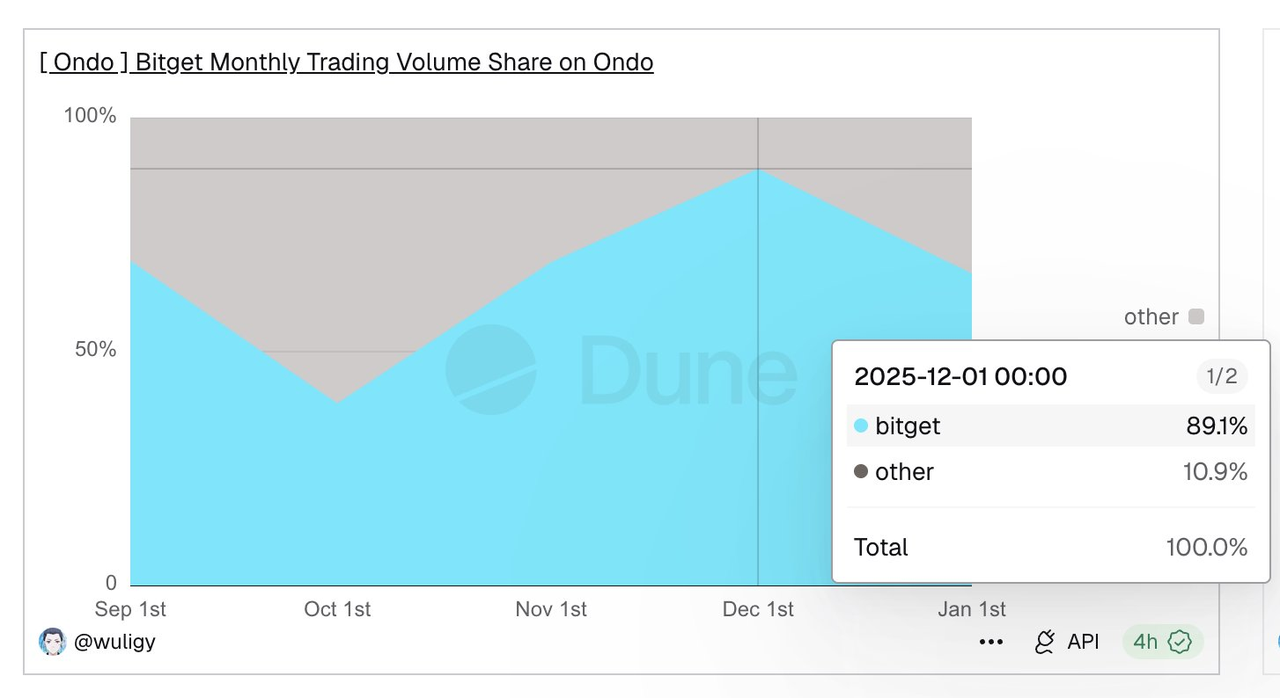
According to official data, Bitget's CFD trading volume has exceeded $6 billion per day. The market share of its tokenized stock business is even more noteworthy: in December 2025, Bitget's tokenized stock trading volume once accounted for 89.1% of Ondo's global market share, and its platform's holdings of contracts for core US tech stocks such as Apple, Google, and Tesla also briefly ranked first among all CEXs.
Precious metals trading has also seen significant growth. Data shows that Bitget's 24-hour XAU trading volume exceeded $207 million , ranking among the top three centralized exchanges.
More importantly, the growth structure is also changing. According to official data, Bitget's institutional trading volume share has increased from 39.4% in January 2025 to 82% in December 2025. This means that the UEX route is attracting not only a wider range of users, but also an increasing number of professional funds with higher requirements for liquidity, execution efficiency, and risk management.
At the same time, Bitget's AI capabilities are also rapidly penetrating trading scenarios: GetAgent has covered more than 350,000 users and facilitated more than 2 million conversations about portfolio and strategy guidance.
Behind every number are traders who were once trapped by "fragmented entry points," "information overload," and "lack of trust," and are now rediscovering their trading freedom in a more complete system.
For Bitget, this protracted battle to build a "panoramic trading platform" may have only just begun to enter its truly interesting phase.
Conclusion
Just as this article was being written, Bitget once again took action to "break down the firewall":
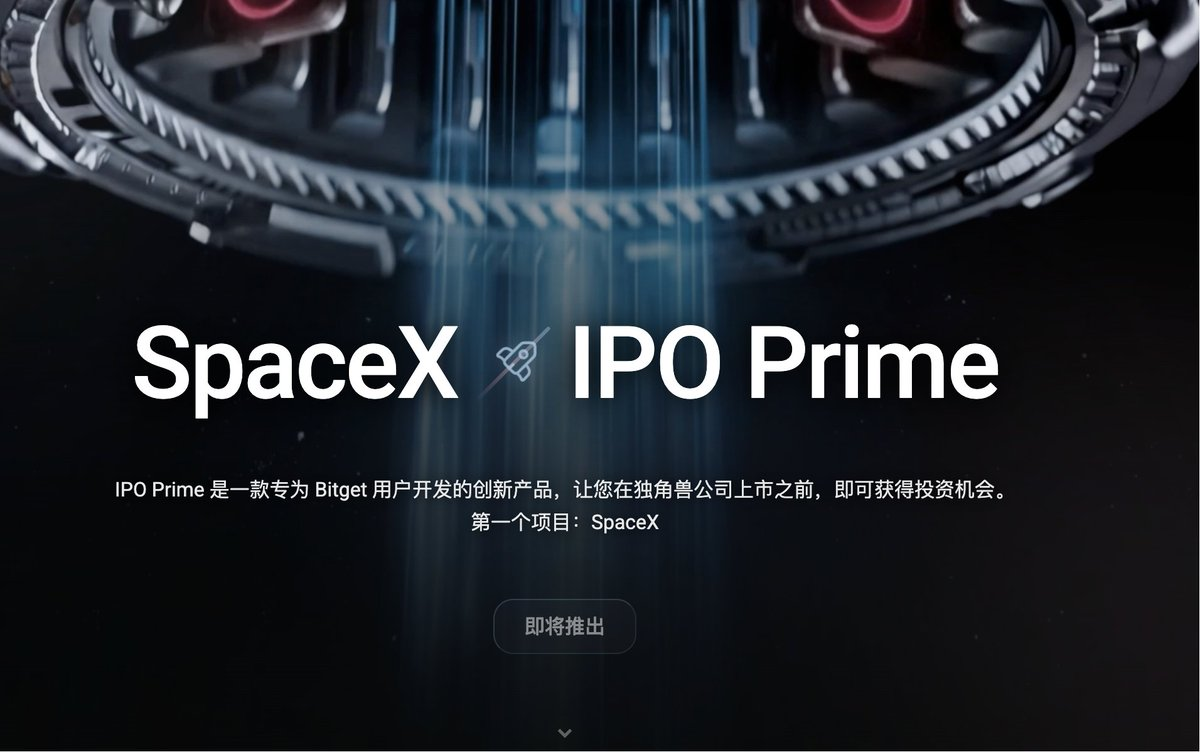
Bitget announced the launch of IPO Prime, a US IPO subscription service, further extending the boundaries of UEX into the primary market and providing global users with a new channel to participate in the potential economic benefits of unicorn companies before their IPOs.
The initial asset listed is preSPAX, a digital token issued by the regulated issuer Republic, designed to mirror the economic performance of SpaceX after its IPO on a 1:1 basis. Users can obtain subscription quotas based on their VIP levels. After token allocation, users can trade them on the soon-to-be-opened over-the-counter market; alternatively, after the lock-up period for the underlying debt assets of preSPAX expires, the issuer, through Bitget, will exchange them for stock tokens or USDT, referencing the stock market price of the underlying company.
This is not an isolated product launch, but rather another step in Bitget's deeper understanding of UEX logic:
From the very beginning, Bitget's goal was never to be an exchange that looked "fully stocked," but rather to constantly ask how many assets an account could actually handle while remaining simple, smooth, and secure.
Of course, being first doesn't guarantee victory. The competition among panoramic trading platforms has only just entered its most challenging phase. The real contest will gradually shift from "who proposes the direction first" to "who can be the first to turn that direction into reality."
Returning to the beginning of the article, Zhang Xue's motorcycles show that a track dominated by traditional powerhouses for many years is not entirely without the opportunity to break through.
Bitget is currently trying to carve out its own "4-second lead" in the equally crowded and long-dominated field of exchanges.

