

Written by: Bilibili News
On April 28, 2026, the UAE issued a statement through its national news agency WAM, announcing its formal withdrawal from the Organization of the Petroleum Exporting Countries (OPEC) and its extended alliance OPEC+, effective May 1.
This member, which has been a member of the organization for nearly 60 years, produces about 3.6 million barrels per day, accounting for about 12% of OPEC's total production, making it the third largest oil producer after Saudi Arabia and Iraq.
After withdrawing, OPEC's member countries will be reduced from 12 to 11, and the organization's share of global crude oil supply will further decline from about 30% to about 26%.
This is the largest member withdrawal event OPEC has experienced in recent years.
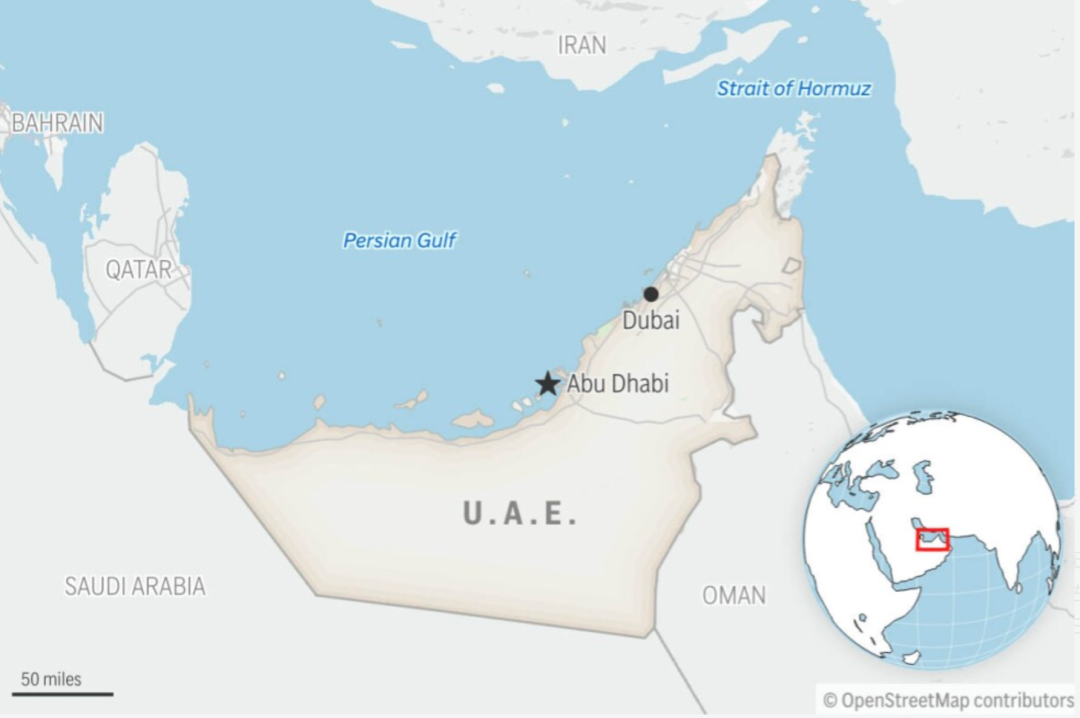
From Founding to Core: 60 Years of the UAE
OPEC was originally founded in 1960 by five countries: Iran, Iraq, Kuwait, Saudi Arabia, and Venezuela. Its core purpose is to coordinate production and defend the common interests of oil-exporting countries.
In 1967, the Emirate of Abu Dhabi joined as an independent nation, and four years later, the United Arab Emirates inherited this membership upon its independence.
In the decades that followed, the UAE expanded its energy empire through massive capital investment from Abu Dhabi National Oil Company. Its proven reserves now stand at 113 billion barrels, ranking sixth in the world and accounting for about 6% of global reserves.
Entering the 2020s, the UAE's daily crude oil production remained stable at around 3.6 million barrels, reaching a historical high of nearly 4.12 million barrels in 2022.
At the same time, Abu Dhabi National Oil Company continues to advance its expansion plan, aiming to increase its capacity to 5 million barrels per day by 2027, for which it has invested more than US$150 billion.
While production capacity is increasing, the amount and method of sales are not entirely up to the UAE.
Long-term tension between quotas and production capacity
The core of OPEC's operation is the quota mechanism.
Based on member countries’ production capacity, historical output, and market forecasts, each member is allocated a production cap, and any excess is theoretically considered a violation.
This mechanism can maintain market stability during periods of high oil prices, but it acts as an invisible income ceiling for members who expand production capacity rapidly.
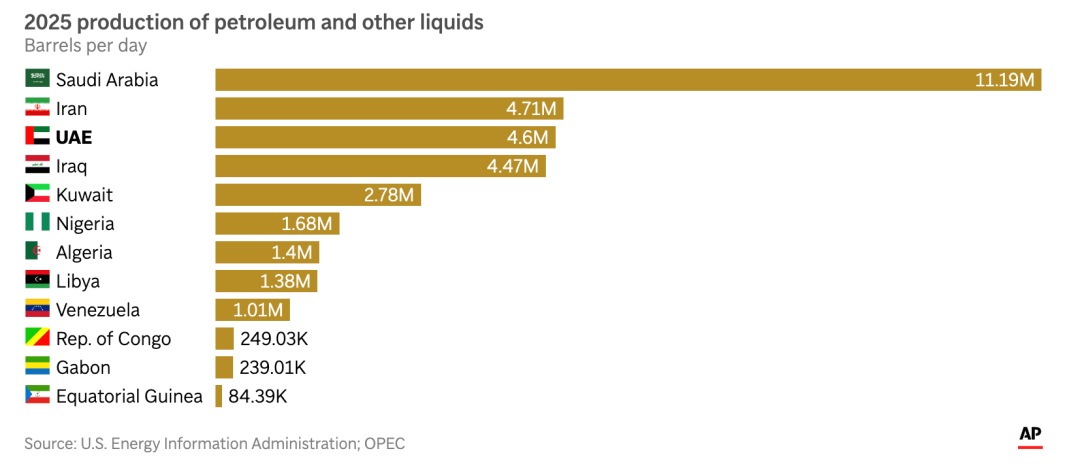
The UAE is in a similar situation. Its latest quota is approximately 3.41 million barrels per day, while its actual production capacity is close to 4.85 million barrels per day, leaving a gap of about 1.4 million to 2 million barrels per day.
Based on international oil prices of $70 to $80 per barrel, the potential annual revenue loss from this suppressed production capacity is between $46 billion and $58 billion.
The conflict between the UAE and OPEC reached its peak in 2021.
At that time, demand began to rebound after the COVID-19 pandemic, and OPEC discussed whether to continue production cuts. The UAE explicitly refused to accept the existing quota and demanded that the benchmark be increased from 3.2 million barrels to 3.8 million barrels.
After two weeks of deadlocked negotiations, Saudi Arabia finally allowed the UAE to increase its quota to 3.65 million barrels.
Subsequently, the UAE began to routinely exceed its quotas at the implementation level, with daily production exceeding the quota by hundreds of thousands of barrels becoming the norm in 2024.
There was precedent for withdrawing.
In the history of OPEC, members withdrawing is not uncommon.
Indonesia joined in 1962, then withdrew and rejoined, before finally leaving again in 2016.
Ecuador withdrew in 2019.
After becoming the world's largest exporter of liquefied natural gas, Qatar announced its departure in 2019, citing a shift in its strategic focus away from oil.
Angola withdrew in 2024, also due to dissatisfaction with quota allocation.
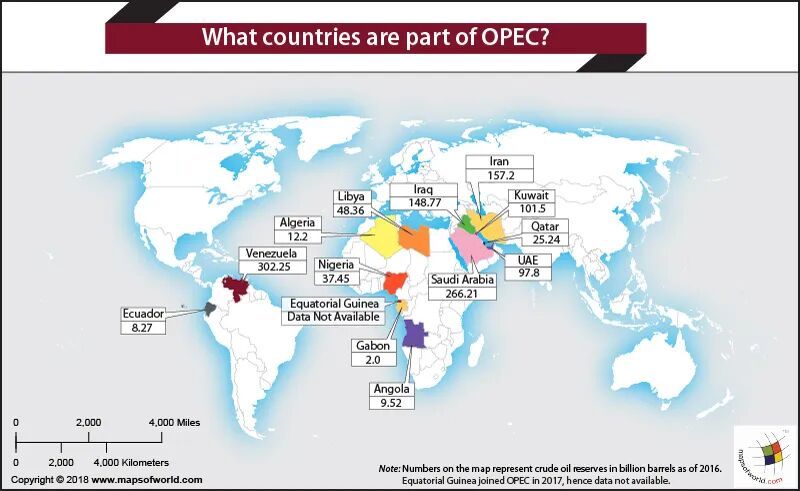
However, the UAE is not on the same scale as these countries.
When Qatar withdrew, its daily production was approximately 600,000 barrels, Angola's was approximately 1.1 million barrels, and the UAE's was close to 3.6 million barrels, several times the total production of all previous members who withdrew.
This is because the UAE has a more diversified economy and is less dependent on high oil prices to balance its fiscal budget than Saudi Arabia, so it is more inclined to win by volume rather than by price.
The war disrupted the rhythm, but it wasn't the root cause.
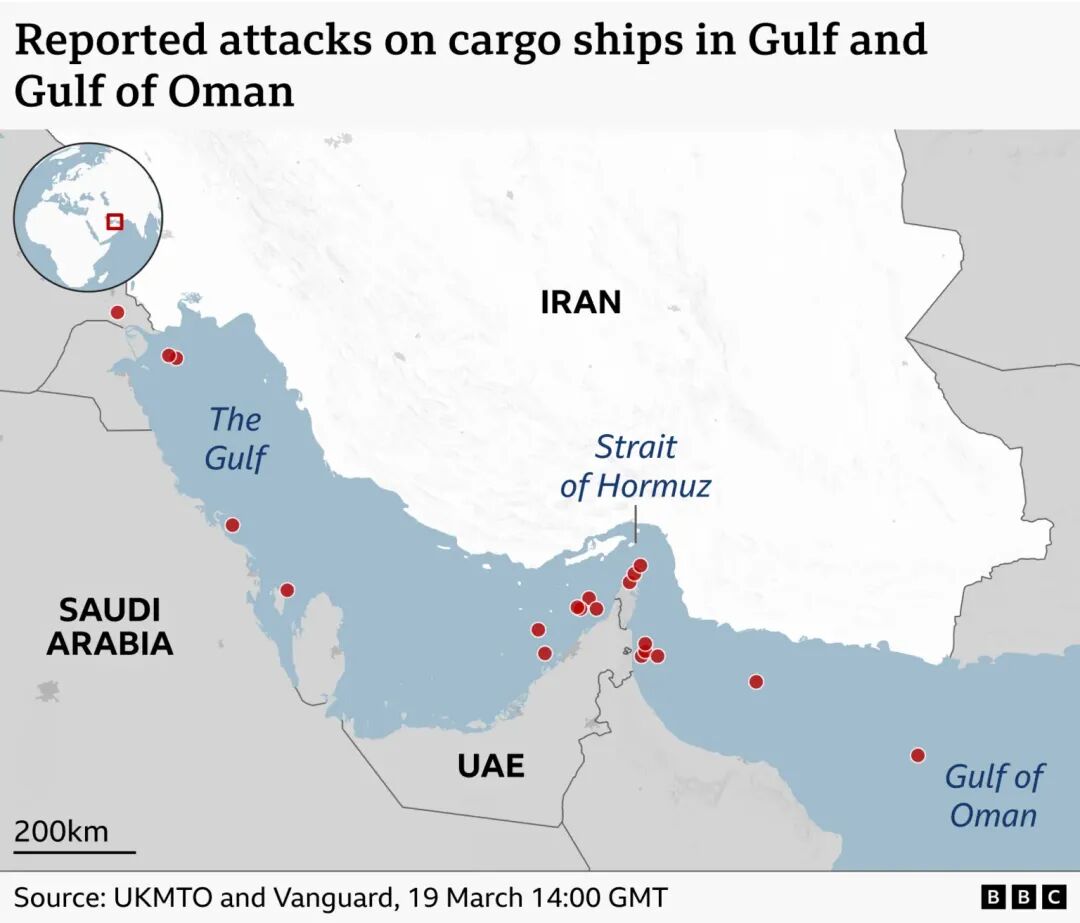
On February 28, 2026, the United States and Israel launched a military strike against Iran, and the resulting conflict quickly spread throughout the Gulf region.
The Strait of Hormuz, the world's most important oil shipping route, normally carries about one-fifth of the world's crude oil and liquefied natural gas. However, as the conflict escalated, the strait has effectively been closed.
The UAE's exports were hit almost immediately. Although an overland pipeline bypassing the Strait of Hormuz has been built with a maximum capacity of about 1.8 million barrels per day, this is far from enough to compensate for the losses caused by the disruption of shipping.
In March 2026, its daily crude oil production plummeted to approximately 1.9 million to 2.34 million barrels, a decrease of about 35% to 47% from the pre-war 3.6 million barrels. In comparison, Saudi Arabia's production fell by about 23% during the same period, while Iran, as a party to the conflict, saw its production decline by only about 6%.
Data from the International Energy Agency shows that OPEC+’s share of global oil production fell from about 48% in February 2026 to 44% in March, and is expected to continue to decline in April, and will shrink further in May as the UAE formally withdraws.
The disruption of the Strait of Hormuz was a catalyst, but it was nothing more than a catalyst.
UAE Energy Minister Suhail al-Mazrouei stated that the decision was made after a comprehensive assessment of the UAE's oil production policy and current and future capacity, and that policy considerations predate the current geopolitical conflict.
What changes will occur in the structure of OPEC?
The key indicator for assessing the actual impact of the UAE's withdrawal on OPEC is spare capacity.
Spare capacity refers to standby production that can be quickly put into use in a short period of time, and it is the most important stabilizer in the oil market during supply shocks. Globally, the total effective spare capacity is approximately 4 to 5 million barrels per day, with a significant proportion concentrated in Saudi Arabia and the United Arab Emirates.
After exiting the OPEC agreement, this portion of the UAE's idle capacity will no longer be subject to OPEC quotas and will be able to operate independently of the organization's decision-making system.
The UAE is the only OPEC member besides Saudi Arabia with substantial spare capacity. After its withdrawal, OPEC's overall production control capacity will decline. In addition, the continued increase in production by non-OPEC oil-producing countries, especially the United States, will further narrow the room for maneuver in coordinating supply.
The United States currently produces more than 13 million barrels per day, higher than Saudi Arabia's approximately 9 million barrels per day, which has significantly weakened OPEC's bargaining power in recent years.
Saudi Arabia will now be almost the only member of OPEC with a large amount of spare capacity, bearing a heavier burden in managing the market, but with fewer support resources available.
What happened to oil prices on the day the withdrawal was announced?
On the day the news was released, Brent crude oil futures initially fell briefly, but then rose about 2% from the previous day's closing price, with the price above $111 per barrel.
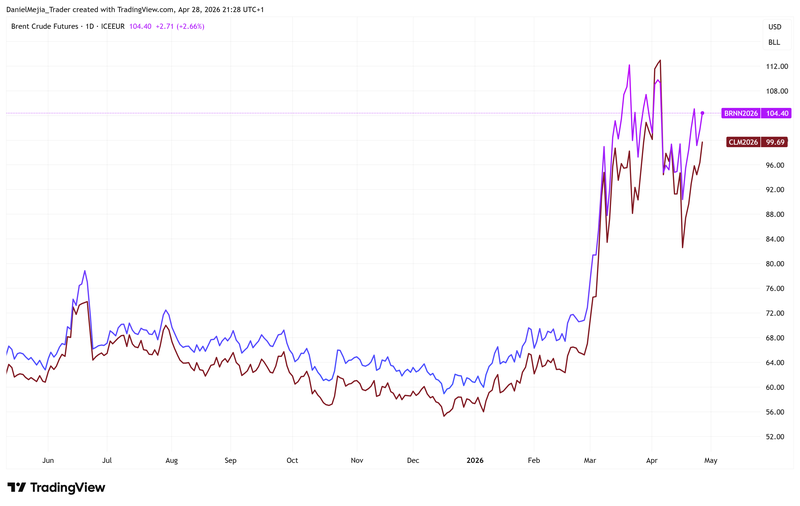
The Strait of Hormuz remains effectively blocked, preventing the UAE from substantially increasing its exports in the short term. The impact of leaving OPEC on immediate supply is close to zero. Oil prices remain largely driven by geopolitical risks and are more than 50% higher than pre-war levels in February 2026.
However, in the medium to long term, once the Straits return to normal, the UAE's expectation of independent production increases will put downward pressure on prices.
The futures market is relatively cautious in its reaction to medium- to long-term demands. If the UAE delivers on its production target of 5 million barrels per day and significantly increases production, the additional supply will account for approximately 1% to 2% of global demand. This level of supply and demand equilibrium is sufficient to influence price trends.
UAE's next production increase strategy
After withdrawing from the quota system, the UAE will be able to make its own production decisions and will no longer be bound by quotas. The pace and extent of production increases will depend primarily on when the Strait of Hormuz reopens, the progress of Abu Dhabi National Oil Company's capacity expansion, and demand in major global consumer markets.
Abu Dhabi National Oil Company has been expanding its upstream investments over the past few years, with recoverable capacity approaching 4.85 million barrels per day. The target of 5 million barrels per day by 2027 has long been set, and the real significance of exiting the market lies in allowing this capacity to be released to the market without restrictions.
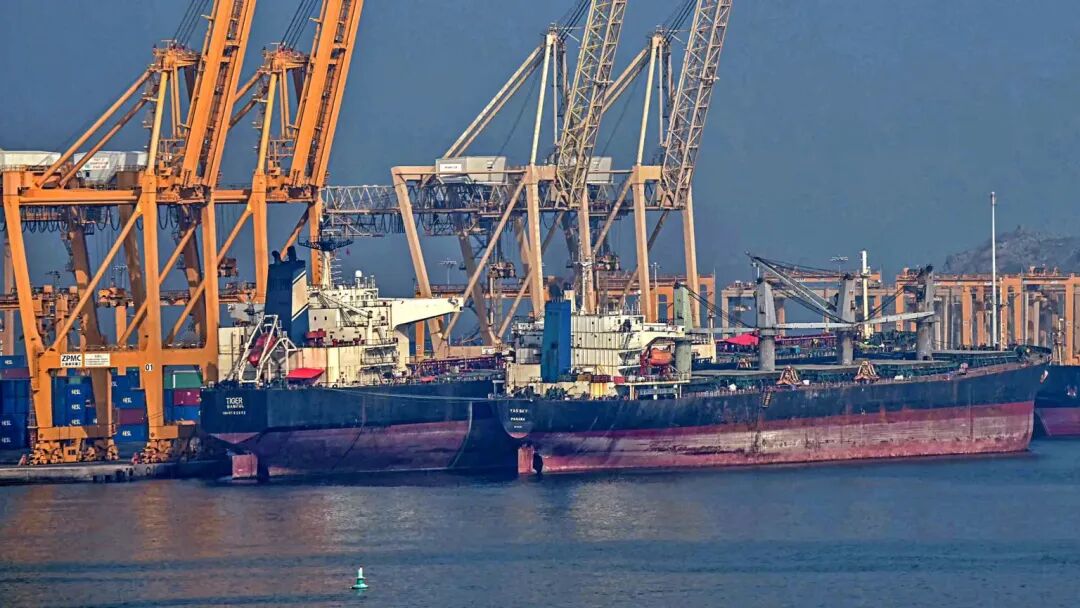
The UAE also possesses the Habashan Pipeline, which connects inland oil fields to the port of Fujairah, bypassing the Strait of Hormuz into the Gulf of Oman, with a maximum daily transport capacity of approximately 1.5-1.8 million barrels. With the strait not yet fully open to traffic, this pipeline represents the UAE's limited export route, but it is insufficient to support a full-scale production increase.
A World Bank report indicates that the oil supply losses caused by the conflict with Iran are the largest on record, and global energy prices are expected to rise by an average of about a quarter this year. It is estimated that it will take six months for the Strait to recover to pre-war levels.
This window of opportunity will also be crucial for the UAE to adjust its pace and increase production across the board.



