
Author: 1912212.eth, Foresight News
On the evening of June 22, Kusari, a member of the National Security Committee of the Iranian Parliament, said that the parliament had concluded that the Strait of Hormuz should be closed, but the final decision was in the hands of the Supreme National Security Council of Iran. Once the news was announced, BTC fell from $102,810 all the way, eventually falling below $100,000 to $98,200, and has now rebounded to around $100,800. ETH once fell to $2,111, and the daily line fell again for four consecutive days. SOL fell to $126, a 24-hour drop of 3.45%, and other altcoins fell across the board.
In terms of contract data, according to coinglass data, the total open contracts on the entire network had a 24-hour liquidation of US$658 million, of which long orders had a liquidation of US$526 million. The largest single liquidation order occurred in HTX - BTC-USDT, worth US$35.4503 million.
The market suddenly changed, BTC fell below $100,000 in a short period of time. Will Iran really close the Strait of Hormuz in the end?
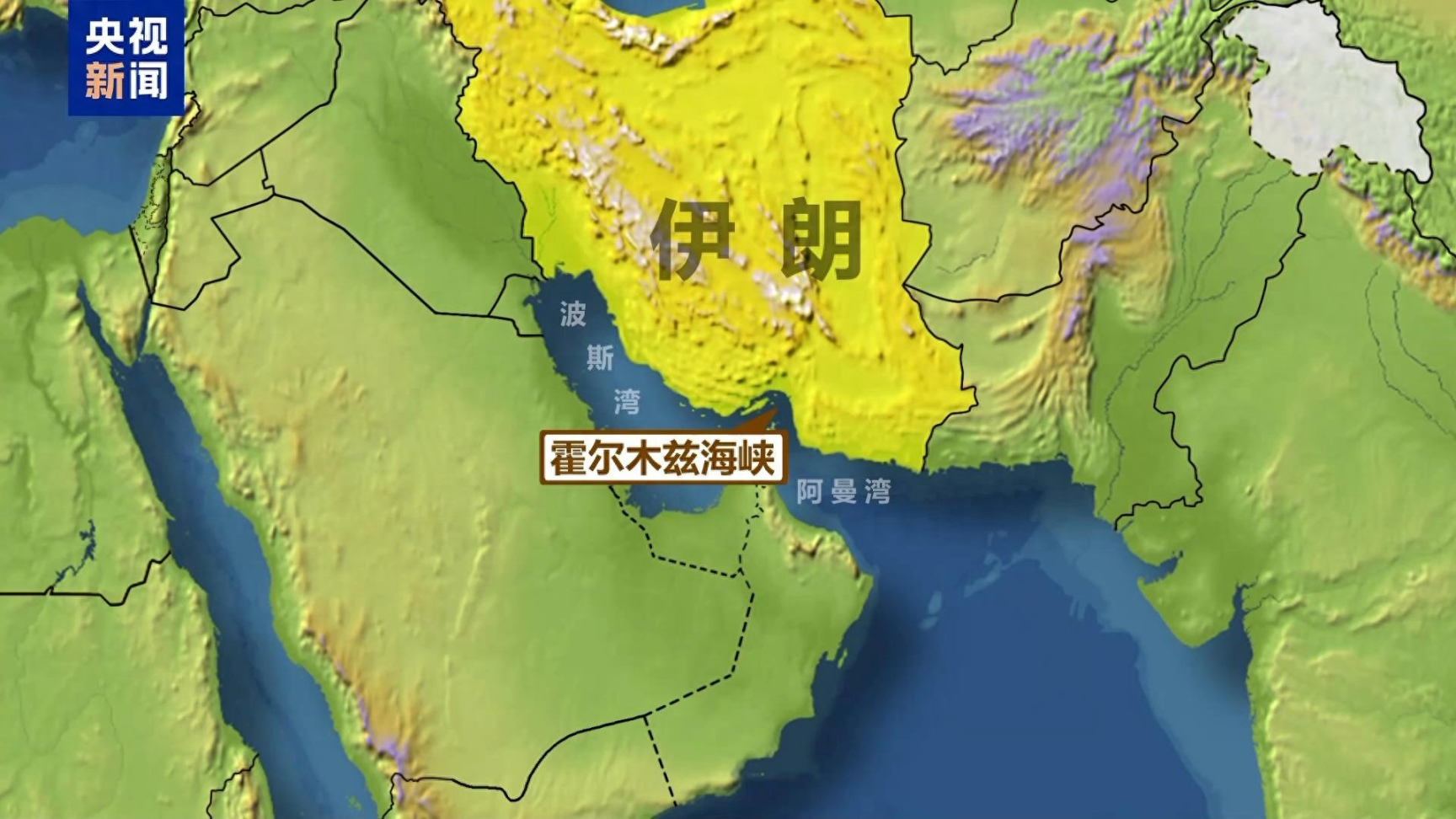
The Strait of Hormuz is located between Oman and Iran, connecting the Gulf of Oman in the east and the Persian Gulf in the west. It is the only sea route for the Gulf region to export oil to the rest of the world. About one-third of the world's seaborne crude oil trade passes through the Strait of Hormuz. Iran controls a large number of highlands, caves and key islands on the west bank of the Strait of Hormuz, such as Hormuz Island, Fars Island, and Lak Island. Once a blockade is ordered, a "layered firepower blockade network" can be established immediately.
Historically, Iran has threatened to block the Strait of Hormuz many times, but has never actually carried it out. For example, during the Iran-Iraq War in the 20th century, Iran threatened to blockade it, but it did not fully implement it in the end. In recent years, after the United States withdrew from the Iran nuclear agreement and resumed sanctions against Iran, Iran has also issued similar threats many times.
Iran's economy is heavily dependent on the Strait of Hormuz for exporting energy. If the Strait is closed, Iran's economy will suffer a severe blow, people's lives will become more difficult, and the regime's legitimacy crisis may be accelerated. In addition, blocking the Strait will seriously deteriorate Iran's foreign relations and make it more isolated in the international community.
Dr. Liu Qiang, Vice President and Director of the Academic Committee of the Shanghai Rim-Pacific International Strategic Research Center, said, "If Iran is rational, it will most likely not decide to block the Strait. Blocking the Strait will do more harm than good to Iran. Currently, the international community tends to sympathize with Iran. Once a blockade is implemented, it will only trigger opposition from various countries and reverse international public opinion in its favor."
U.S. Vice President Cyrus Vance said that "Iran's attempt to close the Strait of Hormuz would be suicidal for their economy. In his view, it is unlikely that Iran will decide to do so."
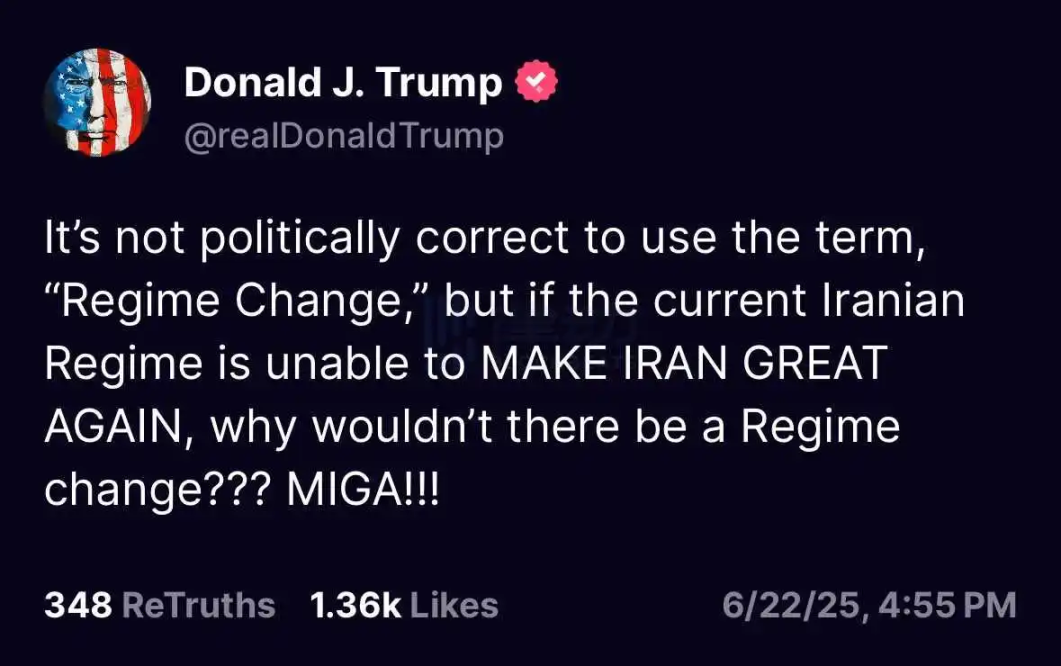
Trump said on his social platform Truth in the early morning of June 23rd Beijing time, "It is politically inappropriate to use the term "regime change", but if the current Iranian regime cannot make Iran great again, why can't there be a regime change? MIGA"
The market is waiting with bated breath to see what decision Iran will make.
The crypto world is wailing. Is the bull market still here? Is it a good time to buy at the bottom?
Trader Eugene Ng Ah Sio posted on his personal channel at 10 pm yesterday, "I'm quite active in opening long orders here, including Bitcoin and some altcoins. I think the US bombing earlier today, coupled with the closure of the Strait of Hormuz, is a continuous blow to early bulls, enough to clean up the market, and now is the time to "buy on dips." If the market gaps down directly to $95,000, it will be "good night", but this is the last battle for the bulls, and I'm already in place. "
Julio Moreno, head of research at CryptoQuant, said that after a period of accelerated growth and prices approaching $112,000, Bitcoin demand is showing signs of cooling. Spot demand is still growing, but the growth rate has slowed and is currently below the historical trend. Bitcoin purchases by whales and ETFs have been halved. Demand from new investors is also declining. In the futures market, investors have recently chosen to take profits and start to establish new short positions.
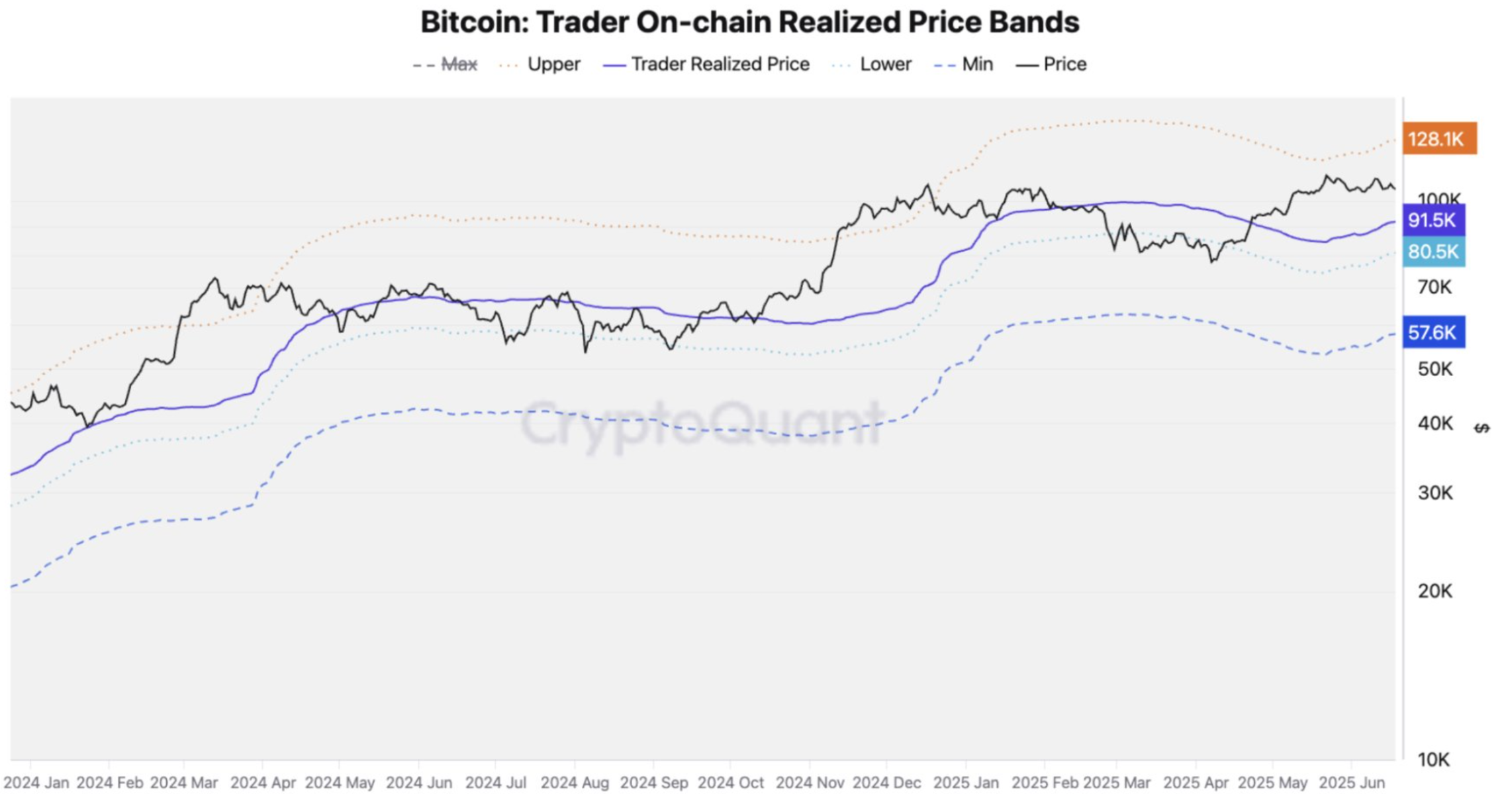
If demand continues to be weak, Bitcoin may find support around $92,000, which corresponds to the trader's actual cost price on the chain and is a typical support area during bull markets. If this support fails, the next support level may be $81,000, close to the lower track of the trader's actual cost price on the chain.
On-chain data analyst Murphy tweeted that although the ETH price has fallen back by nearly 20% from its high, he still does not think this is the best place to buy the bottom. Because from the profit supply percentage data, it can be seen that it is still 55%, which means that even at the current price, 55% of the circulating chips are still in a state of floating profit. From historical data, only when more than half of the circulating chips are in a state of floating loss, will it be a more cost-effective time to buy the bottom.
Galaxy Digital founder Mike Novogratz tweeted that the next 72 hours are critical, but if there is no real counterattack from Iran, the market will rise sharply by the end of the week.