
Author: Yangz, Techub News
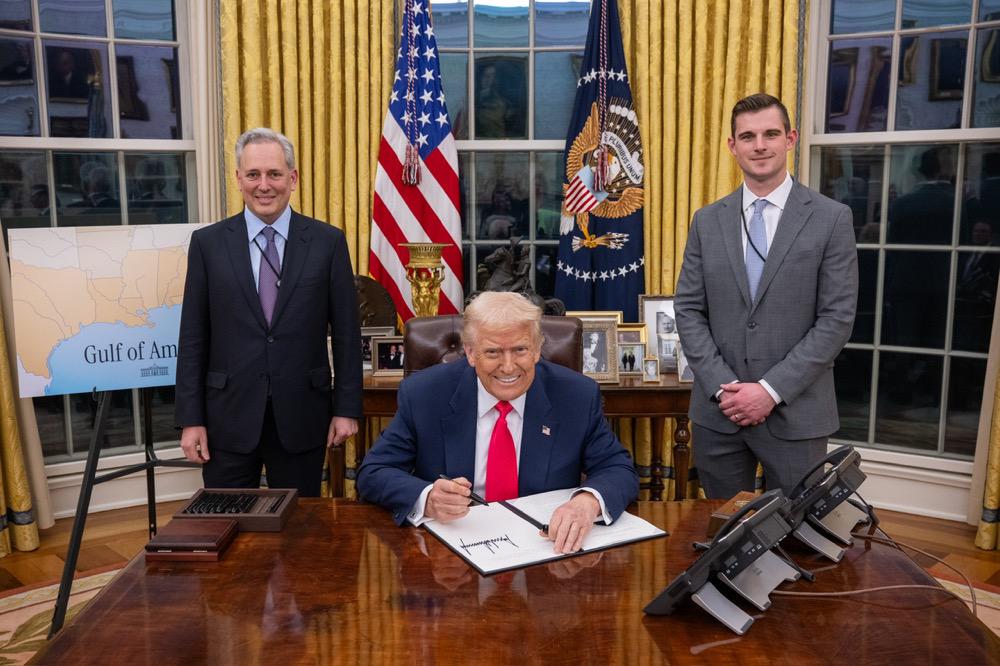
On March 7, US President Trump signed an executive order to establish a strategic reserve of Bitcoin and the US digital asset reserve, fulfilling the promise he made at the Nashville Bitcoin Conference before taking office.
Among them, the initial funds for the Bitcoin strategic reserve come from the Bitcoin confiscated by the US government through criminal and civil lawsuits over the years (David Sacks, head of the White House's artificial intelligence and encryption affairs, said that without a complete audit, the US government currently owns about 200,000 Bitcoins, and the executive order requires a comprehensive accounting of the federal government's digital asset holdings; Arkham data shows that the current US government owns about 198,109 Bitcoins, worth about US$17.38 billion), and authorized Treasury Secretary Scott Bessent and Commerce Secretary Howard Lutnick to explore budget-neutral strategies to obtain more Bitcoin without increasing the burden on taxpayers; the US digital asset reserves include digital assets other than Bitcoin confiscated in criminal or civil lawsuits, which are managed by the Treasury Department.
The executive order reads, “Within 30 days of the date of this order, each agency shall review its authority to transfer any government bitcoin held to the Bitcoin Strategic Reserve and submit a report to the Secretary of the Treasury. Government bitcoin deposited in the Bitcoin Strategic Reserve shall not be sold and shall be treated as a reserve asset of the United States and used to achieve government objectives in accordance with applicable law.” (The same applies to the digital asset reserve)
The battle between good and bad
As soon as the news came out, the market fluctuated. Bitcoin fell from a high of 91,000 USDT to 84,000 USDT at around 8 am this morning, with a 1-hour fluctuation of nearly 7.6%, and then rebounded to around 88,000 USDT. In addition, the market has also fallen into a "good news and bad news" dispute. On the one hand, some people believe that the strategic reserve policy is not as expected, causing traders to "sell the news"; on the other hand, there are also views that in the long run, this is simply a huge positive.
Matt Hougan, chief investment officer of Bitwise, said that the US strategic reserve of Bitcoin will greatly reduce the possibility of the US government "banning" Bitcoin in the future, and greatly increase the possibility of other countries following suit to establish Bitcoin reserves or accelerate their reserve process. In addition, it will make it more difficult for various institutions, including national wealth management platforms and quasi-governmental institutions such as the International Monetary Fund (IMF), to position Bitcoin as a dangerous or unsuitable asset. David Bailey, CEO of Bitcoin Magazine, said that when the decision is recorded in history, "it will prove to be the most important monetary policy decision since the Bretton Woods system." In addition, Solana co-founder Anatoly Yakovenko figuratively compared this executive order to a scalpel. He said , "The government did not bail out cryptocurrencies. It just further eliminated the regulatory uncertainty that has existed for the past four years. We need a stablecoin bill, guidelines that allow banks to deposit and access cryptocurrencies, and clear rules on token issuance and DeFi formulated by the US SEC and CFTC. "
In addition, some investors have analyzed the significance of the US Bitcoin strategic reserve from other perspectives. From the perspective of the relationship between Bitcoin and the US dollar, Blue Fox Notes believes that building a national reserve of cryptocurrency is a "defense and defense" for the United States. Blue Fox Notes said , "Perhaps, building a strategic reserve of cryptocurrency is a defense method for the US dollar international monetary system. When Bitcoin grows large enough, the human monetary system is expected to be turned upside down. Therefore, for the United States, if it cannot be stopped, the sooner it starts, the easier it will be to gain an active position. In addition, if the US dollar declines in the future and is replaced by the legal currency system of other countries, then once the US dollar loses its hegemonic position, cryptocurrency systems such as Bitcoin can be used as an alternative to the legal currency system of other countries." Primitive Ventures investment partner @YettaSing also retweeted, "If Bitcoin is included in the national reserve, it can only mean that there are cracks in the sovereign monetary system itself, and countries need to seek new credit anchors. This is a huge recognition of the monetary attributes of Bitcoin."
Unlike the above optimism, many investors believe that this executive order does not meet expectations and is considered "bad news". @hexiecs said that this executive order is not breaking news. "The Bitcoin strategic reserve has been preheated for a very long time. Part of the expectation for the previous rise was that the United States would use the strategic reserve to buy more Bitcoin. Now that the expectation has been dashed, isn't it an obvious bad news?" In addition, many investors also expressed concerns that the US government may openly "confiscate" crypto assets in the future. @realwuzhe said, "The United States has now established a Bitcoin reserve, but it is not prepared to buy coins with taxpayers' money. Where does the new currency come from? It must continue to be obtained through law enforcement. Next, the United States has a great motivation to take law enforcement actions against overseas exchanges and large holders of coins."
The debate between positive and negative factors may be largely due to the fact that "position determines the mind". In addition to the debate, there are some details about the US strategic reserve of Bitcoin that are worth paying attention to. Alex Thorn, head of research at Galaxy Digital, pointed out that there is a difference between "seizure" and "confiscation". "The current balance of Bitcoin available for the US government to use as a strategic reserve is up to 88,000, which only accounts for 43% of the current government holdings. This is because 112,000 will be returned to Bitfinex." Of course, whether the US government will eventually return this Bitcoin is still unknown. In addition, the Strategic Bitcoin Reserve signed by Trump is not the same as the Strategic Federal Reserve Act promoted by Cythia Lummis at the federal level. Alex Xu, research partner at Mint Ventures, pointed out that the former can be directly controlled by the government, while the latter needs to be legislated by Congress; the former itself does not have a separate budget for purchasing Bitcoin (if it needs to be increased, it needs Congressional approval), while the latter will provide a separate budget for purchasing Bitcoin (the goal is to buy 1 million in 5 years). Therefore, "David Sacks' statement that 'the government will not purchase other assets for reserve assets' does not mean that the Bitcoin strategic reserve in the public's impression has suddenly become something that only relies on confiscations and does not spend money to purchase Bitcoin separately."
summary
In my opinion, the symbolic significance of the United States establishing a strategic reserve of Bitcoin far outweighs the actual effect of the short-term policy implementation. In the short term, it is normal for the market to react negatively to policy details that are not as expected. In the long run, this step is still an important signal of changes in the global financial landscape. Perhaps this is not a positive factor that can immediately reverse the current market situation, but there is no doubt that this will be a decision that will go down in history.
At the same time, the market has focused on the White House Crypto Summit to be held in the early morning of March 8. According to Fox reporter Eleanor Terrett, the people who have confirmed their attendance include Ripple CEO Brad Garlinghouse, Coinbase CEO Brian Armstrong, Gemini founders Winklevoss brothers, Chainlink co-founder Sergey Nazarov, Multicoin managing partner Kyle Samani, Paradigm co-founder Matt Huang, Bitcoin Magazine CEO David Bailey, etc., and Trump will also give a speech.
Between policy implementation, market reaction and the upcoming summit, the US cryptocurrency policy is at a new turning point. Whether this roundtable forum on Saturday can bring more signals to the market or provide more substantial progress in the implementation of the Bitcoin strategic reserve will undoubtedly become the focus of the future development of the market and the industry.