
"Finternet is not a vision, it is taking shape."
I. From Blueprint to Construction
If the discussion on digital assets in Hong Kong in 2022–2023 was still at the stage of "whether or not to reopen", then by 2025, the question had clearly changed - it was no longer "whether or not to do digital assets", but "under what rules, by whom, and to what extent".
On November 4th of this year, the Finternet 2025 Asia Digital Finance Summit, held at the Grand Hyatt Hong Kong, laid out this issue throughout the day's agenda: from regulators, traditional financial institutions, card organizations and payment companies, to public blockchain foundations, RWA infrastructure and compliance technology companies, almost all participants revolved around the same main theme:
If we consider the future financial internet as a "new financial operating system," then is compliance the "anchor point" or the "brake" of the system?
When we use "compliance as an anchor, riding the wave" as a theme to interpret this summit, we are actually answering two questions:
- We believe the tide will come – cross-border payments, stablecoins, RWA, ETFs, DAT, institutional allocation… these ongoing changes will not be reversed by any single fluctuation.
- We also believe that an unanchored tide can ultimately hurt people—especially after a historic liquidity event like 10/11, when the market has begun to repric "stability" and "transparency."
The entire day's Finternet discussion can be roughly seen as a complex interplay of multiple threads revolving around these two sentences:
How should regulators set their anchor points, and how should the market follow the tide?
II. Regulatory Approach: "Following the Trend, Taking Small Steps and Moving Quickly": The Logic of Anchoring in the Market
The most noteworthy moment of the morning occurred during the special dialogue on "Hong Kong's Breakthroughs, Innovations and Safeguards".
During this dialogue between representatives of the Hong Kong Securities and Futures Commission and senior executives of the OSL Group, one statement particularly resonated with many industry professionals present:
"Regulation should follow the trend and proceed in small steps but quickly." — Ye Zhiheng
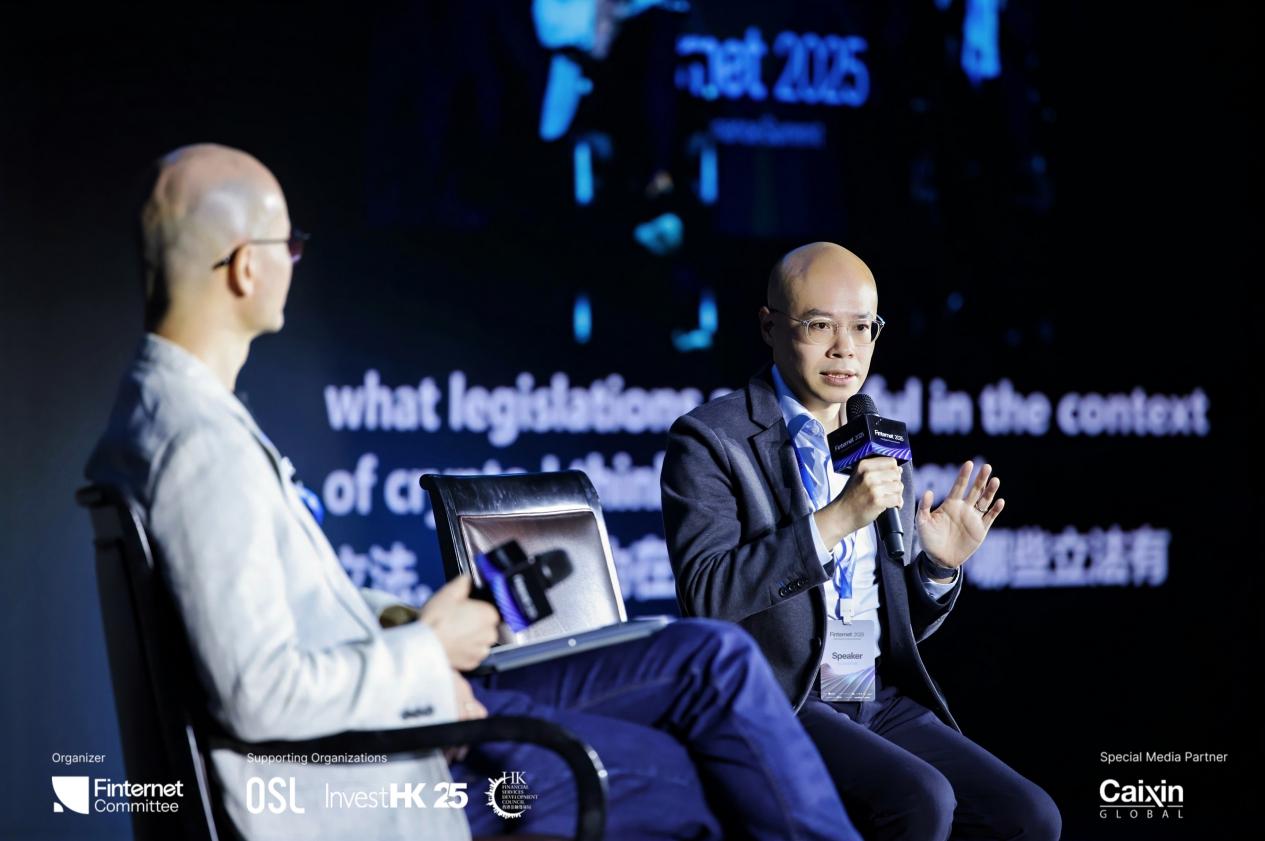
Image 1: Diao Jiajun, Director and Head of Legal Affairs of OSL Group, in conversation with Ye Zhiheng, Executive Director of the Intermediaries Division of the Hong Kong Securities and Futures Commission.
This seemingly simple statement actually summarizes Hong Kong's strategy for regulating digital assets quite accurately:
- "Go with the flow" means acknowledging that the market and technology have already taken the lead—crypto assets, stablecoins, and RWA are not industries that can be "shut down" by administrative orders, but rather are realities that are constantly being restructured through global capital and technology networks. If Hong Kong wants to become a hub, instead of going against the tide, it should acknowledge that "the tide does exist" and then consider how to build dikes and channels within that tide.
- "Small steps, quick progress" is about finding a balance between speed and controllability—not aiming to "slow down" or "achieve the goal in one step," but rather to continuously move forward under the premise of verifiability and reversibility.
- First, there will be a batch of licensed trading platforms, and then the scope will be expanded to wealth management and ETFs;
- Pilot programs will be implemented first on specific asset classes and investor groups, and then gradually relaxed.
- First, establish a regulatory framework for stablecoins and RWA, then consider more complex derivatives and structured products.
This is completely different from the past two-pronged management style of "either you can't do it at all, or you can let go of everything all at once".
For licensed institutions, a "small steps, quick progress" approach is actually a more favorable pace.
- We can make compliance and technical preparations in advance, under clear licensing and rules;
- Regulators also have the opportunity to gradually develop an empirical understanding of risks through continuous communication with platforms, rather than relying on static imagination.
From the beginning of this dialogue, the implicit theme that "regulation and the market are not opposites, but two feet pushed together by the tide" became the underlying theme throughout the Cornerstone Stage—regulation is not about keeping the tide out of the harbor, but about learning to stand firm in the tide, neither being swept away nor drowned.
III. Institutional Capital's Hesitation and Calculations: SC Ventures' "Tax Dilemma"
If regulators are considering "whether to provide the road and how to build it," then institutional investors are considering a more practical question:
"Considering the benefits and risks, is this path really worth taking?"
In the first fireside chat this morning: Fintech Ecosystem and Crypto-Related Investments,
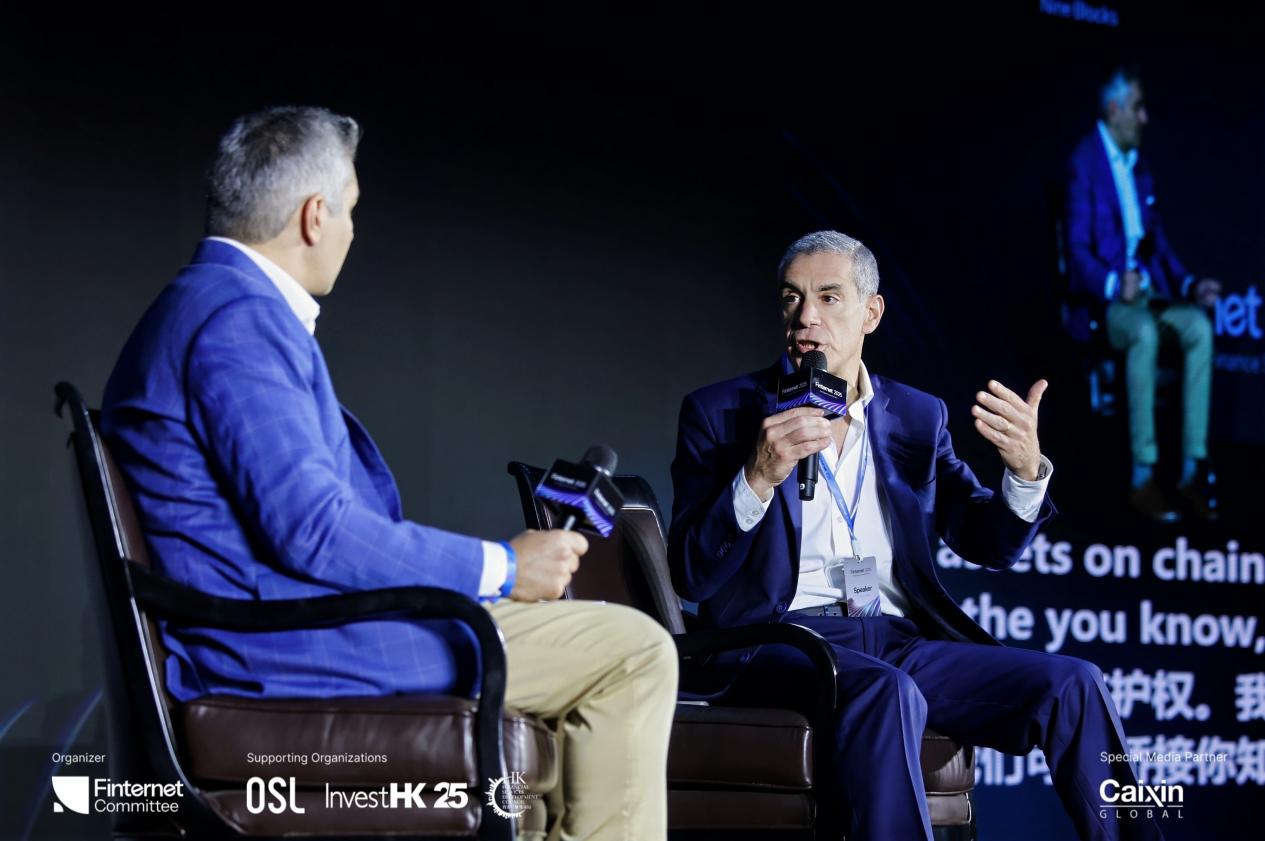
Image 2: Alex Manson, CEO of SC Ventures
Alex Manson, CEO of SC Ventures, a subsidiary of Standard Chartered, raised a very typical concern that has rarely been addressed at crypto conferences in the past:
"From a tax perspective, I have always found it difficult to make a judgment on the stability and replicability of crypto assets, which directly affects our asset allocation decisions."
(Paragraph: The tax recognition, valuation, and reporting methods for crypto assets vary greatly across different jurisdictions, affecting the certainty of long-term asset allocation by institutions.)
This statement is important for two reasons:
This illustrates that the institution isn't ignorant of encryption, but rather "unable to calculate" it—this "unable to calculate" doesn't refer to price fluctuations, but rather:
- Are these assets classified as "currency," "commodities," "securities," "intangible assets," or "other assets" in different jurisdictions?
- How should changes in fair value during the holding period be recorded?
- When realizing income, what tax rates and deduction rules will you encounter under different tax systems?
- When unifying financial statements at the group level, how can the tax treatment of encrypted assets in multiple locations be integrated?
- When these problems lack a clear path forward, even the highest expected returns are not "scalable" for large banks and institutions.
It reminds us that compliance is not just about "getting a license," but also about "being able to explain taxes and accounting clearly."
- Tax and accounting treatment are "hard constraints" in the internal risk control and compliance chain of institutional investment.
- If these constraints cannot be resolved, any macro narrative will be difficult to translate into substantial capital inflows.
Alex Manson's statement about his "tax dilemma" can actually be seen as a very clear research indicator:
- When analyzing digital asset investment strategies, we cannot only talk about "volatility and Sharpe ratio", but must also incorporate tax, accounting and regulatory costs into the same model;
- When connecting with banks and asset management institutions, it is not enough to just show "profit potential"; it is also necessary to show "tax and accounting treatment of this type of asset in different jurisdictions"—you can even try to cooperate with accounting firms to provide some "standardized templates".
in short:
It's not that institutions are unwilling to allocate resources, but rather that they need someone to help them understand the "compliance and tax pitfalls" in advance.
This task is well-suited to be accomplished jointly by licensed platforms and research teams that are at the forefront of compliance.
IV. Asian Regulation and Markets: Multiple Speeds on a Single Internet Map
In addition to Hong Kong, regulatory representatives from the Middle East, Malaysia, and Indonesia, as well as policy and infrastructure participants, gathered on the Cornerstone stage to sketch a Finternet blueprint for a “multi-speed Asia.”
1.1 Hong Kong and the Middle East: A Comparison of Two Hubs
In the discussion on "Digital Asset Regulation from Hong Kong to the Middle East," we see two types of hub-type financial centers attempting to align their roles on the same track:
Hong Kong Model:
- Based on a mature securities regulatory system, digital assets will be gradually included in the "regulated asset class" by adding virtual asset trading platform (VATP) licenses, ETF approval, and a stablecoin regulatory framework.
- Its advantages lie in its strong legal tradition, well-developed investor protection mechanisms, and high degree of integration with traditional financial markets.
- The challenge lies in the fact that reforms need to be compatible with existing systems, and many innovations can only be implemented "embedded".
The Middle East model (taking Abu Dhabi as an example):
- By leveraging the free trade zone and financial center, a relatively complete "digital asset special zone regulation" will be designed, highlighting openness and institutional competitiveness.
- The advantage lies in the ability to test new business models and product structures within relatively independent legal jurisdictions;
- The challenge lies in the fact that the methods of "mutual recognition" and "interoperability" with other global regulatory systems still need to be worked out.
There's no question of which model is superior or inferior; the difference lies more in the choice of path.
Hong Kong is like expanding a "new financial district" in an already highly developed city;
In the Middle East, a new area is being developed into a "financial special zone for the future."
For Finternet, what's more important is that as long as both choose to promote the development of digital assets within a compliant framework, the two systems will have the opportunity to interconnect in terms of clearing, custody, and stablecoin settlement in the future.
For organizations that possess networks in Hong Kong and multiple regions globally, this "multi-hub structure" actually presents new opportunities:
- On the one hand, it leverages Hong Kong's regulatory credibility and mature financial market;
- On the one hand, it explores more flexible business models and product structures through cooperation with the Middle East and other regions.
1.2 Southeast Asia Frontier: Finding a Balance Between "Inclusive Benefits" and "Risk Prevention"
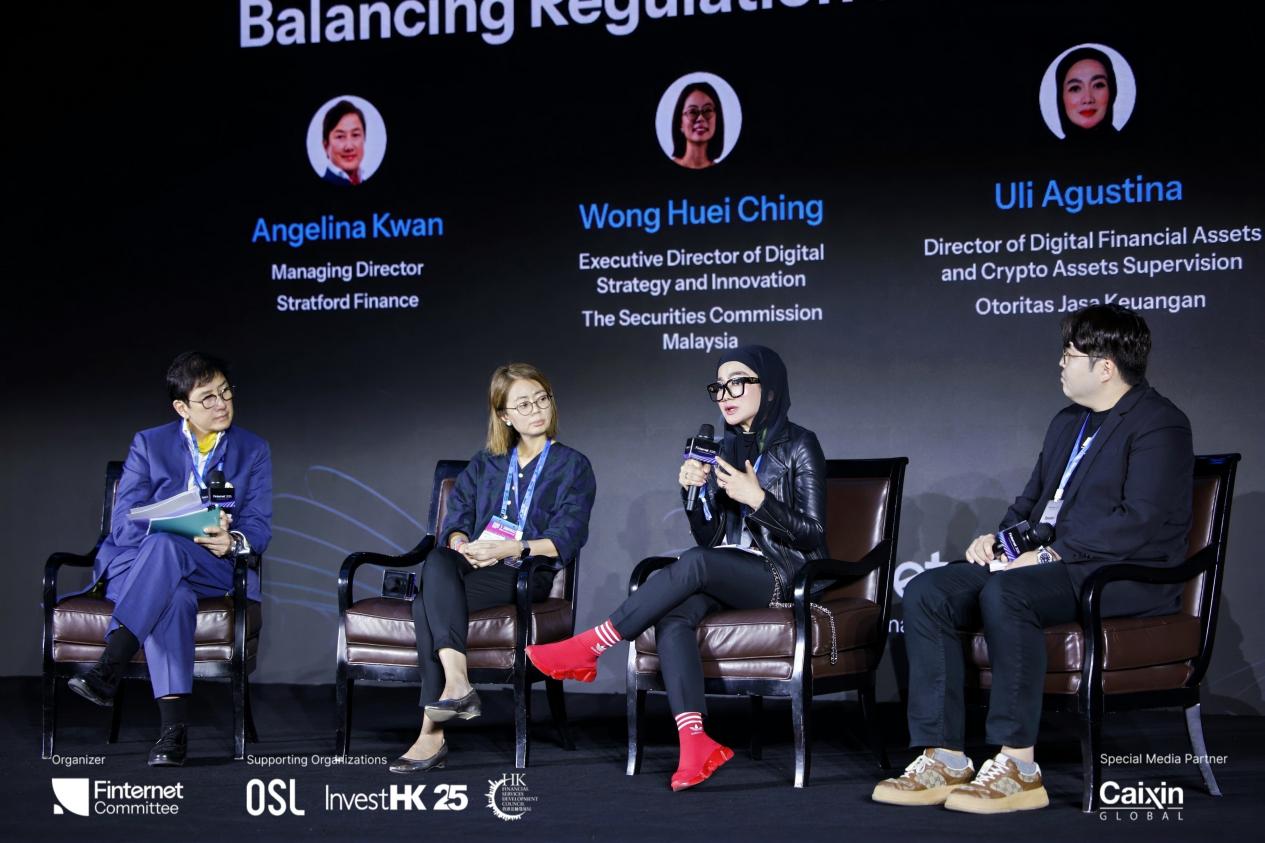
Image 3: Interaction between Wong Huei Ching, Executive Director of the Digital Strategy and Innovation Department of the Securities Commission of Malaysia, and Uli Agustina, Director of Digital Financial Assets and Crypto Assets Supervision at the Financial Services Regulatory Authority of Indonesia.
In "Asia's Crypto Frontier: Balancing Regulation and Compliant Growth," regulators from markets such as Malaysia and Indonesia present a different scenario:
- For many Southeast Asian countries, crypto assets and digital finance are not just investment tools, but are also closely linked to real-world issues such as financial inclusion, cross-border remittances, and micro-payments.
- However, retail speculation, fraud, and capital flight are also real risks that regulators cannot ignore.
Therefore, these markets often adopt a "tiered management" approach:
- For payments, remittances, and small-value settlements, a more open regulatory framework should be used to encourage innovation (even directly combined with the central bank digital currency pilot program).
- For high-leverage trading, complex derivatives, and structured return products, we will maintain strict restrictions or suspend them.
- By leveraging KYC/AML, on-chain monitoring, and compliance technologies, we strive to identify key risk points within limited regulatory resources.
This reminds us that:
Finternet is not a single-speed network, but a system that combines multiple speeds. Hong Kong, the Middle East, and Singapore may be more focused on "capital and asset management."
Malaysia and Indonesia lean more towards "payments and inclusive finance"; while India's Finternet concept attempts to combine tokenization, AI and traditional finance through a nationwide digital public infrastructure and then export it globally.
Two things are clear here:
- We must understand the primary uses of digital assets in different markets, rather than simply applying the same product logic.
- What we are building is not a single business line, but a set of compliance infrastructure capabilities (custody, trading, clearing, compliance data, risk control interfaces, etc.) that can be invoked in multiple jurisdictions and scenarios.
V. Stablecoins and Cross-border Payments: The First Areas to Be Hit by the Tide
Of all the topics, "stablecoins + cross-border payments/trade" is undoubtedly the closest to real business and real pain points.

Image 4: Circle Asia Pacific Vice President Yam Ki Chan discusses cross-border payments using stablecoins.
In the panel discussion titled "Supporting the Real Economy: Exploring the Potential of Digital Finance in Cross-Border Trade,"
The heads of payment businesses from Visa, Circle, PayPal, and OSL shared the stage, focusing on a very simple question:
"If we were to redesign a cross-border settlement system today, would we simply copy the old structure with its multiple layers of corresponding banks and exorbitant fees?"
The discussion focused on roughly three directions:
- A rebalancing of cost and efficiency
World Bank data shows that the average cost of global cross-border small-amount remittances has long remained in the 4-6% range, still significantly short of the G20's goal of reducing retail cross-border costs to below 1%. The advantages of stablecoins and on-chain settlement are:
- It allows for near-real-time recording and transfer of ownership of funds on the blockchain;
- Programmability enables complex scenarios such as automatic reconciliation, conditional payment, and revenue sharing;
- Subject to regulatory approval, reduce the capital tied up in some intermediate links and the costs of reconciliation.
2. Reclassification of Business Models
For traditional payment networks and card organizations, "on-chain settlement" does not mean "abandoning the existing network," but is more likely a backend architecture upgrade:
- The front end remains the familiar card and wallet interface for users;
- The backend has shifted from a multi-layered nostro/vostro relationship to an on-chain clearing network mediated by compliant stablecoins.
- For stablecoin issuers like Circle, the real goal is not to remain in trading and DeFi, but to become the underlying settlement asset in cross-border trade and B2B settlement.
3. Conditions for Compliance and Trust
For stablecoins to truly enter the trading and corporate financial systems, they must satisfy three layers of trust:
- Trust in the issuer and the reserve assets;
- Trust in clearing and hosting nodes;
- Trust in the regulatory framework and judicial remedies.
This is also the significance of Hong Kong's advancement of the regulatory framework for stablecoin issuers: it is not to add another hurdle, but to create a predictable compliance environment for this new type of settlement asset.
This main thread corresponds to a very specific business problem:
In the "stablecoin + cross-border payment" track, should we just be a "liquidity provider", or should we further become a "compliant clearing node" and an "enterprise-level solution provider"?
If the answer is the latter, then what we need to do next is not just connect to more chains and stablecoins, but rather:
- Provides "explanatory power" for KYC/AML and transaction monitoring that can be integrated with bank and corporate risk control systems;
- In terms of settlement, custody, and fund flow visualization, it provides reports and interfaces that can be understood by both enterprises and regulators;
- The goal is to truly embed "on-chain settlement" into enterprise finance and ERP systems, rather than simply limiting it to "transfers between wallet addresses".
VI. ETFs and DAT: From "Entry Tickets" to "Transformation Vehicles," Bridges, Steel Cables, and the Road to the Future
In a panel discussion on "From ETFs to DATs," ETF experts from Bloomberg Industry Research, the head of product development for Asia Pacific at Invesco, representatives from Fidelity Digital Asset Fund and market makers examined this "institutional entry path" from different perspectives:
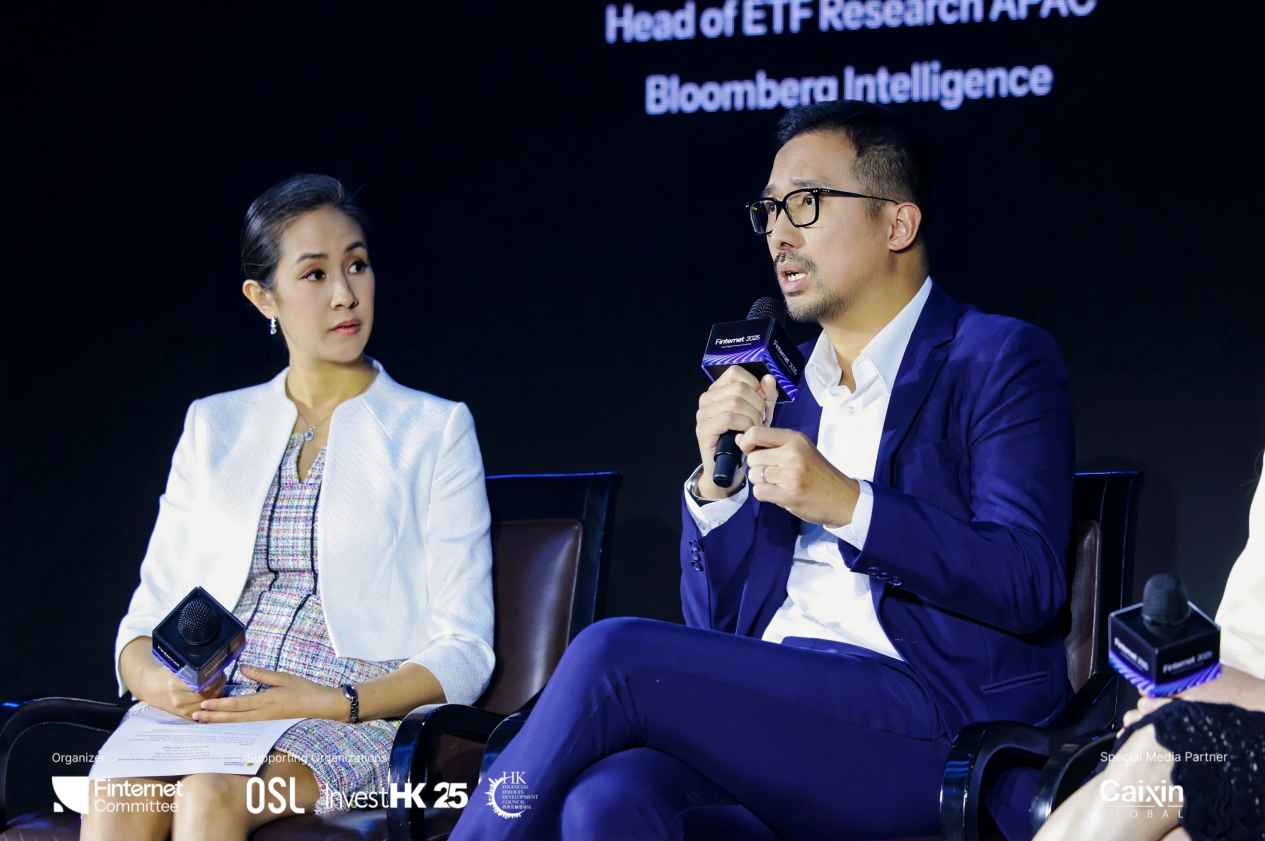
Image 5: Rebecca Sin, Head of ETF Research, Asia Pacific, Bloomberg Intelligence, in conversation with Huang Jiacheng, Head of Product, Asia Pacific, Invesco.
- ETFs are a very familiar shell:
- Within the existing regulatory and exchange system, it helps traditional investors access assets such as Bitcoin and Ethereum with minimal changes; its "bridge" role has been proven in the US market and is a relatively mature "entry ticket".
- DAT, on the other hand, is a more controversial tool:
- Listed companies or institutions are allowed to allocate a certain percentage of their funds to digital assets such as Bitcoin on their balance sheets, or to amplify their exposure through structured solutions.

Image 6: Giselle Lai, Associate Director of Digital Asset Investments at Fidelity International
Marco Lim, Independent Non-Executive Director of Boyaa Interactive, discusses ETFs and DAT with Jaden Chan, Digital Asset Investment Manager at Flow Traders.
However, the focus of the discussion lies in the duality of its identity:
- When such holding involves a certain amount of leverage, is sensitive to price fluctuations, and lacks a clear hedging mechanism, is it a "strategic allocation" or will it become a speculative tool disguised as "treasury management"?
- When the market is on the rise, this structure is easily packaged as "forward-looking investment in future assets"; however, in extreme market conditions, it may become a leverage engine that amplifies volatility.
Currently, the market offers DAT a 30-50% premium; however, this premium structure is fragile. Once more mature products offering returns, such as ETF staking, emerge, DAT's premium will be drastically reduced to 10-30% if it fails to evolve, and it may even face the risk of being replaced.
Therefore, DAT must transcend the "pure hoarding" 1.0 model and find a new value narrative. The true significance of DAT 2.0 should not be merely that of a "cryptocurrency holding company," but rather a strong signal of a Web2 company's strategic transformation towards Web3. The company's use of cryptocurrency exposure is not just for financial appreciation, but also for deep integration into its business operations—for example, using it as an underlying asset for a new economic model, exploring a tokenized membership system, or building a decentralized business ecosystem.
This discussion did not yield a simple conclusion.
But the implicit consensus is:
ETFs are a relatively mature "entry ticket".
DAT is still navigating a tightrope, embracing both innovative value and potential regulatory and market risks.
DAT needs to evolve from a simple treasury management tool into a strategic fulcrum for companies to explore new business models.
VII. RWA and Asset Ownership: Clarify "Whose Assets" Before On-Chain Action
If stablecoins solve the problem of "how money can move faster, cheaper, and more transparently," then RWA (Real World Assets) and asset ownership address the question of "who owns it and what the rights are."
- The Global RWA Alliance and Asset Manager's Perspective
The afternoon discussions surrounding the "Global RWA Alliance" and "Unlocking RWA: Exploring New Paths for On-Chain Real-World Assets" shared a clear characteristic:
It's no longer about telling stories; it's about dismantling projects.
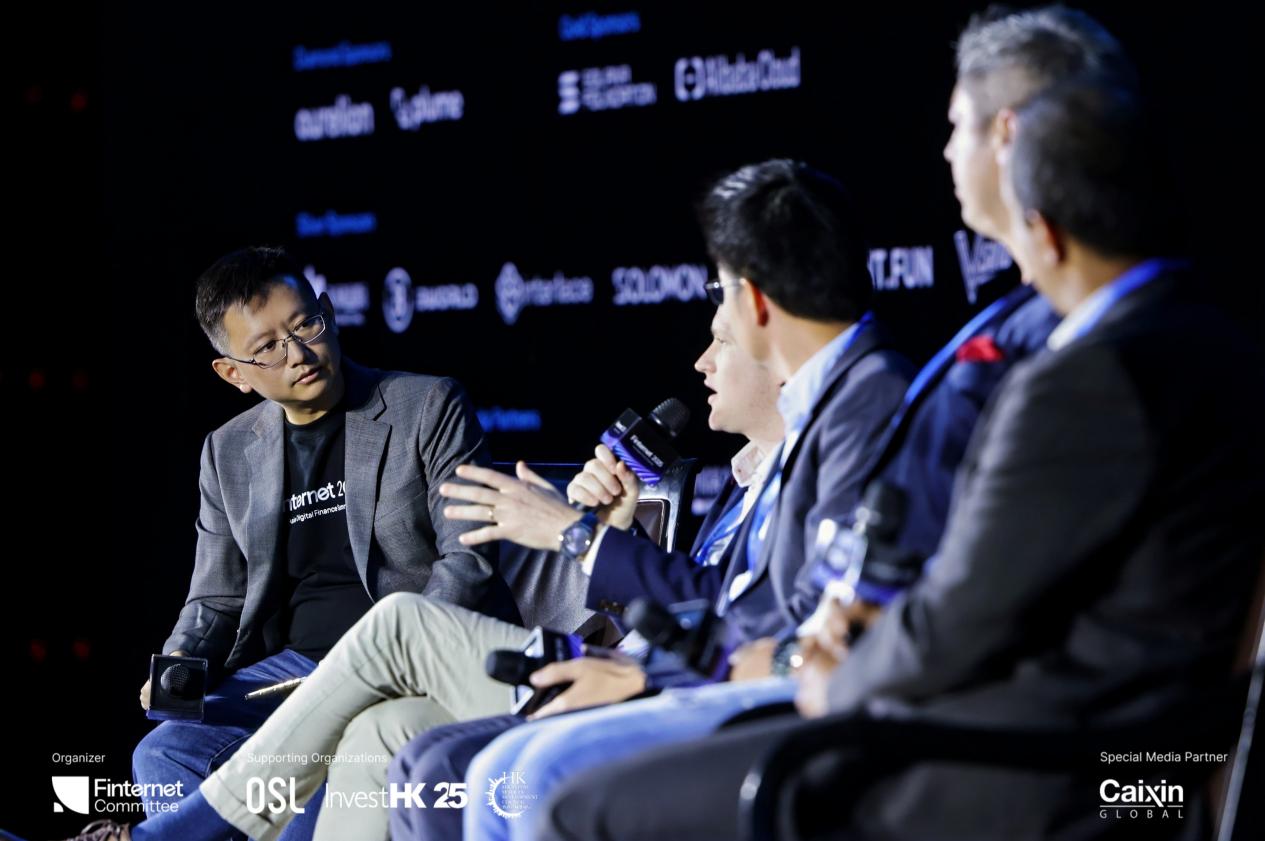
Image 7: Brian Chen, Head of Wealth Management at OSL Group, discusses RWA with representatives from traditional financial institutions.
Representatives from institutions such as Blackstone, Franklin Templeton, and Marketnode focused more on "specific asset classes + product structure":
- Money market funds, short-term bonds, notes, fund units, and alternative asset income rights—for each type of asset:
- The cash flow structures are different;
- The legal rights are different;
- The accounting treatment and valuation methods are different.
- "Going on-chain" does not automatically improve asset quality; on the contrary, the amplification of liquidity and leverage may make previously hidden problems more sensitive.
Therefore, what they are concerned about is:
Within the existing legal and accounting framework, how can we design an RWA product structure that is "auditable, custodial, tradable, and recyclable"?
This means that the real challenge of RWA lies not on the blockchain, but in:
- How to clearly define rights and obligations in legal documents;
- How to stably map these rights in a custody and registration system;
- How to ensure consistency and reconciliation between on-chain contracts and offline registrations.
2. Asset Ownership Confirmation: A Tripartite Dialogue Among Law, Technology, and Compliance
In the special topic "Asset Confirmation: From Reality to Blockchain", the consensus reached by law firms, compliance technology companies, and infrastructure providers can be summarized into three points:
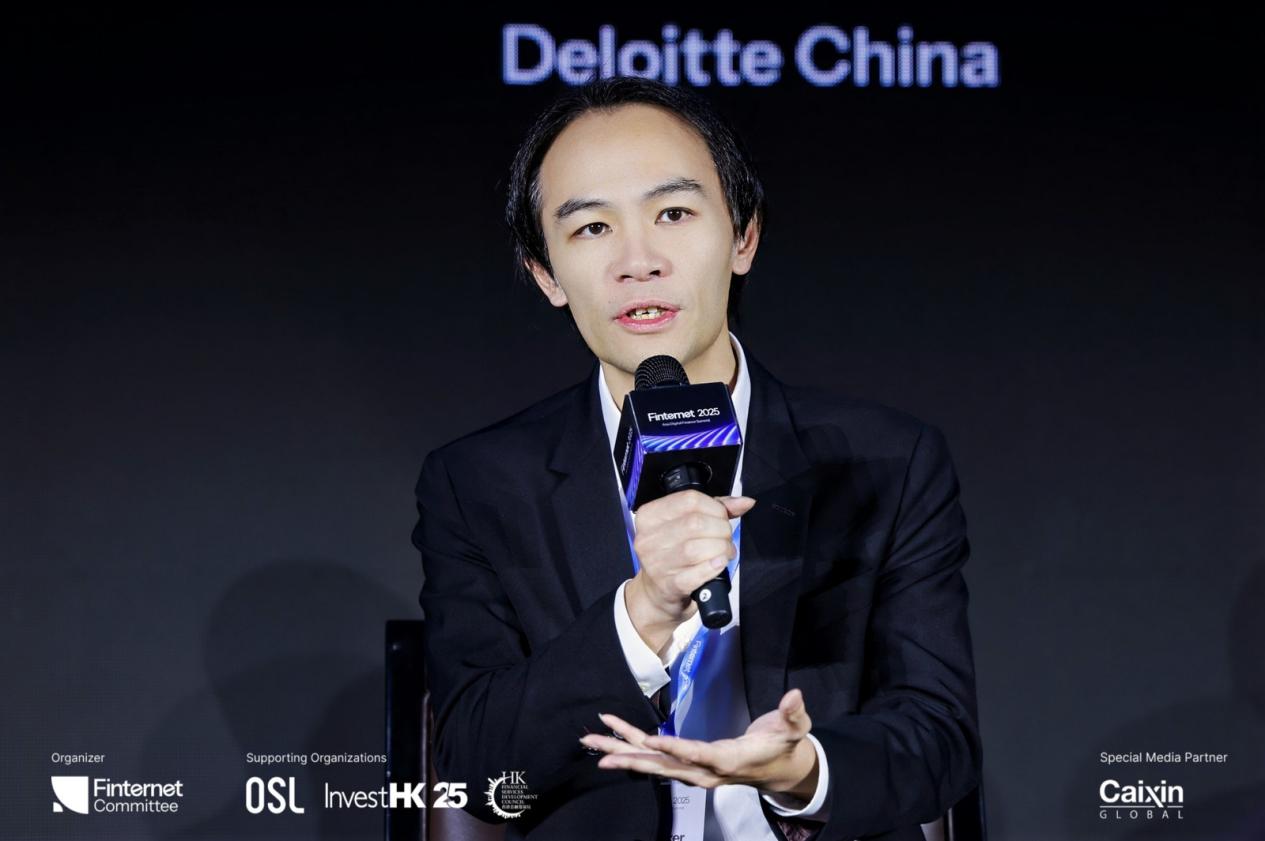
Image 8: Lu Zhihong, Head of Digital Assets, Deloitte China (Hong Kong)
The law remains the ultimate anchor of "rights": in the vast majority of jurisdictions, what the courts truly recognize is:
- Contracts and agreements;
- Various types of registration (equity registration, real estate registration, pledge registration, etc.);
- Records of banks and custodian institutions.
For a blockchain record to have the effect of "proof of rights," it must establish a verifiable connection with these traditional credentials.
3. Smart contracts are execution tools, not the law itself.
Even though smart contracts can technically guarantee "execution by code," in many scenarios, real-world events (defaults, enforcement, regulatory intervention) still require offline intervention. Therefore, RWA's smart contracts are more like a "projection" of legal provisions into the machine world, and the two must be mutually verified.
Hosting and registration nodes are becoming more important:
Who will bear the responsibility for the mapping between "on-chain ledgers and offline rights"?
- Is it a traditional custodian bank?
- Is it a new type of digital asset custody platform?
- Or is it a joint registration structure involving multiple parties?
For licensed platforms, there is a natural opportunity here:
- By collaborating with law firms, auditing firms, accountants, and compliance technology companies, it plays the role of a "reconciliation hub" between the blockchain and the offline world.
From Finternet's perspective, stablecoins are the "blood" of the cash layer, while RWA is the "skeleton" of the asset layer.
The blood needs to flow fast enough, but the skeleton must be clear and strong enough.
Without the former, the system lacks efficiency;
Without the latter, the system lacks a sense of security.
VIII. The October 11 Liquidity Event: A Real-World Stress Test of "Anchors" and "Tides"
Although the preceding agenda consisted of the main themes and guest list, the fireside chat entitled "Gray Rhino or Systemic Failure," which began with the "historic reckoning" on October 11, was clearly the emotional high point of discussion among practitioners recently.

Image 9: OSL Group CEO Cui Song discusses the future direction of the digital asset industry during a fireside chat.
This liquidity event is being discussed separately because it acts as a real-world stress test, bringing to the test many of our optimistic assumptions about the resilience of decentralized markets over the past few years.
From the statements of regulators, platform operators, and capital representatives, several layers of consensus can be discerned:
1. This is a foreseeable "gray rhino," and also a systemic "comprehensive check-up."
- High leverage, stablecoin run risk, and highly correlated prices of multi-chain collateral constitute a "familiar but dangerous combination."
- The difference is that this time it happened at a time when "regulators are getting involved and compliant platforms and traditional institutions are accelerating their entry," thus giving it a stronger symbolic meaning.
2. Many risk control models are still too "locally optimal".
- Many platforms' risk control systems are based on the fundamental assumption of "single platform + single product + single type of collateral";
- However, the real-world crypto market has evolved into a cross-platform, cross-chain, and cross-product "liquidity network": any anomaly in any node can be amplified non-linearly to the entire system.
- This means that risk control needs to be upgraded from "calculating the liquidation line" to "identifying structural vulnerabilities".
3. Transparency and compliant disclosure can act as a buffer, not an amplifier.
- In the absence of unified disclosure and real-time monitoring, market sentiment is easily swayed by "joke-like information."
- If more core liquidity is provided by licensed, auditable platforms, forming a certain "healthy liquidity foundation," then the impact of similar events on the entire system may be mitigated.
For licensed institutions, this dialogue is more like a mirror:
- On the one hand, it reminds us that continuously increasing investment in risk control systems, real-time monitoring, and stress testing is not "icing on the cake," but rather the foundation of the license's value;
- On the other hand, it also subtly increases the market's premium for "compliance and stability"—when some platforms prove unable to provide sufficient transparency and resilience under extreme market conditions, those compliant platforms that can stand firm will be repriced.
IX. Compliance as the Anchor, Riding the Wave: The Imagined Role of Compliance Agencies in Finternet
Based on a day's discussion, we can more concretely understand the meaning of "compliance as the anchor, riding the wave" in the context of Finternet—especially for compliant and licensed institutions, it is not just a pretty slogan, but a rather specific action list.
1. On the compliance front: From "meeting regulatory requirements" to "jointly building rules"
- By securing a Hong Kong VATP license, a stablecoin framework, and potential derivatives rules, we can first firmly anchor ourselves.
- Actively participate in discussions with regulators and industry associations, and provide feedback on frontline risk control experience and data to rule-making.
- On tax and accounting issues, we collaborate with law firms and accounting firms to explore standardized solutions for institutional clients—this is precisely where SC Ventures raised questions, and it's a gap we can fill.
2. In the market: Go with the tide, but don't be pushed along by it.
- In the area of stablecoins and cross-border payments, we are exploring becoming a compliant clearing node and enterprise-level solution provider, rather than just a liquidity provider, with settlement solutions as the core.
- In the area of RWA and asset ownership confirmation, we build capabilities around custody, registration and secondary transactions, and work with asset managers, law firms and auditors to assume the central role of "on-chain - offline reconciliation";
- In the area of wealth management and institutional asset allocation, we leverage our experience in licensing, risk control, and product structuring to help more traditional institutions make the transition "from pilot projects to asset allocation".
3. On the research side: Transform "highlight moments" into long-term frameworks.
Ye Zhiheng's highly summarized regulatory attitude of "going with the flow and taking small, quick steps" is a prime example.
And Alex Manson's candid expression of "tax confusion leading to cautious asset allocation,"
These shouldn't just remain in the PowerPoint presentations of the day, but should serve as the starting point for our research work over the next period of time:
- One line continuously tracks the institutional evolution of Hong Kong and major jurisdictions in terms of stablecoins, RWA, derivatives, taxation and accounting treatment, and compiles "what can be done and how to do it" into a knowledge base that can be accessed by various internal business lines;
- Another approach, from the perspective of institutional investors, studies the appropriate position of digital assets in different asset allocation frameworks, taking into account after-tax returns, capital requirements, and compliance costs—this is precisely what institutions like SC Ventures are concerned with.
In conclusion: The tide will eventually come; what matters is where we anchor.
The biggest takeaway from Finternet 2025 is that it's no longer just a conference for the crypto industry, but a group of people seriously doing the math, discussing a new blueprint for the financial internet.
Some people are considering how to draw the boundaries from a regulatory perspective;
Some people are taking a technical approach, considering how to manage bandwidth.
Some people are considering how to reduce costs by starting with payment and trade;
Some people start from assets and accounting to consider how to clarify equity;
Others start with risk events and consider whether a system has resilience under extreme circumstances.
On this complex graph, no one will always be in the center, but one thing is clear:
| Only by anchoring ourselves on compliance and stability can we have the opportunity to talk about how to go further with the tide of the market. |