
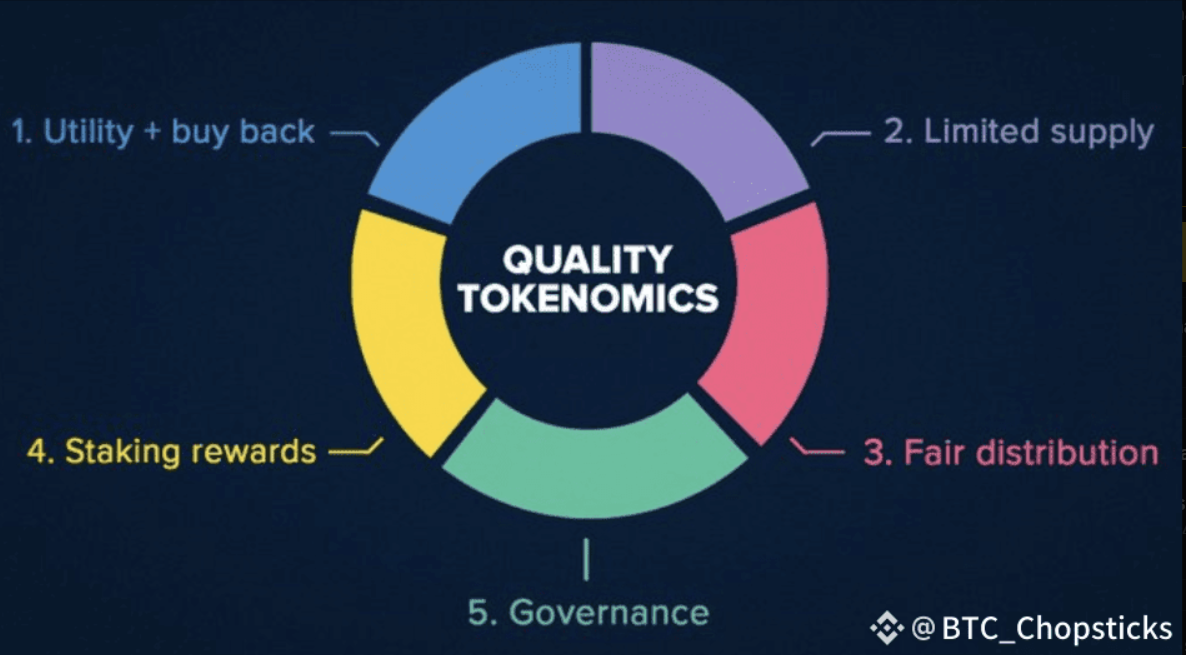
1️⃣ Practicality + Buyback and Destruction Mechanism
📖 Simple understanding:
Tokens need “use”, for example:
Pay the agreement fee
Unlock features/Get voting rights
Mortgage/Pledge to get income
If part of the income is used for repurchase + destruction, positive price support can be formed.
✅ How to judge?
Does the project document mention that ≥10% of revenue will be used for repurchase?
Is there a wallet address that can be traced on the chain?
📌 Example: Hyperliquid ($HYPE)
54% of the transaction fees will be injected into the aid fund for the continuous repurchase and destruction of $HYPE.
2️⃣ Limited total amount + predictable release
📖 Simple understanding:
The total supply + unlocking rhythm must be clear to avoid "sudden crashes".
✅ How to judge?
Is there a detailed Token Release Schedule?
Can I import into Excel or Tokenomist tool to simulate daily unlocking?
📌 Example: Uniswap ($UNI)
The total amount is 1 billion, with an annual inflation of 2%. The release rules are written into the contract and are completely transparent.
3️⃣ Fair distribution + long-term lock-up mechanism
📖 Simple understanding:
Community is prioritized. The longer the team/VC locks up their funds, the better, to prevent a market crash.
✅ How to judge?
Does the team + VC account for more than 50%?
Do you want to set a Cliff (lock-up period) of ≥12 months?
📌 Example: Hyperliquid ($HYPE)
31% airdropped to the community, no VC
The team locks up for 1 year and unlocks linearly until 2028
4️⃣ Substantial income + sustainable staking incentives
📖 Simple understanding:
Rewards come from real revenue of the protocol (such as ETH / USDC ), not from issuing more tokens.
✅ How to judge?
Comparing “Real Return APR” vs “Token Inflation APR”
If more than 70% comes from inflation → potential Ponzi risk
The staking rewards come from transaction fees, a typical "Real Yield" project.
5️⃣ Real and effective governance rights
📖 Simple understanding:
Governance tokens must be able to decide resource allocation/parameter modifications rather than symbolic voting.
✅ How to judge?
Have the governance proposals been implemented in the past six months?
Is voting participation >5%?
📌 Example: Uniswap DAO
In March 2025, an allocation of $165 million was made to establish an ecological fund with effective, open and transparent governance.
✅ Summary: This is my standard template for screening projects
Almost every long-term growth project meets at least four of these five criteria.
📌 My personal criteria:
No VC/Team lock-up transparency
Many airdrops + Reasonable concentration of holders
There are clear real benefits, not "idle incentives"
If a project hands over tokens to the community from Day 1, it deserves long-term attention.
📌 Like + Save this practical checklist to prepare for your next investment decision.


