Author: Liu Honglin
After a year, I went to the Hong Kong Convention and Exhibition Center again to attend the Web3 Carnival. People are path-dependent. I saw the poster saying that the exhibition area was on the 5th floor, so I went up to the 5th floor directly along the stairs I took last year, but I found out... I went the wrong way.
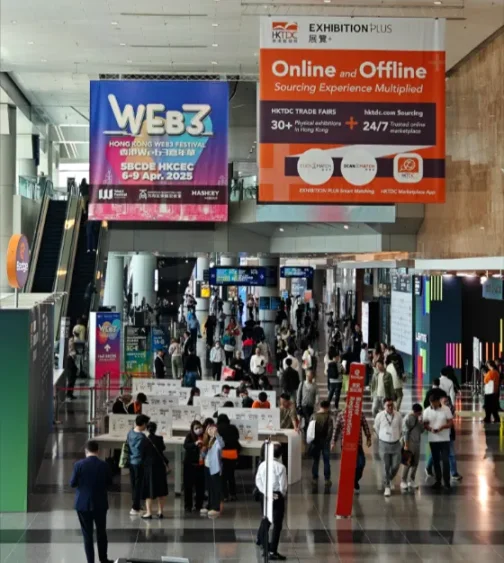
When I returned to the lobby on the first floor by the same route, I was glad that I had taken the wrong path. As I went up the stairs, I was sighing that no matter how bad the industry was, it wouldn't be so bleak.
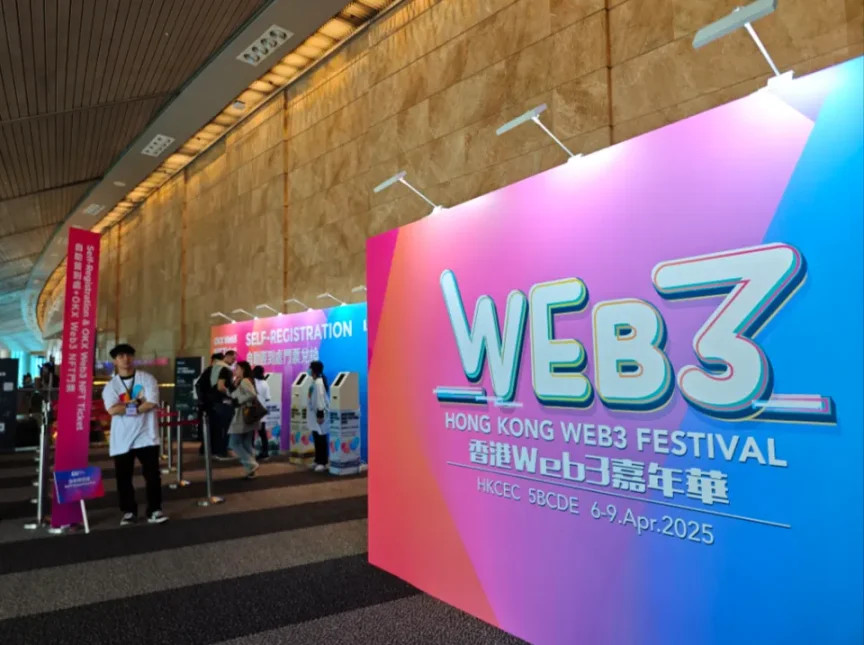
I arrived at the official entrance, got my ticket, and entered the venue. The first exhibition area I saw was Hashkey and OKX. It is true that exchanges are the mainstay of the current Web3 industry. Strangely enough, OKX did not get a license in Hong Kong, but OKX is not low-key in Hong Kong at all. If you say that the relevant leaders of the Hong Kong government do not know that OKX is in Causeway Bay, I don’t believe it at all.
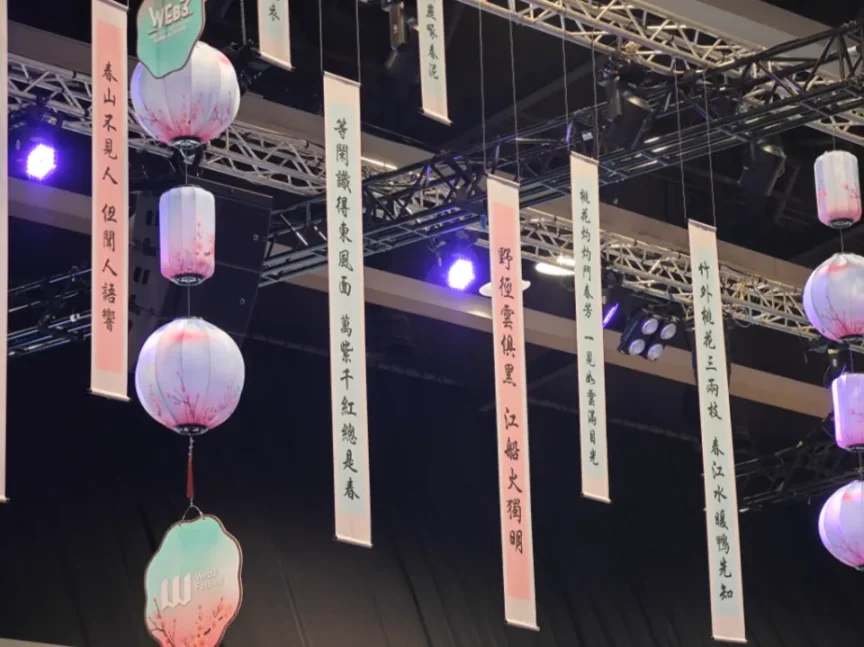
The theme of spring, summer, autumn and winter for this year's venue is very good. From the perspective of the market, I think it is enough to keep winter. I think the vertical banners of Chinese poetry on the main booth are particularly beautiful. As expected, the combination of ancient Chinese style and global topics is very cyber and punk.
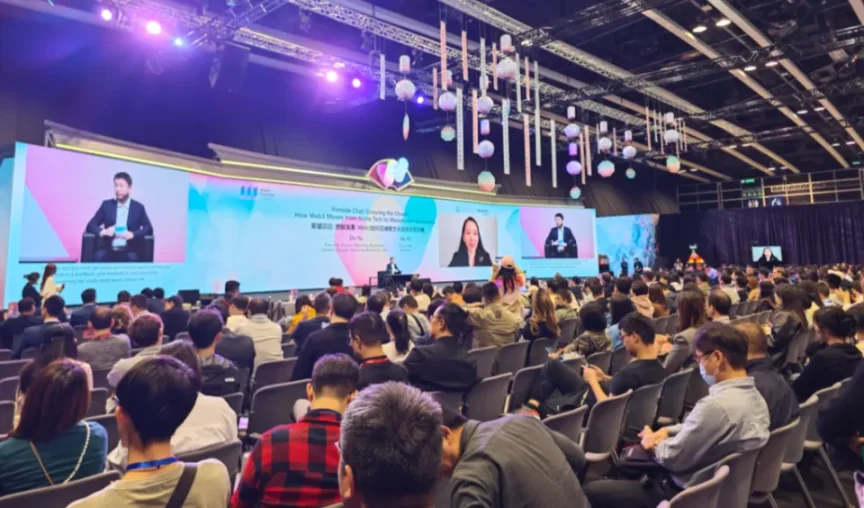
It is said that the entire exhibition area has increased by 1.5 times compared to last year. So it seems that the popularity of the entire venue is also much quieter than last year. This is not what I said, but the intuitive feeling given by several partners who participated in the exhibition at the venue. Last year, the Mankiw team still had a booth at the venue. Seeing the state of the venue this year, I am glad that the team partners do not have to stay here for 4 days. While visiting the exhibition, I also met partners from Conflux. They did not participate in the exhibition this year. Instead, they found a bar nearby to hold activities. The popularity of the venue was diverted, which is probably a very important reason. Everyone will find that this kind of activity is just a need for a place to meet and gather, both inside and outside the venue.
One of the key themes of the event on the 7th was PayFi. I listened to the sharing of executives from Yuanbi, ZAbank, HSBC and other banks. I also met several old friends in the audience. They are all companies engaged in payment in the Web2 era. In addition to the traditional track, they have recently begun to pay attention to the combination of Web3 and the payment industry. Outside the venue, I also visited the payment concept booths one by one and communicated with their staff about their business scenarios and product services. The core is still two: Tob's cross-border payment and Toc's USDT bank card.
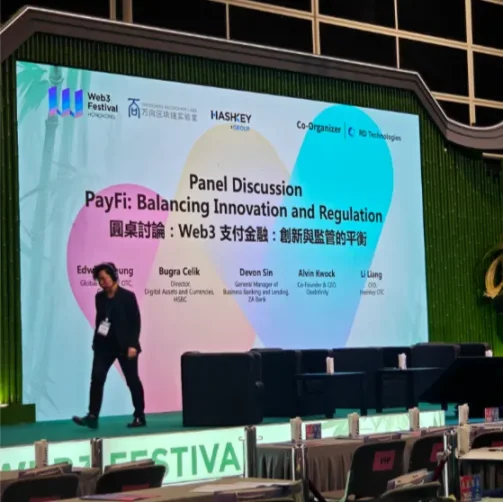
I think USDT bank cards are a bit mixed now. So mixed that I am worried that some agents who deal with USDT bank cards will run away with the money. Therefore, you should be cautious when using USDT bank cards that are not from well-known large institutions. Don't just focus on the low handling fee rate, the other party may be eyeing your pre-deposited principal.
The Depin track that was very popular last year was not mentioned at this year's venue. The only hardware-related project that could be seen was a robot dog made by an unknown exhibitor in the middle of the venue.
Surprisingly, I saw Shanghai Data Exchange also participating in the exhibition. Mr. Xie and Ray from the exchange were at the booth. When I walked to the booth, everyone greeted them warmly. The key service they introduced at the exhibition was the RWA track. There were quite a lot of partners who came to the booth for consultation. After all, RWA is a business scenario that allows mainland companies to connect to Web3 to some extent. I think many traditional companies, especially bosses who are worried about financing, are thinking about it. But I am really curious and looking forward to what path RWA can take in the mainland.
Another booth with a similar concept to RWA is Boshi Fund. Judging from the previous PR publicity and the introduction of the booth, the general gameplay is to tokenize the traditional money market fund, and allow qualified investors to directly use cryptocurrency to purchase it on compliant exchanges such as Hashkey, which can be regarded as a product that provides friends in the currency circle with an income product in a short position state. Of course, I understand that money market funds are only the initial attempt, and more fund products should be tokenized and sold on compliant exchanges in the future. From this perspective, the future cryptocurrency exchange is also a brokerage to some extent. In addition to being able to purchase crypto assets on the market, you can also buy securities products. New and old brokerages such as Futu Securities/Shengli Securities suddenly have another competitor in another track. The intersection of new and old forces is also quite interesting.
In addition to the Payfi track, Meme Coin was also a popular booth at the venue. I saw at least three or four such projects, but I didn’t talk much because I thought it was boring. I met a friend from Shanghai at the venue, and he told me that Meme Coin had made them lose millions of dollars in the past few months. It was really sad.
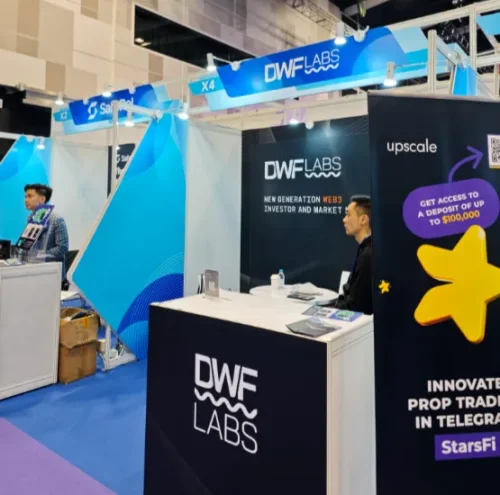
Interestingly, I saw that DWF labs had a small booth this year. I remember that last year, they had a large booth with many staff members. It seems that trading is not very profitable this year. I guess it is not easy for market makers to do business recently, so they keep a low profile.
As for the public chain project, the partners of BSC left work on time at 16:00 in the afternoon. It seems that except for CEX which is the mainstream business, the other projects are just for show. In recent days, the two co-founders of Binance have appeared in Hong Kong after many years. Some friends speculated that the Hong Kong government has further favorable policies. Who knows?
Maybe I didn’t notice that the public chains Sol and Sui, which are popular in the Chinese-speaking world, were not seen at this year’s conference. Come to think of it, it seems that no one was talking about technology at the conference, and everyone seemed to be focusing on finance.
Next to the BSC booth is a project booth called FoX. From a visual inspection, the people who came to check in at this booth were relatively older. Judging from the information conveyed on site, I suspect that this is a project with some CX.
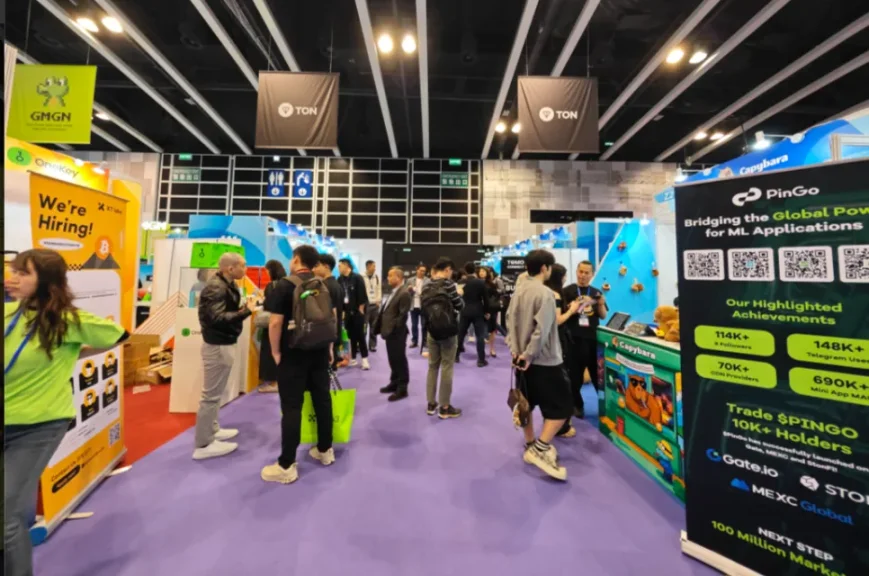
The Ton ecosystem is the only exhibitor that makes people feel that it is an ecosystem, except for the organizers Wanxiang and Hashkey. In a certain exhibition area, Ton and about a dozen projects in its ecosystem gathered into a street, which seemed to be organized and disciplined. I looked at it and saw that it was mainly on-chain transactions/e-commerce/small games, but the popularity in front of the platform was not that high. Think about it, Ton contracted a sub-forum last year, so it seemed depressed in comparison. Last year, many Ton teams in the Chinese-speaking area should have left. A good friend of mine left Ton not long after the web3 carnival and started his own entrepreneurial project.
Occasionally, I would be recognized and greeted by some unfamiliar partners at the scene. Everyone would greet me enthusiastically and ask, "Are you Liu Honglin, the lawyer from Mankiw?" It can be seen that the workload of daily typing and shooting short videos still has positive feedback. We still need to keep up the good work and output more useful things to all friends.
I listened to the sharing and talked with friends at the venue until the end of the exhibition. After I came out of the exit, I had something urgent to do and was about to enter the venue. At the entrance, an old man who spoke Cantonese stopped me and said that the entrance time had passed and I couldn’t enter. I said that I just came out of the exit, I went in to find someone and came out, but he said that this was not allowed because the entrance time had passed. This should be an art of communication in the mainland, but think about it, this is Hong Kong, and everyone seems to have a different understanding of the rules, so I gave up.
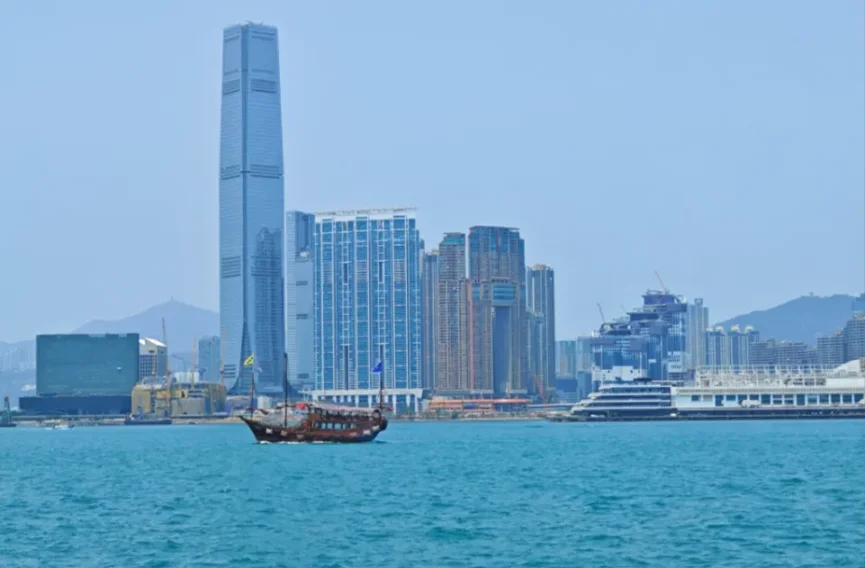
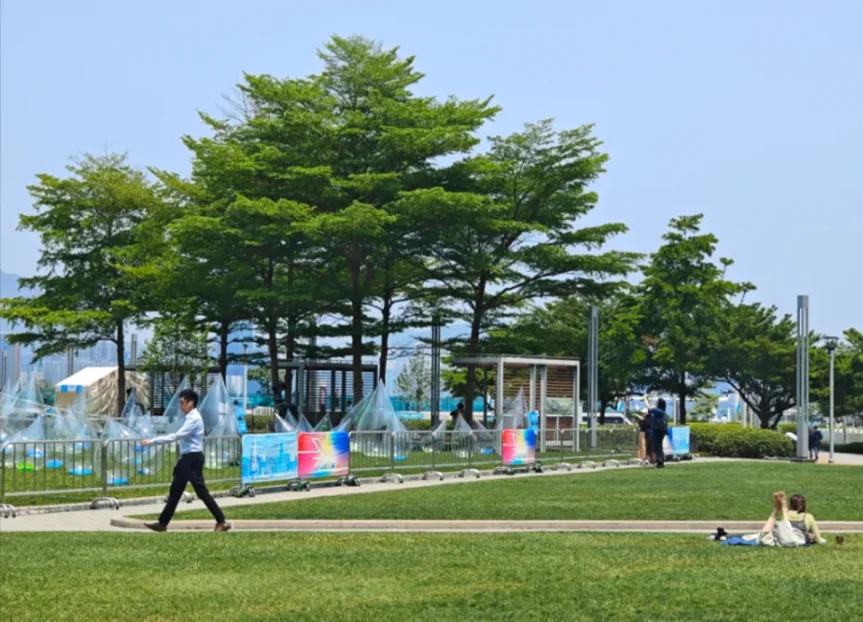
I flew directly from Shanghai to Hong Kong in the morning and took the Airport Express directly to Hong Kong Station. I looked up the distance to the Convention and Exhibition Center and it was 30 minutes. So I walked along the beach. The sun was shining and spring was in the air. There were people jogging on the beach, and people lying on the lawn for lunch and sunbathing. It made me see another side of Hong Kong beyond the rush and fast pace. Starting a business and working hard are not all for a better life.
The entry of sovereign states and traditional financial institutions is the core narrative of this bull market. The recent actions of the unreliable president of the United States have made the whole world seem more and more absurd, and everything is full of uncertainty. The global financial market has fallen sharply, especially the crypto market. I saw the news in WeChat Moments last night that since Trump took office, the global cryptocurrency market value has fallen by 1.1 trillion US dollars. It is difficult for us to predict the rise and fall of the market, but my personal opinion is: Web3 entrepreneurship has never been the logic of the financial market. Products and services that can truly solve user needs are the weapon to fight against the cycle.
During the exhibition, the Hong Kong government said that it will issue another policy statement on Web3 later this year and will further implement relevant incentive development systems. Friends often say that the Hong Kong government is slow in its layout of Web3. But my point of view is that for a city that has been around for a hundred years, this speed is already very good. We often overestimate the changes in one year, but we often underestimate the power of 10 years.
The road ahead is long and arduous, but I remain confident in the future of Web3.0 in China.