
Special statement: This article is an original article by lawyer Shao Shiwei and only represents the personal views of the author and does not constitute legal advice or legal opinion on specific matters.
In recent years, Mr. Shao has represented many cases where programmers or technical teams were held criminally liable for providing technical services, such as:
Represented a technology company legal person in a case where he was charged with aiding and abetting crime for providing software development services;
Represented a NFT digital collection platform in a case of being charged with fraud;
Represented a well-known Web3 information platform in a case where enforcement procedures were initiated in a different place due to compliance issues;
Acted as agent for a member of the founding team of an exchange (CTO) suspected of opening a casino (the amount involved exceeded 100 million yuan)
Acted for a technical team that provided payment and settlement services to an online gambling platform and was accused of opening a casino (the amount involved was billions)
Acted as agent for a loan assistance company’s technical staff who was charged with suspected fraud (the amount involved exceeded 100 million yuan)
The commonality of the above cases, or the question that lawyers always have to deal with when formulating defense strategies for such cases, is:
Can we use "technological neutrality" as an excuse to obtain a lighter sentence or even acquittal for the parties involved?
Depending on the different charges and specific circumstances of the case, lawyers’ defense opinions on “technical neutrality” are often personalized. The defense ideas for the client’s behavior itself are actually the skeleton of the defense, but what really determines the depth of the defense is the foundation behind it - the original intention of the legislator, the evolution of the legal provisions, and the logic of the application of this principle in specific judicial judgments.
Only by standing at a more macro perspective of institutional evolution and understanding the judicial function positioning of the principle of technological neutrality in different periods can defense lawyers provide the judges with a credible reasoning path in highly controversial cases with ambiguous legal application. A truly powerful defense is to "make the judges willing to walk the path you have paved."
Based on this, this article will start from typical cases at home and abroad, systematically sort out the historical evolution and judicial evolution of the principle of technological neutrality, analyze the application attitude and judgment standards of this principle under the Chinese legal system, and finally return to the criminal law context to discuss the defense ideas and legal boundaries of criminal cases involving technology.
I Author: Lawyer Shao Shiwei
1
The Origin and Development of the Principle of Technological Neutrality
1. Foundational cases: Sony and Grokster
The principle of technological neutrality originated in the field of patent law, specifically the "Staple Article of Commerce Doctrine" in the U.S. patent law. That is, if the goods produced and sold by the actor may be widely used for legitimate purposes (substantial non-infringing purposes), the actor cannot be presumed to have the intention to infringe and bear liability simply because the user of the goods uses it to commit infringement.
In 1984, the U.S. Supreme Court borrowed the "common goods principle" of patent law in the "Sony Case" (Sony Corp. of America v. Universal City Studios), and determined that Sony's video recorders did not constitute contributory infringement because they had "substantial non-infringing uses" (such as recording non-copyrighted content). This is the starting point of the traditionally recognized "technology neutrality principle."
This case established the boundaries of protection for technological innovation - as long as the technology has substantial non-infringing uses, the developer can be exempted from liability. This rule was later called the "Sony Rule" or the "Technology Neutrality Principle."
Universal Pictures v. Sony Corporation:
In the 1970s, Japan's Sony sold Betamax video recorders in the United States, which could record TV programs. In 1976, Universal Studios and Disney Studios sued Sony in court, demanding damages and a ban on the production and sale of such video recorders.
After the case was heard by the district court and the appellate court, Sony appealed to the U.S. Supreme Court.
Ultimately, the U.S. Supreme Court held that Sony VCRs have multiple legitimate uses: the time-shifting function allows users to watch programs at their convenience, which constitutes a "fair use" of copyrighted works; recording non-copyrighted content or content licensed by the right holder, etc. Therefore, although there may be users who use VCRs to commit infringement, Sony, as a technology provider, does not bear liability for aiding and abetting infringement.
However, the subsequent rise of P2P technology (Peer-to-Peer, a decentralized network architecture that allows nodes (user devices) to interact and share resources directly without relying on a central server) posed a serious challenge to Sony's rules.
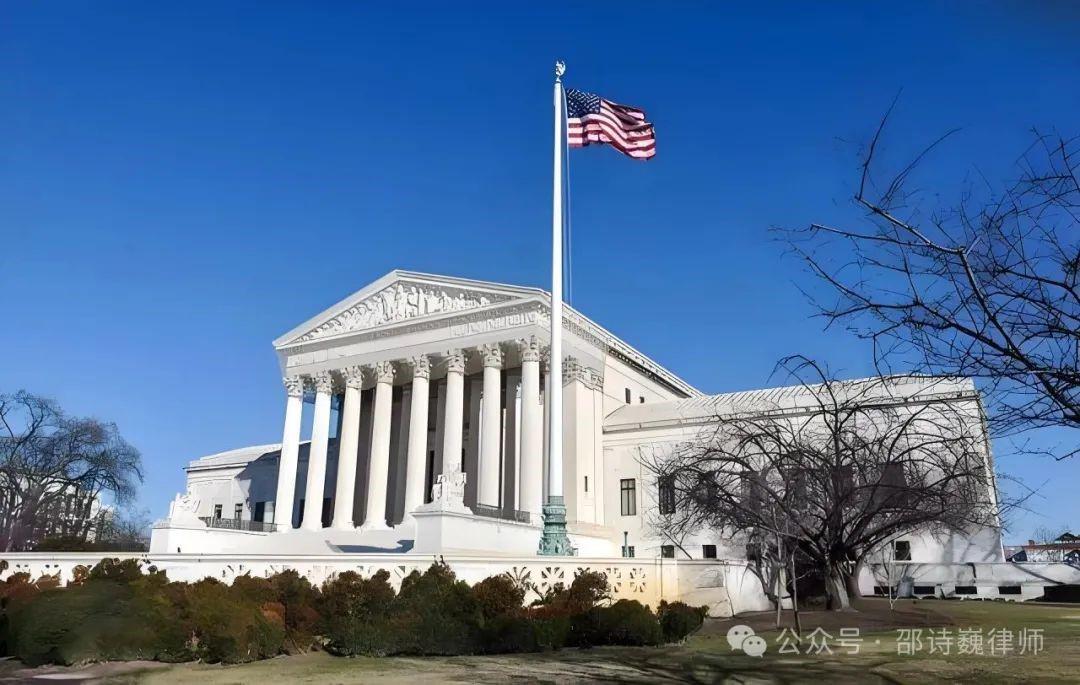
In the 2005 Grokster case (MGM Studios, Inc. v. Grokster, Ltd.), the "Active Inducement Rule" was established, reshaping the scope of application of the principle of technological neutrality.
The significance of the Grokster case lies in that it breaks through the mechanical application of the Sony Rule, establishes the core position of the "intention standard" in the technology neutrality defense, and provides a more sophisticated judgment framework for the subsequent determination of liability of network service providers.
MGM Studios v. Glockster:
The P2P file-sharing software developed by the defendant Grokster was widely used by users to spread pirated music and movies. MGM and more than 20 other film and television record companies filed a lawsuit, accusing the defendant of inducing users to infringe copyright. The defendant cited the "technological neutrality principle" established in the 1984 Sony case (Sony Corp. v. Universal City Studios).
The trial court strictly followed the Sony Rule, holding that Grokster's software had "substantial non-infringing purposes" (such as sharing public domain works or authorized content), thereby exempting it from infringement liability.
However, the U.S. Supreme Court overturned this decision, pointing out that "the standard of substantial non-infringing use is not the sole basis for determining legal liability" and that when there is evidence that the product provider has the intention to induce infringement, he or she should still bear liability for aiding and abetting infringement.
2. Safe Harbor Principle
In the 1990s, with the rapid development of technologies such as P2P file sharing and user-generated content (UGC) platforms, Internet service providers (ISPs) were faced with a massive amount of user-uploaded content and were unable to conduct effective prior review. The lack of a uniform standard for whether ISPs constituted "contributory infringement" by providing technical tools led to a surge in lawsuits, hindering industry development.
In 1998, the United States enacted the Digital Millennium Copyright Act (DMCA). The "Safe Harbor Provisions" is one of the core systems in the Act, which aims to provide Internet service providers (ISPs) with an exemption mechanism from copyright infringement liability and to balance the relationship between technological innovation and copyright protection.
The specific meaning of the "safe harbor principle" is that when network service providers (such as social media, cloud storage, search engines, etc.) only provide technical platforms and do not actively produce or edit infringing content, if the statutory conditions are met, they can be exempted from joint and several liability for users uploading infringing content. However, the application of this principle requires the following conditions to be met: unawareness and no active participation in infringement, designated copyright agents, timely removal of infringing content, and no inducement to infringe.
2
The Development and Application of the Principle of Technological Neutrality in my country
1. Applicable laws related to the principle of technological neutrality
In my country's legal system, the principle of technological neutrality is not an exclusive concept in a single field, but an intersecting legal principle that runs through multiple fields such as Internet supervision, intellectual property rights and electronic evidence rules.
In the area of Internet content supervision, on August 25, 2017, the Cyberspace Administration of China issued the "Internet Forum Community Service Management Regulations", emphasizing that platforms must not use "technical neutrality" to shirk their management responsibilities for user-posted content, especially for pornography, fraud and other illegal information, and must take the initiative to intervene.
In the field of electronic evidence, according to the Civil Procedure Law, the authenticity of electronic data provided or confirmed by a neutral third-party platform (such as WeChat and Weibo) can be presumed without notarization.
In the field of intellectual property, China's "Regulations on the Protection of Information Network Dissemination Rights" formulated in 2006 absorbed the " safe harbor principle " specified in the above-mentioned US "Digital Millennium Copyright Act" and stipulated the " notice + deletion " principle, that is, Internet service providers are not required to review the information uploaded by netizens one by one. When someone discovers infringing materials, they are required to inform the Internet service provider and provide relevant evidence. The Internet service provider must take prompt measures to delete articles, videos or disconnect links.
At the same time, an exception was added to the "safe harbor principle", namely: if the ISP is aware that the infringing content is "as obvious as a red flag" (such as pinning popular pirated movies and TV shows), or inducing its dissemination through algorithms, then the technology neutrality defense is invalid - this is also called the " red flag principle ."
Regulations on the Protection of Information Network Dissemination Rights (Revised in 2013)
Article 23 Where a network service provider provides search or link services to its service recipients and, after receiving a notice from the right holder, disconnects the links to the infringing works, performances, audio and video recordings in accordance with the provisions of these Regulations, it shall not bear liability for compensation; however, if it clearly knew or should have known that the linked works, performances, audio and video recordings were infringing, it shall bear joint liability for the infringement.
Provisions of the Supreme People's Court on Several Issues Concerning the Application of Law in the Trial of Civil Dispute Cases Involving Infringement of Information Network Dissemination Rights (2020 Amendment)
Article 7 Where a network service provider instigates or assists network users in committing acts that infringe upon the right of information network dissemination when providing network services, the People's Court shall order it to bear liability for infringement.
If an Internet service provider induces or encourages Internet users to commit acts that infringe upon the right of information network dissemination through words, promotion of technical support, awarding points, etc., the People's Court shall determine that it constitutes incitement to infringement.
If an Internet service provider knows or should know that Internet users are using Internet services to infringe upon the right of information network dissemination, and fails to take necessary measures such as deletion, blocking, or disconnecting links, or fails to provide assistance such as technical support, the People's Court shall determine that it has constituted aiding and abetting infringement.
2. Typical domestic cases

iQIYI sues Morgan Stanley for unfair competition in online advertising blocking
iQiyi's business model is "advertising + free videos". The company earns revenue by charging advertising fees. The "ADSafe" Net Cleaner software developed and operated by Morgan Stanley blocks responses to advertising data requests in video program requests, thereby blocking pre-video ads and directly playing video content. Therefore, iQiyi requires Morgan Stanley to stop infringement and compensate for losses.
This case is an unfair dispute case caused by ad blocking software blocking ads. When discussing the attributes of the software in question, "Adsafe", the Internet Cleaner, the opinions of all parties clashed fiercely, and one of the focal points of the dispute was whether "Adsafe" constituted technical neutrality.
In 2016, the Shanghai Intellectual Property Court made a ruling on the case of Morgan Stanley v. LeTV. The court held that Morgan Stanley knew that the software involved would directly damage the commercial interests of iQiyi, but it still took advantage of the consumer psychology of users who were unwilling to pay time costs and money costs to promote the software involved, relying on the user base of iQiyi to increase market transaction opportunities for itself and seek its own competitive advantage, which constituted unfair competition.

Pan Asia Company sued Baidu Music Box for infringement
Zhejiang Pan Asia Electronic Commerce Co., Ltd. (Pan Asia) owns a large number of copyrights of musical works, including the property rights of lyrics and music, the property rights of performers' rights, and the rights of recording producers. Baidu, operated by Baidu, provides mp3 search and music box services. Pan Asia believes that Baidu's website has infringed its copyright by providing its songs and lyrics without permission.
The court held that the mp3 search engine service provided by Baidu, when users click on it, links to third-party websites. Baidu did not download and store the songs in question, and therefore did not constitute infringement. The Baidu Music Box service similarly did not constitute infringement. The lyrics "snapshot" and "cache" services provided by Baidu objectively allowed users to obtain lyrics directly from its server, and therefore constituted infringement.
Through the above introduction to the historical evolution of the principle of technological neutrality and typical domestic cases, it can be seen that the principle of technological neutrality is widely applicable in the field of intellectual property. But in the field of criminal justice, does the principle of technological neutrality have room for application? This is the focus of the following discussion.
This article (next article) ➡️
"Can technological neutrality be used as an effective defense in criminal cases? (II) Limitations of application of technological neutrality in the field of criminal law and defense ideas"