Text | RWA Knowledge Circle
Editor|RWA Knowledge Circle
1. 24-hour confrontation: Equity tokenization triggers disputes over corporate control
When Robinhood launched the private equity tokens of OpenAI and SpaceX in Europe, OpenAI issued an urgent statement within 24 hours: "These tokens are not our equity, we are not in partnership with Robinhood, and we do not endorse them!" Musk even mocked it as "fake equity." This lightning confrontation reveals the core contradiction of equity tokenization: How can companies stick to the red line of control in liquidity innovation?

2. Large enterprises defending themselves tightly vs. SMEs breaking through flexibly
The root of OpenAI's tough stance: As a company with a trillion-dollar valuation, its equity structure involves three sensitive factors: Microsoft's strategic investment, founder control, and non-profit charter. Any unauthorized circulation may trigger SEC review or even shareholder lawsuits; more importantly, brand value management always takes precedence over liquidity innovation - this is the core logic of its 24-hour cut of Robinhood.
The disruptive value of the Robinhood model: Although the SPV structure was resisted by OpenAI, it opened up a new path for small and medium-sized enterprises:
持牌券商采购资产→ 链上铸造追踪代币→ 投资者获得标准化敞口
✅ Breaking the one million dollar threshold for private placement
✅ On-chain settlement confirmed in seconds
✅ Comply with the regulatory principle of "total amount on the chain = custodial position"
Tokenization opportunities for SMEs: With the support of the RWA Accelerator, SMEs with efficient decision-making and concentrated equity can more flexibly leverage tokenization to unlock value while retaining governance dominance. Founders can lock in control through customized agreements, rely on the RWA Accelerator to quickly build a compliance architecture, and establish a market-based valuation system for assets that have not yet been publicly priced.
3. Tokenization of SME Equity: A Financing Revolution Under the Guarantee of Control Rights
Based on the opportunities of equity tokenization, small and medium-sized enterprises are using three types of innovative models to transform control protection into financing momentum:
1. SPV penetration model: enterprise-led title confirmation design
With the professional support of the RWA Accelerator, enterprises can fully control the tokenization rules and achieve triple autonomy:
- Autonomous confirmation of ownership: By signing a special tokenization agreement with the original shareholders, clearly stipulate the tradable shares and restrictive terms to avoid ownership disputes at the source;
- Governance firewall construction: The token design is strictly limited to economic rights such as dividend rights, and is completely isolated from operating rights such as voting rights, to ensure that corporate control is not diluted;
- Flexible configuration of information disclosure: Enterprises independently decide the scope and frequency of uploading audit reports to the chain, and strike a balance between transparency and commercial confidentiality.
Case effectiveness: Swiss compliance platform TDX connected with the German manufacturing SME cluster through the above model, and adopted the SPV penetration model to complete equity tokenization, achieving an average financing amount of more than US$3 million for a single enterprise, while retaining 100% decision-making power, and shortening the overall financing cycle by 60%.
(II) Issuance-trading separation model: compliance leverages global liquidity
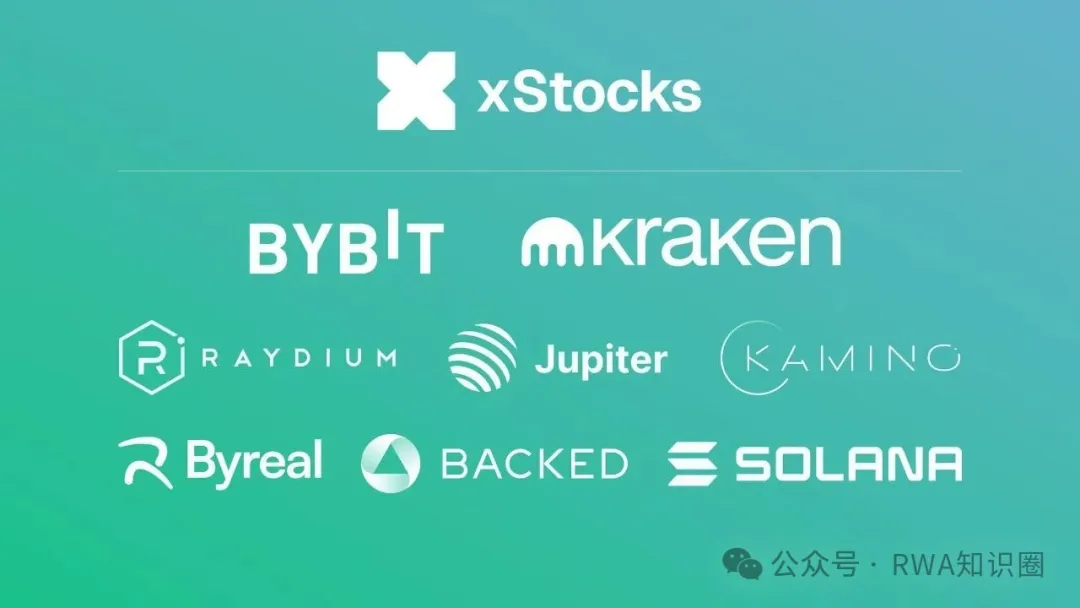
Taking the xStocks Alliance as an example, this model decouples the issuance and trading functions:
- Licensed issuers (such as Backed Finance) purchase stocks in the traditional market and hold them in custody with compliant institutions such as Clearstream
- On-chain mapping: minting tokens on public chains such as Solana at a 1:1 ratio (TSLAx/AAPLx, etc.)
- Division of labor among exchanges: Kraken/Bybit and other platforms provide secondary liquidity and do not bear the pressure of issuing compliance
The advantages of this architecture are:
- Asset transparency: Off-chain custody is auditable and on-chain tokens are traceable
- Risk diversification: Issuers assume compliance responsibilities, and exchanges focus on liquidity construction
- Cross-chain expansion: support multi-public chain deployment to improve coverage
This model enhances investor trust through asset transparency, reduces corporate compliance costs through risk diversification, and opens up the global market through cross-chain expansion, allowing small and medium-sized enterprises to directly access exchange liquidity pools without having to build their own financial license system.
(III) Risk Warning: The Double-edged Sword of CFD Model
Some platforms use pure price tracking CFD contracts (such as Bybit's TSLAUSDT perpetual contract), which circumvents the problem of securities compliance, but is essentially a zero-sum game tool:
- No real equity anchor → Enterprises cannot obtain financing
- Leveraged speculation may distort corporate market value signals
- Only applicable to liquidity supplement of listed companies
Core Principle: Choose a tokenization path that is fully supported by real assets to ensure that the financing substance is tied to the corporate value
4. Equity Tokenization: A Global Springboard for SME Financing
Putting aside the Robinhood controversy, the core value of equity tokenization is to provide IPO alternatives for small and medium-sized enterprises:
- Revolution in financing efficiency: Traditional VC fundraising consumes more than 30% of the founders’ energy. Tokenization can directly connect to global liquidity and accelerate capital acquisition.
- Multi-level market construction: regional equity markets are directly connected to the main board exchange through blockchain
- Compliance framework takes shape: EU MiCA, Swiss DLT Act, etc. gradually clarify the rules for security tokens, and the $10 trillion RWA market is ready to go.
For small and medium-sized enterprises, the key to successful tokenization is not technology, but compliance architecture design - this is the core mission of the RWA Accelerator: integrating law firms to clarify shareholder agreements, audit agencies to standardize financial disclosure, and technology suppliers to build on-chain mapping systems, ultimately helping companies cross the "triple gates" of legal, financial, and technical affairs.
The dispute between OpenAI and Robinhood is not a denial of tokenization, but the ultimate interpretation of the principle of "corporate governance rights cannot be compromised". When the technological surge encounters the governance red line, the historical mission of the RWA Accelerator has never been so clear: by building a trinity framework of "legal confirmation of rights × on-chain mapping × liquidity access" , small and medium-sized enterprises can always hold the governance power in the tide of capital flow and sail to the global financing blue ocean with compliance.