By Joel John, Decentralised.co
Compiled by: Yangz, Techub News
Money controls everything around us. When people start discussing fundamentals again, the market is probably in a bad place.
This article asks a simple question, should tokens generate revenue? If so, should teams buy back their own tokens? Like most things, there is no clear answer to this question. The path forward needs to be paved with honest conversations.
Life is just a game called capitalism
This article was inspired by a series of conversations with Ganesh Swami, co-founder of Covalent, a blockchain data query and indexing platform. It covers the seasonality of protocol revenue, evolving business models, and whether token buybacks are the best use of protocol capital. It also complements the article I wrote last Tuesday about the current state of stagnation in the cryptocurrency industry.
Private equity capital markets such as venture capital always swing between excess liquidity and liquidity scarcity. When these assets become liquid assets and external funds continue to pour in, the industry's optimism tends to drive prices up. Think of all kinds of new IPOs, or token issuances. This newly acquired liquidity will allow investors to take more risks, but in turn will drive the birth of a new generation of companies. When asset prices rise, investors will turn their funds to early-stage applications, hoping to get higher returns than benchmarks such as Ethereum and SOL.
This phenomenon is a characteristic of the market, not a problem.
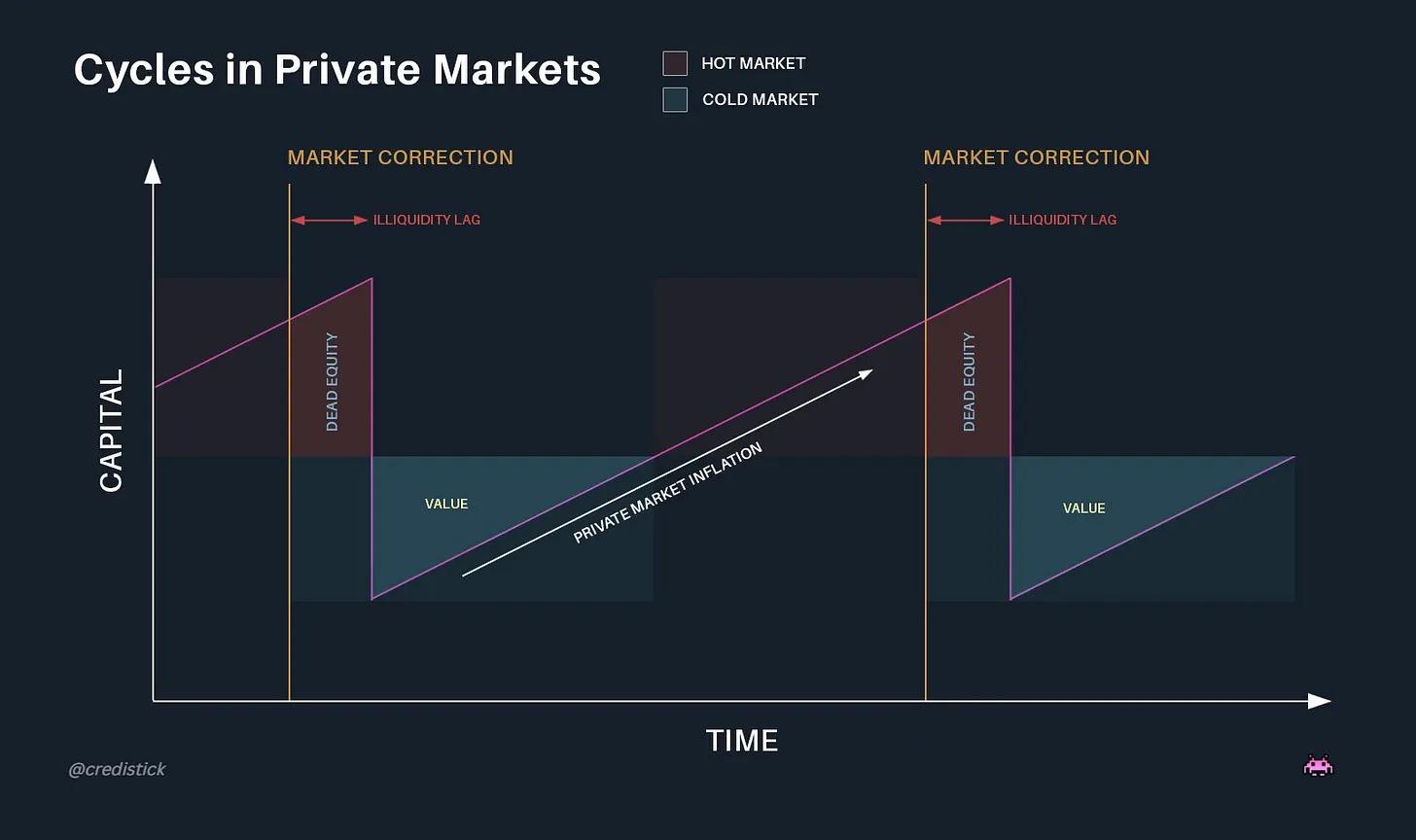
Source : Dan Gray, Principal Researcher at Equidam
Liquidity in the cryptocurrency industry follows a cyclical cycle marked by the halving of Bitcoin block rewards. From historical data, market rebounds usually occur within six months after the halving. In 2024, the inflow of funds from Bitcoin spot ETFs and Michael Saylor's large-scale purchases (a total of $22.1 billion was spent on Bitcoin last year) became a "reservoir" for Bitcoin. However, the rise in Bitcoin prices did not lead to an overall rebound in small altcoins.
We are currently in a period of tight capital liquidity, capital allocators’ attention is scattered across thousands of assets, and founders who have been working on developing tokens for years are struggling to find the meaning of it all. “Why bother building real applications when launching meme assets can bring more economic benefits?”
In previous cycles, L2 tokens have enjoyed a premium due to perceived underlying value, supported by exchange listings and venture capital. However, as more and more players enter the market, this perception and its valuation premium are being eroded. As a result, L2's token value has declined, limiting their ability to subsidize smaller products with grants or token revenue. Moreover, the valuation surplus has in turn forced founders to ask the old question that plagues all economic activities: where does the revenue come from?
How Cryptocurrency Project Revenue Works
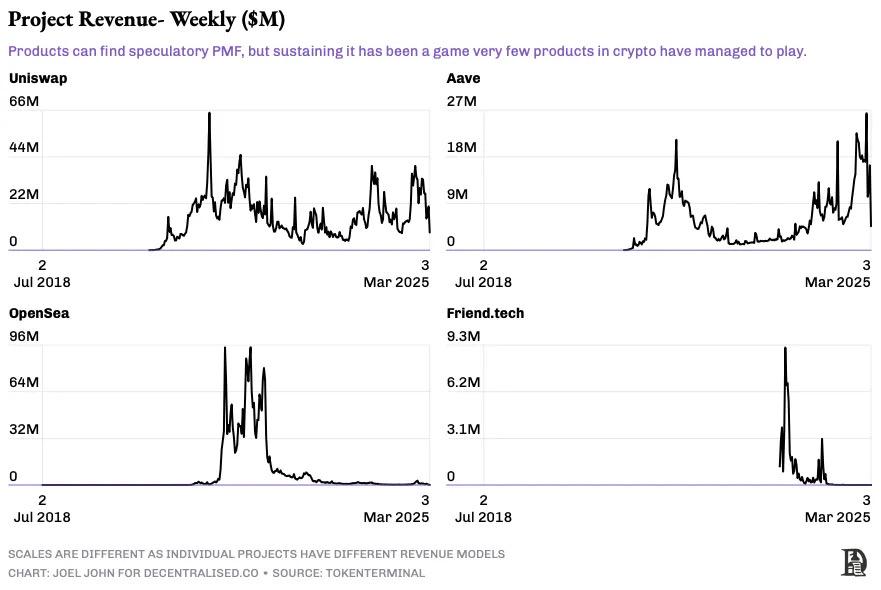
The above diagram explains very well how cryptocurrency project revenue typically works. For most products, Aave and Uniswap are undoubtedly ideal templates. These two projects have maintained stable fee income for many years by virtue of their early entry into the market and the "Lindy Effect". Uniswap can even generate revenue by increasing front-end fees, which perfectly confirms consumer preferences. Uniswap is to decentralized exchanges what Google is to search engines.
In contrast, the revenues of Friend.tech and OpenSea are seasonal. For example, the "Summer of NFTs" lasted for two quarters, while the speculative craze in Social-Fi lasted only two months. Speculative income is understandable for some products, provided that the scale of its revenue is large enough and consistent with the original intention of the product. Currently, many meme trading platforms have joined the club of over $100 million in fee income. This scale of revenue is usually only achievable for most founders through token sales or acquisitions. This level of success is not common for most founders who focus on developing infrastructure rather than consumer applications, and the revenue dynamics of infrastructure are different.
Between 2018 and 2021, venture capital firms provided a lot of funding for developer tools, expecting developers to gain a large number of users. But by 2024, two major shifts have occurred in the cryptocurrency ecosystem:
First, smart contracts enable unlimited scalability with limited human intervention. Today, Uniswap and OpenSea no longer need to scale their teams in proportion to trading volume.
Secondly, advances in large language models (LLMs) and artificial intelligence have reduced the need to invest in cryptocurrency developer tools. Therefore, as an asset class, it is at a "reckoning moment".
In Web2, API-based subscription models work because there are so many users online. However, Web3 is a smaller niche market with very few applications that can scale to millions of users. Our advantage is the high revenue per customer. Due to the nature of blockchain that allows money to flow, ordinary users in the cryptocurrency industry tend to spend more money at a higher frequency. Therefore, in the next 18 months, most companies will have to redesign their business models to obtain revenue directly from users in the form of transaction fees.
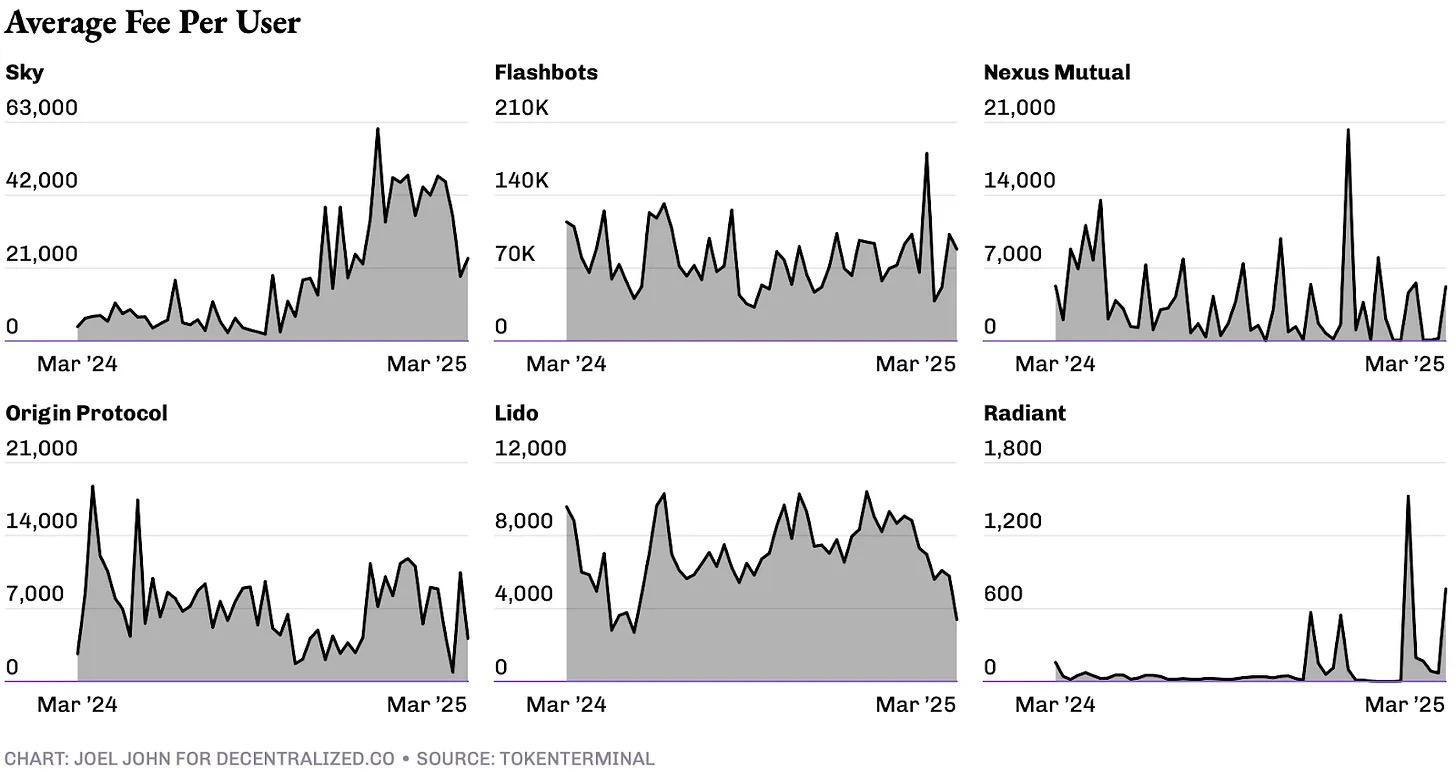
Of course, this isn’t a new concept. Initially, Stripe charged per API call, while Shopify charged a flat fee for subscriptions, but both platforms have since switched to charging a percentage of revenue generated. Web3’s API charging approach is relatively straightforward for infrastructure providers. They cannibalize the API market through a race to the bottom, or even offer free products until they reach a certain volume of transactions, then start negotiating revenue sharing. Of course, this is an ideal scenario.
As for how this might actually work, Polymarket is an example. Currently, the UMA protocol’s tokens are tied to dispute cases and used to resolve them. The greater the number of prediction markets, the higher the probability of disputes, which directly drives demand for UMA tokens. In a trading model, the required margin can be a small percentage, such as 0.10% of the total bets. Assuming a $1 billion bet on the outcome of the presidential election, UMA could earn $1 million in revenue. In a hypothetical scenario, UMA could use this revenue to purchase and destroy its own tokens. This model has both advantages and challenges (which we will explore further later).
In addition to Polymarket, another example of a similar model is MetaMask. Through the wallet's embedded exchange function, there has been about $36 billion in trading volume, and the revenue from the exchange business alone has exceeded $300 million. In addition, a similar model also applies to staking providers like Luganode, which can charge fees based on the amount of assets staked.
However, in a market where the returns from API calls are decreasing, why would developers choose one infrastructure provider over another? If revenue sharing is required, why choose one oracle service over another? The answer lies in network effects. Data providers that support multiple blockchains, provide unparalleled data granularity, and can index new chains faster will become the first choice for new products. The same logic applies to transaction categories such as intent or gas-free exchange tools. The greater the number of blockchains supported, the lower the cost and the faster the speed, the more likely it is to attract new products because marginal efficiencies help retain users.
Token buyback and destruction
Tying token value to protocol revenue is nothing new. In recent weeks, several teams have announced mechanisms to buy back or burn native tokens in proportion to revenue. Notable ones include Sky , Ronin , Jito , Kaito , and Gearbox .
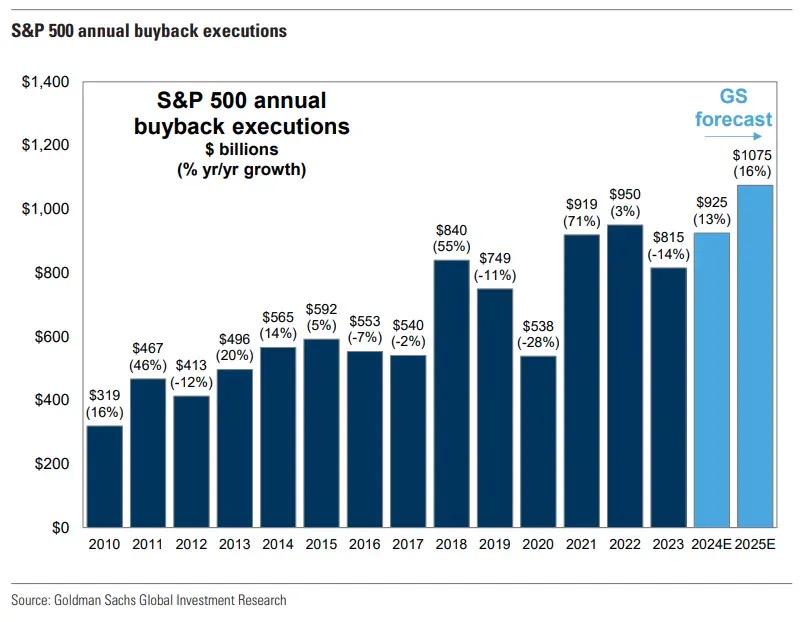
Token buybacks are identical to stock buybacks in the U.S. stock market and are essentially a way to return value to shareholders (token holders) without violating securities laws.
In 2024, the US market alone will spend about $790 billion on stock buybacks, up from $170 billion in 2000. Stock buybacks were illegal until 1982. Apple alone has spent more than $800 billion buying back its own shares over the past decade . While it remains to be seen whether this trend will continue, we are seeing a clear split in the market between tokens that have cash flow and are willing to invest in their own value, and those that have neither.
Source: Bloomberg
For most early-stage protocols or dApps, using revenue to buy back their own tokens may not be the optimal use of capital. One possible way to do this is to allocate enough funds to offset the dilution effect of new token issuance, which is exactly how the founder of Kaito recently explained its token buyback approach. Kaito is a centralized company that uses tokens to incentivize its user base. The company receives centralized cash flow from corporate customers and uses part of the cash flow to execute token buybacks through market makers. The number of repurchased tokens is twice the number of newly issued tokens, which puts the network into a deflationary state.
Unlike Kaito, Ronin takes a different approach. The chain adjusts fees based on the number of transactions per block. During peak usage, a portion of network fees will flow into the Ronin treasury. This is a way to monopolize the supply of assets without buying back tokens. In both cases, the founders designed mechanisms to tie value to economic activity on the network.
In future posts, we will dive deeper into the impact of these actions on the price and on-chain behavior of the tokens participating in such activities, but for now, it is clear that as token valuations decline and the amount of venture capital flowing into the crypto industry decreases, more teams will have to compete for the marginal funds that flow into our ecosystem.
Given the core nature of blockchain as a “monetary rail,” most teams will switch to a revenue model based on a percentage of transaction volume. When this happens, if the project team has already launched a token, they will be motivated to implement a “buyback and burn” model. Teams that can successfully execute this strategy will become winners in the liquid market, or they may buy their own tokens at extremely high valuations. The results of everything can only be known after the fact.
Of course, there will come a time when all this talk of price, earnings, and revenue will become irrelevant. We will continue to throw money into various "dog memecoins" and buy various "monkey NFTs". But looking at the current state of the market, most founders who are worried about survival have begun to have in-depth discussions around revenue and token destruction.