
Author: Fan Jia: PhD student in the Department of Media and Communication at City University of Hong Kong, Eurybia Research Fellow
Preface
In March 2025 , with the support of City University of Hong Kong and my doctoral supervisor Professor Liu Xiaofan, I went to Sanxing Village (formerly Nantang Village) in Sanhe Town, Fuyang City, Anhui Province for a one-and-a-half-month field research. During this period, I conducted in-depth interviews with 14 interviewees, including core members of Nantang DAO, employees of local agricultural cooperatives and villagers, and participated in the Nantang DAO Novice Program, the daily affairs of the Nantang Xingnong Cooperative, and the Nantang DAO Translation Group. Although the time was short, I had a lot of feelings. I have seen the efforts of local partners to put the DAO ideal into practice, and I have also observed the many challenges faced by pioneers in the field of rural construction DAO. These problems are both unique and reflect some common problems in the current development of DAO.
The series "Nantang DAO Chronicles" is divided into seven parts: birth, assembly and conflict, what is the goal, experiments in incentives and circulation, is it decentralized enough, and find a way out, and write at the end . These words are intended to objectively record the stories of those who seek change on this land - the glimmer of ideals in rural construction, the frustrations and perseverance in practice, and the most authentic interpersonal connections. If these stories can touch the hearts of more people, or bring some inspiration to rural builders and Web3 explorers, then their value lies.
This article is the first and second parts , which mainly introduces the background of the birth of Nantang DAO in Nantang Village, the gathering of the "Seven Elders", and the conflicts between Nantang Cooperative and DAO members.
Birth
Nantang’s Democratic Gene
In 2025, in the wish list of academic funding projects of the Ethereum Foundation, "How DAO tools can help cooperatives" was first proposed as an academic proposition. This is not only a new way of thinking for Web3 technology to affect the real world, but also a difficult problem facing everyone. While researchers around the world are gearing up to face this problem, coincidentally, in an "ordinary" village in China, a grass-roots team composed of young people and villagers has already begun to solve the problem. In August 2024, Nantang DAO, a decentralized autonomous organization dedicated to rural construction, was officially established. Unlike most DAOs in the world, all members of Nantang DAO moved into the village and lived locally, and for a time they formed a confrontation with the original agricultural cooperative in the village. Of course, this is a joke. The "headquarters" of Nantang DAO is actually located in the courtyard of the cooperative. It can be said that you are in me and I am in you. However, it is indeed the first time in China to introduce the concept of decentralized autonomous organizations into the fields. This village in Sanhe Town, Yingzhou District, Fuyang City, Anhui Province, has become a hot topic for a while with its pioneering ideas from the crypto world. It has not only attracted experts and scholars from all over the country to discuss "rural construction DAO", but also hosted a Web3 "hackathon" for the first time 3 ...
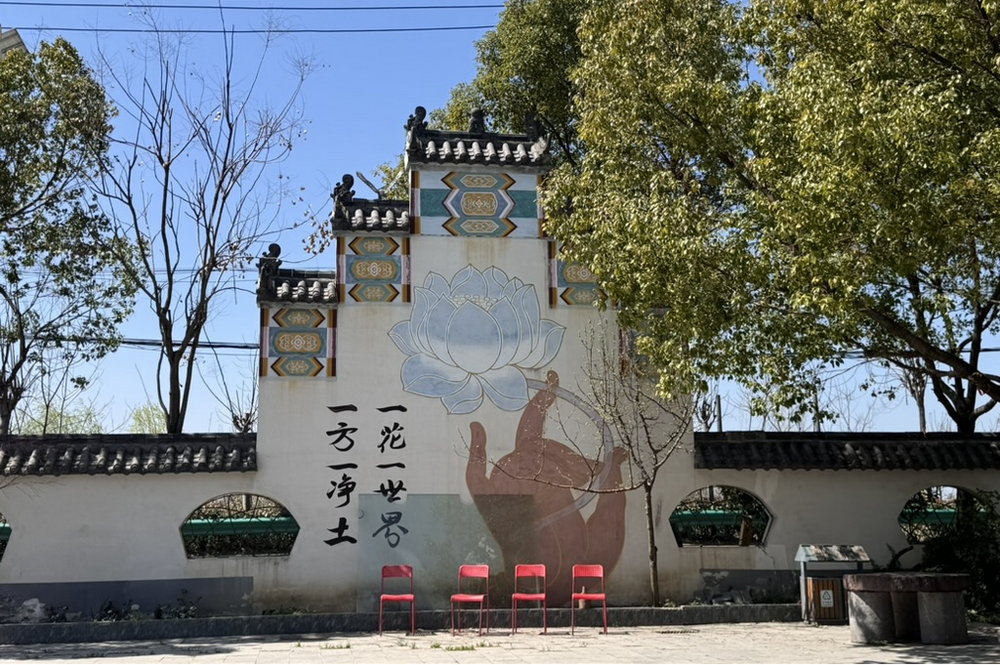
You may be curious about what charm this village has that attracts so many Web3 elements to gather here. Why was the first rural DAO born here? Why was this place once nicknamed "China 's Web3 Jerusalem" ? In fact, behind the accident is the inevitability - the democratic genes and cultural accumulation cultivated by this land for 30 years are the deepest answer. From the well-known farmers' rights protection organization to the first local practice of " Robert's Rules of Order " , the seeds of democratic governance have long been planted here.
It may be a bit out of place to talk about farmers' rights protection organizations nowadays. But at the turn of the century in China, in the era when "farmers were really suffering, rural areas were really poor, and agriculture was really dangerous", such spontaneous organizations in rural areas had effectively promoted the modernization of China's rural areas and also wrote a strong and colorful chapter in the history of rural construction. This village in Anhui is a participant and witness of this mighty rights protection movement. In the 1990s, the central government implemented tax and fee reforms. Some places in Fuyang added layers of taxes to increase the burden on farmers. The cadres had corrupt work styles and entangled with ruffians to collect taxes, and the people were living in poverty. At that time, Yang Yunbiao (Brother Biao), who had just graduated from Northwest University of Political Science and Law, went to Beijing to file a complaint on behalf of the villagers, but suffered various accusations, intimidation, and even illegal arrest. Against this background, local villagers believed that only by establishing farmers' own organizations could the current situation in rural areas be changed. Thus, the "Farmers' Rights Protection Association" came into being. In 2004, at the initiative of Wen Tiejun , a famous rural expert, the village prepared to establish the "Nantang Xingnong Cooperative", which marked that the main goal of the local area gradually shifted from rights protection and struggle with confrontational colors to organizational construction and development - from "crying for rights protection" to "laughing for rural construction". During this period, many constructive cultural, community and economic activities have made initial developments, such as the Respect for the Elderly Cultural Festival, farmers' cooperative fund mutual assistance, the Elderly Association, the Women's Association, and the Left - behind Children Activity Center.
As everything gradually calmed down, an innovative democratic practice of Nantang Cooperative once again attracted the attention of the outside world. In 2008, the classic Western parliamentary procedure, Robert's Rules of Order, took root in rural China for the first time. Yuan Tianpeng , a key figure in promoting this change, had personally experienced the rules of procedure in the student parliament of the University of Alaska in the United States. After returning to China, he has been committed to the localization of the rules of procedure. By chance, he met Yang Yunbiao of Nantang Cooperative through the introduction of freelance writer Kou Yanding , and came to Nantang in person. Here, the three of them repeatedly discussed and tried and failed with the villagers, and finally polished out the "Nantang Thirteen Articles" (also affectionately called "radish and cabbage rules" by the villagers, and the book "Operational Democracy" vividly and detailedly recorded its birth process) in a few months . This localization of the innovative practice of the rules of procedure quickly attracted widespread attention from academia and the media at home and abroad, and became the most recognizable cultural symbol of Nantang. Looking back, what is particularly valuable is that it successfully removed the elitism in Western rules of procedure and transformed it into a set of democratic practice paradigms that are truly rooted in the countryside and can be implemented . Nantang's practice proves that the realization of democracy is by no means a castle in the air, nor is it the patent of the elite class, but a set of operational systems that can take root at the grassroots level through specific methodologies. This practice provides valuable local experience for China's grassroots democracy construction and demonstrates the strong vitality of the democratic system in rural China.
Establishment of Nantang DAO
Consciously organizing farmers and using the rules of radish and cabbage to discuss matters is undoubtedly a valuable cultural gene of Nantang. However, so far, everything that has happened in the Nantang cooperative has not intersected with the elements of Web3. When it comes to linking cooperatives with Web3, one person cannot be avoided - Liu Bing . In 2011, Liu Bing accidentally learned about the case of democratic practice in Nantang Village on the Internet. With curiosity about the local "rules of radish and cabbage", he came to Nantang alone to volunteer. At the same time, Matthew Hale, a doctoral student in anthropology from the United States, also came to Nantang from the United States to conduct his field research on China's new rural construction movement8. In this village that is closely connected to the land, they discussed the contemporary propositions such as "Argentine workers' factory occupation movement9 , how blockchain technology promotes the emergence of a decentralized economic system, and how to promote the development of cooperatives". During a casual chat, he recommended Bitcoin to Liu Bing and even said that he would give him a Bitcoin (the price at that time was about 1 US dollar). This experience planted a seed in Liu Bing's heart. Since then, the gears of fate began to turn. He began to pay close attention to the dynamics of the virtual currency industry. Since 2013, he has invested in Bitcoin and participated in Ethereum's crowdfunding activities for global network users in 2014. After achieving financial freedom, Liu Bing began to give back to Nantang. At first, he donated Ethereum directly to the Nantang Cooperative and tried to popularize new concepts such as blockchain technology and digital wallets to the members of the cooperative, but the effect was not ideal.
In the following period of time, two major events occurred in the Nantang Cooperative and the domestic Web3 field respectively. First, the cooperative fund mutual aid project exploded. Affected by the COVID-19 pandemic in 2022 and other factors, the cooperative could not recover the funds it had lent out and fell into a debt quagmire; at the same time, SeeDAO, the largest DAO organization in the Chinese-speaking world, also completed the transformation from a company to a DAO, and quickly rose to become the largest DAO community in China. SeeDAO is a DAO organization full of humanistic care, and has been paying attention to the construction and development of rural China. Against this background, after Liu Bing, Gu Yi, Wang Debin and others , Yang Yunbiao, the head of the cooperative in 2023, and Bai Yu, the founder of SeeDAO , had an in-depth conversation. Both parties began to realize that the combination of Web3 and rural areas can not only attract more young talents and business resources, but also bring some new possibilities to cooperatives in deep debt crisis. At this time, the combination of Nantang and Web3 can be said to be ready, only the east wind is missing.
As expected, SeeDAO was the first to borrow the east wind. In May 2024, many members of SeeDAO went to Nantang for exchanges and inspections. In the Nantang Sushe, which was transformed from a rural primary school, Brother Biao sat under the Bodhi tree with the visitors and talked about the cooperative's struggle for more than 20 years. These stories deeply touched the Web3 explorers present, and they repeatedly lamented that Nantang is simply the "Jerusalem of China's Web3". This interesting meeting ignited the enthusiasm for cooperation between the two parties, and SeeDAO subsequently organized members to come for study tours and exchanges many times. Almost at the same time, the cooperative launched the first internship recruitment plan, opening its doors to young people with ideals of rural construction. In this way, people from two completely different fields of rural construction and Web3 began to collide ideas and learn from each other on the hot land of Nantang. It is in this vibrant atmosphere that another east wind has quietly emerged-establishing a truly grounded Web3 organization is gradually turning from a dream into reality...
It was June 2024, in Shanghai, the Magic City. An "Ethereum Public Summer" event jointly initiated by LXDAO and ETHPanda was being intensively prepared, and a wonderful encounter across more than 700 kilometers was about to happen. With the introduction and funding of Liu Bing, partners from Nantang Cooperative in Fuyang, Anhui Province, stepped into the world of Web3 for the first time. Here, they met Tiao, a member of LXDAO who was preparing a keynote speech. Speaking of that moment, Liu Bing said that he could no longer remember the specific content of the speech, but he only remembered that when Tiao finished his speech, Yang Yunbiao's son excitedly pulled Liu Bing's hand and shouted: "I like Tiao, I like Tiao! I want to take him back to Nantang!" This moment full of innocence was regarded by Liu Bing as a destined fate. In the following days, Liu Bing's in-depth exchanges with LXDAO member Yu Xing gradually formed the idea of "Web3 entering Nantang". Soon, Li Zi from SeeDAO and Yu Xing and Tiao from LXDAO came to Nantang as the first batch of residents, starting this special practice. In order to attract more Web3 partners to participate, Liu Bing promised to provide a reward of 0.1ETH (about 2,000 yuan) to each participant who came to Nantang; then, in order to create a more sustainable incentive mechanism, Liu Bing decided to set up a special treasury to promote exchanges between Nantang and Web3 under everyone's advice. After the money problem was solved, the organizational work also started. On July 28, 2024, the first proposal of Nantang DAO written by Yu Xing was released10 , marking the official start of the operation of this innovative organization aimed at promoting the integration of Web3 technology and rural governance; a month later, the proposal for the establishment of Nantang DAO was approved by LXDAO11 , marking the formal establishment of a deep cooperative relationship between Nantang DAO and LXDAO, and at the same time establishing its status as an independent operating entity.
From the ambitious statement of building the "Jerusalem of China's Web3" to the DAO organization based in Nantang taking root, a lot of new things have happened in this land in just two years. Nantang Cooperative has seen a ray of light from the dark debt crisis, and everything seems to be developing towards a better place.
Assembly and conflict
Assemble: Seven veterans of Nantang DAO
“Creating connections while maintaining differences, nurturing hope amid uncertainty.” 12
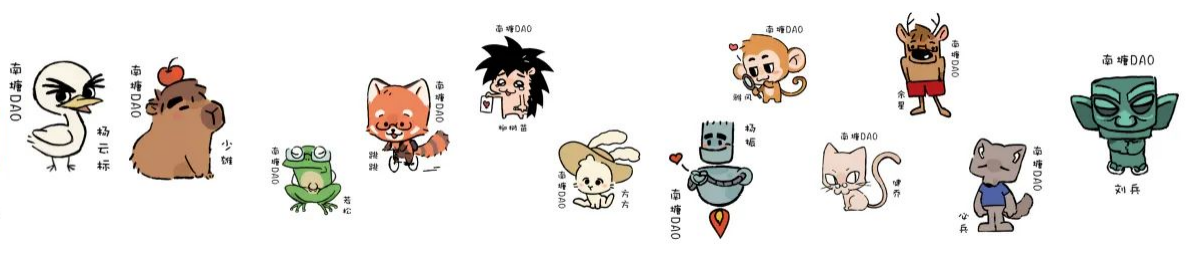
With the support of Liu Bing's Web3 incentive plan, the news quickly spread in different online DAO communities, and more partners came to Nantang, including Bi Bing, who later became a core member of Nantang DAO. At the same time, the cooperative also sent a formal employee ( Yang Zhen ) to join the DAO's startup team as a representative. So far, a rural DAO consisting of seven initial members has been formed. The "seven elders" have different backgrounds. Some are practitioners of other DAOs, some are Web3 programmers, some are graduate students, and some are native villagers of Nantang. Looking across China, it was probably difficult to find such a down-to-earth DAO team at that time.
Yu Xing is the first resident member of Nantang DAO. Before meeting Liu Bing, this Web3 practitioner had studied in depth the innovative cases of combining Japanese villages with blockchain technology. From his obsession with NFT (non-fungible tokens) 13 when he first entered the industry, to his deep participation in the construction of various decentralized communities, to becoming a builder of LXDAO, his choices have always been permeated with idealism and entrepreneurial passion. Before officially entering the field of rural construction, Yu Xing keenly captured the natural "tonal fit" between DAO organizations and traditional villages . In his view, compared with the "winner-takes-all" corporate structure in urban commercial society, the multi-party game mechanism formed by clan networks and public opinion supervision in traditional villages naturally has the characteristics of bottom-up governance - this characteristic forms a wonderful echo with the distributed decision-making model pursued by DAO. In addition, DAO is committed to building a more equal ownership relationship, that is, the ownership of co-creators participating in the process of value distribution of results, and similar ideas are also reflected in the design of rural agricultural cooperatives14, which is a deep tacit understanding at the institutional design level. Talking about the origin of Nantang, he believes that this land, which carries the practice of farmers' rights protection organizations and the exploration of Robert's Rules of Order, has the characteristics of "pioneering social exploration" in its historical accumulation, which provides a unique soil for Web3 to intervene in rural construction. However, facing the reality, he bluntly said that there are significant information asymmetry barriers in rural areas, so only "putting people in can we do something ." In this way, with the original intention of understanding, he entered the game and started an in-depth dialogue between Web3 and rural China.
Tiao is the second core member to come to Nantang after Yu Xing. As a loyal fan of American anthropologist David Graeber15 , he was deeply attracted by this bottom-up organizational method when he first came into contact with the concept of DAO. Before coming to Nantang, he had worked in LXDAO for a year. It was not until the unexpected encounter at the Shanghai event that he formed a wonderful fate with the Nantang partners. Despite this, when he was interviewed by me, he seemed to be very entangled in the statement of "coming to Nantang as a member of LXDAO", and even deliberately avoided it. For him, coming to Nantang with what identity represents a certain original intention. He hoped that he would be free at that time and be able to pursue what he really wanted in his heart in Nantang- a "mycelium"-style life logic and institutional design .
From Tiao's perspective, the keywords of the "mycelium" design model are instability and entanglement. The logic of instability recognizes the dynamic influence of emergence, multiplicity, and encounter (rather than the logic of linear growth and control); entanglement means a symbiotic relationship with the surrounding environment, that is, paying attention to the differences and dependencies between each other when designing the system, so as to live together better. 16 With such values, he came to the countryside and pursued the establishment of a new lifestyle, so he was naturally accustomed to thinking about problems from a local perspective. When it comes to the combination of rural construction and DAO, he said that although simply packaging these two elements can produce some "gimmicks", thereby bringing more development resources, economic benefits, and attention to the countryside, the bubble-filled Web3 is still like a seed, and this seed needs the fertile soil of the countryside even more. When I further asked what the countryside can bring to DAO (or Web3), he pondered for a moment and quickly pulled himself back to his thoughts: "I haven't worked in the Ethereum system for decades, nor do I have much life experience related to it, so I don't look at it from this perspective. I may have more identification with this village and the people I know in this village." However, despite being accustomed to this rural-based way of thinking, he added: "Digitalization is what Professor Wen Tiejun has been proposing and promoting. Web3 can serve as an entry point for rural construction to learn to use digital technology. Some people in the Web3 field really hope that this technology will bring good changes to the real world, and Nantang is a good experimental point. "
Bi Bing is a senior developer in the field of Web3. As his online name "xboring" suggests, his daily life is simple and regular. However, under this calm appearance, there is a heart full of curiosity about emerging things - it is this desire to explore that led him to the world of DAO. Bi Bing, who grew up in the countryside, always maintains a special feeling for his hometown. When he saw the unheard-of idea of "combining rural construction with Web3 ", his inner enthusiasm was instantly ignited. "I want to know what they are thinking and what they want to do." With half curiosity and half trepidation, he embarked on a journey to Nantang, and even prepared to leave after a short stay. Unexpectedly, this stay lasted for more than half a year.
He is a pragmatic person who never indulges in conceptual analysis, but is good at finding solutions based on specific needs. When talking about the combination of DAO and rural construction, he said that villages need to unite, and DAO just provides an organizational form that can maintain individual independence and achieve effective collaboration. He believes that promoting the application of DAO in rural areas can at least open up new ideas for rural construction in trouble and bring about the possibility of change. In his own words, "change is always better than no change."
In addition to Yu Xing, Tiao and Bibing, other members who came from other places include Cikey, Pianpian and Dinghui . At that time, Cikey was the head of the LXDAO operation team and an evangelist of the decentralized community. "DAO's design is similar to an ecosystem, which grows from the bottom up. It can give more people opportunities, stimulate individual potential and creativity, and find a group of like-minded friends." In order to better assist the local integration with Web3, she set foot on this land at the invitation of Nantang. Pianpian was working at the ecological farm of Guangzhou Yinlin at the time. Although he only had a preliminary impression of DAO, he thought "this thing is quite fun." The last person to come to Nantang was Dinghui, a well-known KOL in the circle. He once entered the Web3 vision because of a popular article "The Great Defeat of Chinese DAO: Don't worry! We can't achieve decentralized autonomy." 17
With the joining of Dinghui, the "Seven Elders" of Nantang have finally assembled and started this social experiment of integrating rural construction and Web3.
Conflict: Two groups of people with very different backgrounds
The collectivist culture of Chinese rural society is rooted in the village community tradition of agricultural society, emphasizing group collaboration and common welfare. This culture is based on the moral constraint of "people do, God watches", and achieves governance and maintains social order through collective norms. As Mr. Fei Xiaotong said, traditional beliefs (such as supervision by the kitchen god) and taboos (respecting grain, sex, and writing paper) constitute the norms for people's daily behavior in rural society. 19 In contrast, the governance logic of DAO advocates individual rationality and autonomous decision-making, and builds a trust mechanism with the transparency and traceability of blockchain . When these two completely different governance cultures and logics meet, conflicts and contradictions are almost inevitable.
At the beginning of 2025, the Nantang Xingnong Cooperative launched the "Nantang Youth Internship Program" 20 , the third recruitment since the program was launched in March 2024. Unlike in the past, the learning content this time not only includes ecological agriculture and zero-pollution village construction, Dadi Bookstore operation and community culture construction, but also puts learning the basic principles and tools of Web3 and participating in Nantang DAO in a prominent position. Soon, the news was spread through the media team of "Guoren Rural Construction" 21 and SeeDAO. However, despite this refreshing recruitment, the situation inside Nantang is not optimistic. After several months of getting along, the cooperative and the members of Nantang DAO not only did not produce a good chemical reaction, but became full of contradictions and "tension" between each other. In an article, Tiao Zeng summarized the reason for this tension as the huge gap between the two groups of people: " The differences between the two teams include experience, life experience, values, temperament, and often prejudice. " 22
In fact, the impact of this difference was first seen when Nantang DAO was established. When the cooperative and Nantang DAO were first established, there were relatively large differences between the two sides. The members of Nantang DAO hope to maintain a relatively independent state to operate, while the cooperative advocates getting things done first and slowly forming boundaries in the process of mutual cooperation. In Biao Ge's view, as the main body of Nantang, the cooperative needs to cover what happens in the village. Before the two sides have fully established trust, it is not realistic to let Nantang DAO operate independently, so "everyone needs to discuss it together." Yu Xing attributed this difference to the difference in "behavioral habits", that is, DAO is used to planning basic rules and structural operations in advance, while rural organizations adjust according to changes in things, which is more like a "stretching" habit. After several rounds of adjustments, the two sides reached a certain degree of compromise and decided to preliminarily clarify the cooperation model, namely, the cooperative would invest in the compound as the workplace of Nantang DAO, and Nantang DAO would issue an additional 20% of the original total amount of work points (Nantang beans) to the cooperative as an economic return; at the same time, the cooperative would have a veto over decisions involving local affairs.
At the same time, Nantang DAO is also promoting and improving its organizational system to achieve integration with the local community. In order to better carry out local work and provide convenience to members who are interested in joining, in September 2024, the Nantang DAO community voted to approve the first version of the distinctive "Newbie Task Program". It not only sets up many tasks closely related to the local community, such as participating in daily morning exercises, participating in ecological agriculture (weeding, composting), understanding Robert's Rules of Order, interviewing local villagers, etc., but also learning the basics of Web3 and using common governance tools (such as Snapshot, Fairsharing, Notion) as required tasks. Against this background, some employees and interns of the cooperative have completed their novice tasks and joined the new organization.
However, contrary to expectations, attracting more people to join not only did not promote integration, but seemed to make the situation more complicated. From the perspective of Nantang DAO, the new members not only have dual identities, but also have voting rights that are completely equal to those of old members and sufficient to influence the direction of the community. At the same time, in Yu Xing's view, "the cooperative background often drives them to do things that are in the interests of the cooperative", which once led to a lack of coordination of interests within Nantang DAO, which is undoubtedly a major challenge for an organization that emphasizes flatness and shared decision-making power. Faced with this situation, Nantang DAO decided to raise the entry threshold by 23 - on the basis of the original novice plan, further emphasize the candidate's Web3 experience, that is, "participate in other DAOs and become members who make certain contributions; or participate in the basic knowledge sharing and co-learning of Web3 partner organizations." Higher standards have led to many cooperative members being excluded, which means that they have largely lost the decision-making power for many local affairs that Nantang DAO has decided to do. And a fact that cannot be denied is that for this not-so-large village, almost everyone is a stakeholder in local affairs.
Therefore, the local young people at that time were divided into three categories: members of Nantang DAO with Web3 background, members of Nantang DAO with cooperative background, and cooperative interns who did not join Nantang DAO. On the proposal platform at that time, everyone had their own opinions. Some wanted to do ecological agriculture, some wanted to build local communities, and some wanted to establish links with the outside world. During the discussion and voting stage, everyone always quarreled. Among them, the core debate was "What is the relationship between doing this and Web3" or "Is this thing really meaningful to local development?" If you came here at that time, you would definitely hear the community members' self-deprecating remarks: " Other Web3 communities are speculating in coins, while we quarrel every day . " In mid-October 2024, at a sharing session in Beijing, Bi Bing lamented: "Maintaining the vitality of a DAO organization is far more challenging than creating it, especially when dealing with internal differences and conflicts. " 24
The third option: Nantang does not know DAO
As time went by, the conflicts between people became increasingly irreconcilable. Rationality was gradually defeated by emotions, and discussions always turned into endless quarrels. Nantang DAO, which once embodied ideals, came to a crossroads for the first time.
The first choice was to jump. As a core member, he participated in almost every important decision from the establishment of Nantang DAO to its daily operations, but he was also caught in a vortex of contradictions. "The meetings of Nantang DAO at that time became very rigid and boring," and "pull" was the word he heard most at the time. He felt physically and mentally exhausted without the power and means to change the status quo. Although the logic of "mycelium" told him that this instability and conflict was the norm, the protracted entanglement still made him lose patience. Finally, he decided to change his approach and establish a new relationship with local partners.
Around the winter of 2024, when interns were rejected by Nantang DAO due to "lack of Web3 experience", Tiao, Yanren, Shuhui and other cooperative members hit it off and decided to create a new DAO. They ironically named it "Nantang does not know DAO" and built a new organizational space on Notion25 . Looking through this digital archive, you will see the hearty "revolution of investors" conference held when everyone was indignant, and you will also see the archives of activities such as watching movies together, translating, and writing on ordinary days. With the development of more and more local activities, everyone's relationship has become closer.
Although Nantang Ignorant DAO was established with an ironic and critical attitude, it objectively provides local members with a third choice between cooperatives and Nantang DAO. Talking about the relationship with Nantang DAO, Tiao said intriguingly: "We hope that the existence of Ignorant DAO will force them to change, bring a sense of crisis, and drive them to do better." When asked about the difference between it and Nantang DAO, which also aims at rural construction, Shuhui said frankly: "We refuse to do DAO for DAO's sake, but focus on those things within our capacity that can be done but not done in the lives of villagers." In April 2025, Nantang Ignorant DAO explained its organizational philosophy and vision through a public account article titled "Finding the True Meaning of Life in the Urban Flood of Labor Alienation". They proposed visions such as "decentralization is only a means, not an end" and "making rural construction better" , and promised not to force members to bind to Web3 technology, but to empower local youth and more young people to help them realize their own value. 26
Notes and References
- https://efdn.notion.site/Academic-Grants-Round-2025-Wishlist-17bd9895554180f9a9c1e98d1eee7aec
Web3 is a term coined in 2014 by Gavin Wood, founder of Polkadot and co-founder of Ethereum, to refer to a “decentralized online ecosystem based on blockchain.”
A programming marathon (also known as a hackathon) is an event in which computer programmers and other people involved in software development, such as graphic designers, interface designers, and project managers, come together to work closely together on a software project.
In early 2000, Li Changping, Party Secretary of Qipan Township, Jianli County, Hubei Province, wrote a letter to Premier Zhu Rongji stating that “farmers are suffering, rural areas are poor, and agriculture is in danger.” After publishing “I Tell the Truth to the Premier,” the term “three rural issues” was written into documents in 2001 and officially became a term cited by the theoretical circles and official decision-makers of the People’s Republic of China.
Zhu Xinshan. Rural social structure changes and organizational reconstruction[M]. Shanghai University Press, 2004. Page 166.
Yang Yunbiao: Actionable Democracy[EB/OL]. Urbanization Network - China Urbanization Portal, 2015-03-20 [2023-11-01]. http://www.ciudsrc.com/webdiceng.php?id=82806
Kou Yanding, Yuan Tianpeng. Operational democracy: A complete record of Robert's Rules of Order going to the countryside[M]. Hangzhou: Zhejiang University Press, 2012.
Hale, MA (2013). Reconstructing the rural: Peasant organizations in a Chinese movement for alternative development (Doctoral dissertation).
The Argentine workers' factory occupation movement was a social movement in which workers took over bankrupt factories and implemented democratic management of production against the backdrop of the Argentine economic crisis in the early 21st century.
LXDAO Beijing offline event review | Public goods & DAO governance, https://mirror.xyz/lxdao.eth/GBySIP5z0R5vJdEqg6UH7i3iXsPFMhyXp5vo11jeRH8
Non-Fungible Token (NFT) is a data unit on the blockchain (digital ledger) that can represent unique digital assets such as artworks.
According to the Law of the People's Republic of China on Farmers' Professional Cooperatives, revised in 2017, rural cooperatives are mutual economic organizations that are voluntarily united and democratically managed by producers and operators of agricultural products or providers and users of agricultural production and management services on the basis of rural household contract management. One of its core features is "returning surpluses according to transaction volume", and more than 60% of the distributable surplus must be returned to members according to the transaction ratio.
David Graeber (February 12, 1961 - September 2, 2020) is an American anthropologist and anarchist activist. Professor at the London School of Economics. He is known for his sharp descriptions of bureaucracy, politics and capitalism.
Wynn/跳. From ALONE to Myco: Fungi, public goods, domestic conscience, Nantang and Nantang DAO [EB/OL]. Matters, 2024-10-27. https://matters.town/a/t8mkit1ijo4z/history
https://mp.weixin.qq.com/s/u66m0xCZNBwuY8__4XtMvg
- Fei Xiaotong. Jiangcun Economy[M]. Beijing: Peking University Press, 2012: 232.
Anhui Fuyang Nantang Xingnong Cooperative. 2025 Nantang Youth Internship Program [EB/OL]. Foresight News, 2025-01-04 [2025-4-21]. https://s.foresightnews.pro/article/detail/75546
Wynn/跳. From ALONE to Myco: Fungi, public goods, domestic conscience, Nantang and Nantang DAO [EB/OL]. Matters, 2024-10-27. https://matters.town/a/t8mkit1ijo4z/history
https://mirror.xyz/lxdao.eth/GBySIP5z0R5vJdEqg6UH7i3iXsPFMhyXp5vo11jeRH8
https://meadow-kangaroo-109.notion.site/DAO-187015795cf7817cbb48cabaec79cc24
Nantang Buzhi DAO: Finding the true meaning of life in the urban torrent of labor alienation, https://mp.weixin.qq.com/s/1lLmDI1Ka1XDDwpSx3w85w